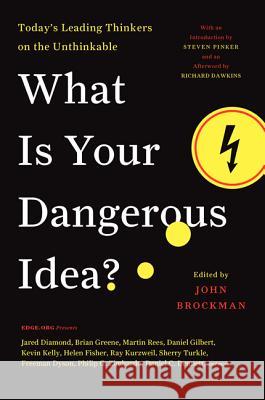
The world's leading scientific thinkers explore bold, remarkable, perilous ideas that could change our lives--for better . . . or for worse . . .
From Copernicus to Darwin, to current-day thinkers, scientists have always promoted theories and unveiled discoveries that challenge everything society holds dear; ideas with both positive and dire consequences. Many thoughts that resonate today are dangerous not because they are assumed to be false, but because they might turn out to be true.
What do the world's leading scientists and thinkers consider to be their most dangerous...
The world's leading scientific thinkers explore bold, remarkable, perilous ideas that could change our lives--for better . . . or for worse . . .
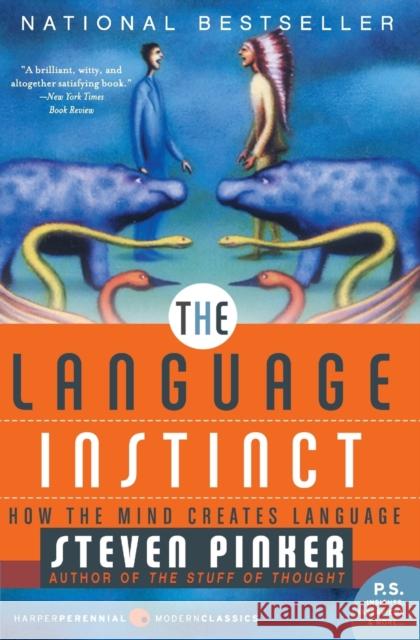
In this classic, the world's expert on language and mind lucidly explains everything you always wanted to know about language: how it works, how children learn it, how it changes, how the brain computes it, and how it evolved. With deft use of examples of humor and wordplay, Steven Pinker weaves our vast knowledge of language into a compelling story: language is a human instinct, wired into our brains by evolution. The Language Instinct received the William James Book Prize from the American Psychological Association and the Public Interest Award from the Linguistics Society of...
In this classic, the world's expert on language and mind lucidly explains everything you always wanted to know about language: how it works, how ch...
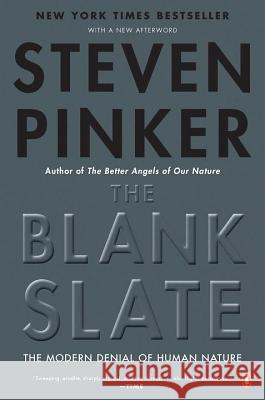
A brilliant inquiry into the origins of human nature from the author of The Better Angels of Our Nature and the forthcoming Enlightenment Now"Sweeping, erudite, sharply argued, and fun to read..also highly persuasive." -Time
Now updated with a new afterword
One of the world's leading experts on language and the mind explores the idea of human nature and its moral, emotional, and political colorings. With characteristic wit, lucidity, and insight, Pinker argues that the dogma that the mind has no innate traits-a doctrine held by many...
A brilliant inquiry into the origins of human nature from the author of The Better Angels of Our Nature and the forthcoming Enlightenment...
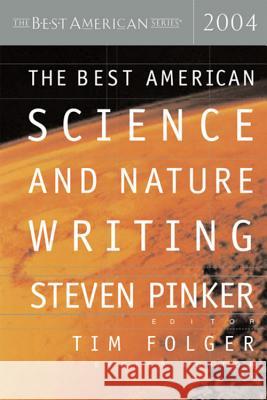
Bestselling author and staff writer for The New Yorker Groopman edits this year's volume of the finest science and nature writing. Contributors include Walter Kirn, Ron Rosenbaum, Jeffrey Toobin, and Oliver Sacks.
Bestselling author and staff writer for The New Yorker Groopman edits this year's volume of the finest science and nature writing. Contributors includ...
These essays tackle some of the central issues in visual cognition, presenting experimental techniques from cognitive psychology, new ways of modeling cognitive processes on computers from artificial intelligence, and new ways of studying brain organization from neuropsychology, to address such questions as: How do we recognize objects in front of us? How do we reason about objects when they are absent and only in memory? How do we conceptualize the three dimensions of space? Do different people do these things in different ways? And where are these abilities located in the brain?While...
These essays tackle some of the central issues in visual cognition, presenting experimental techniques from cognitive psychology, new ways of model...
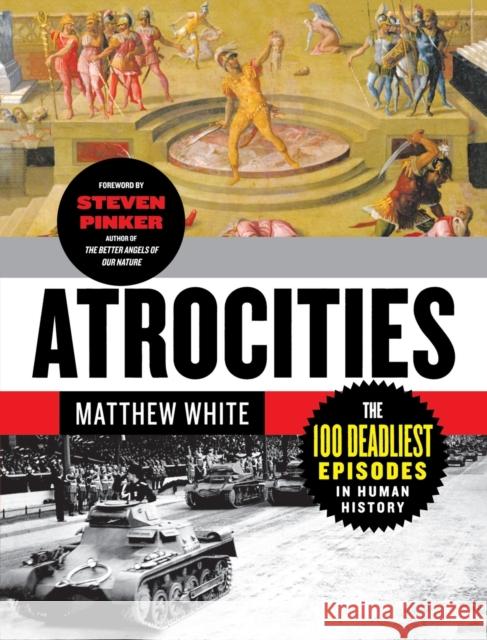
Evangelists of human progress meet their opposite in Matthew White's epic examination of history's one hundred most violent events, or, in White's piquant phrasing, "the numbers that people want to argue about." Reaching back to the Second Persian War in 480 BCE and moving chronologically through history, White surrounds hard facts (time and place) and succinct takeaways (who usually gets the blame?) with lively military, social, and political histories.
Evangelists of human progress meet their opposite in Matthew White's epic examination of history's one hundred most violent events, or, in White's piq...
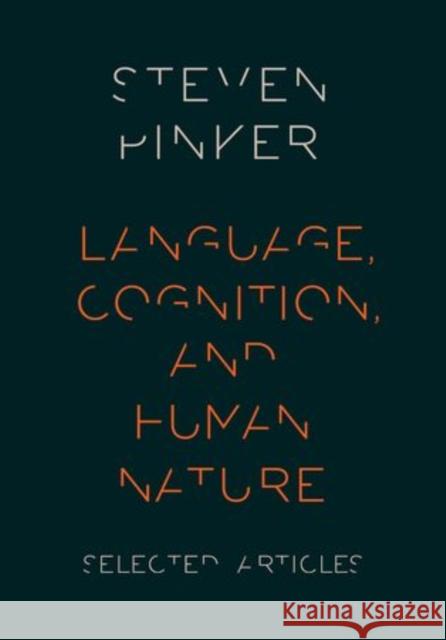
Language, Cognition, and Human Nature collects together for the first time much of Steven Pinker's most influential scholarly work on language and cognition. Pinker's seminal research explores the workings of language and its connections to cognition, perception, social relationships, child development, human evolution, and theories of human nature. This eclectic collection spans Pinker's thirty-year career, exploring his favorite themes in greater depth and scientific detail. It includes thirteen of Pinker's classic articles, ranging over topics such as language development in...
Language, Cognition, and Human Nature collects together for the first time much of Steven Pinker's most influential scholarly work on languag...
What motivates violence? How can good and compassionate people hurt and kill others or themselves? Why are people much more likely to kill or assault people they know well, rather than strangers? This provocative and radical book shows that people mostly commit violence because they genuinely feel that it is the morally right thing to do. In perpetrators' minds, violence may be the morally necessary and proper way to regulate social relationships according to cultural precepts, precedents, and prototypes. These moral motivations apply equally to the violence of the heroes of the Iliad, to...
What motivates violence? How can good and compassionate people hurt and kill others or themselves? Why are people much more likely to kill or assault ...
What motivates violence? How can good and compassionate people hurt and kill others or themselves? Why are people much more likely to kill or assault people they know well, rather than strangers? This provocative and radical book shows that people mostly commit violence because they genuinely feel that it is the morally right thing to do. In perpetrators' minds, violence may be the morally necessary and proper way to regulate social relationships according to cultural precepts, precedents, and prototypes. These moral motivations apply equally to the violence of the heroes of the Iliad, to...
What motivates violence? How can good and compassionate people hurt and kill others or themselves? Why are people much more likely to kill or assault ...