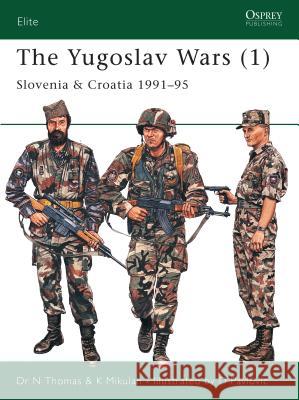
Osprey's examination of Slovenia and Croatia's armies' involvement in the Yugoslav Wars (1991-1995). Following the death of the Yugoslavian strongman President Tito in 1980, the several semi-autonomous republics and provinces that he had welded into a nation in 1945 moved inexorably towards separation. After a deceptively clean break for independence by Slovenia in 1991, the world watched a series of other wars rip through this modern European state. In this first of two volumes, experts on the Balkan region give an unprecedentedly clear, concise explanation of the Slovene, Croatian and...
Osprey's examination of Slovenia and Croatia's armies' involvement in the Yugoslav Wars (1991-1995). Following the death of the Yugoslavian strongman ...
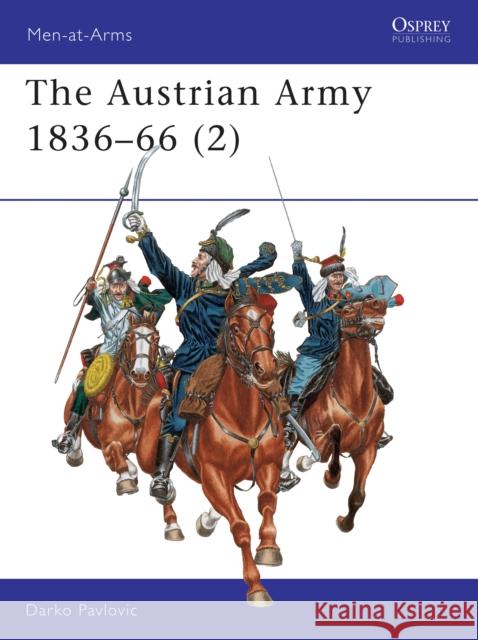
The huge, multi-national Austro-Hungarian army was a major factor in mid-19th century European politics. Sharing borders with ramshackle Ottoman Turkey and volatile Italy, the Empire was threatened both internally - by growing nationalist esentments - and externally by the ambitions of France and Prussia. The Imperial and Royal Army was representative of the Empire, its composition and gorgeously complex uniforms echoing the historical traditions of both German-speaking Middle Europe and the East-facing Hungarian borderlands. This detailed analysis of its cavalry arm - Kurassiers, Dragoons,...
The huge, multi-national Austro-Hungarian army was a major factor in mid-19th century European politics. Sharing borders with ramshackle Ottoman Turke...
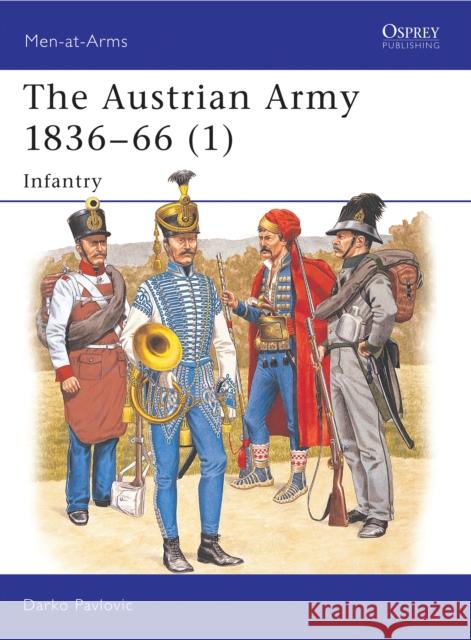
In the mid-19th century, Austria comprised a heterogeneous, multi-ethnic empire consisting of the Austrian or 'German' area; the Hungarian area; the Military Border; and the Kingdom of Lombardy-Venetia. The diverse nature of the empire made it difficult to create a unified and up-to-date military system, especially with remnants of feudalism still strong in some provinces. This book examines the Line infantry, Grenz infantry (Border troops) and Jagers (riflemen) that formed the Austrian infantry. Numerous illustrations and photographs of uniforms, rank insignia and regiments complement the...
In the mid-19th century, Austria comprised a heterogeneous, multi-ethnic empire consisting of the Austrian or 'German' area; the Hungarian area; the M...
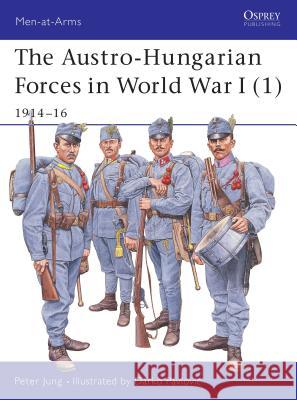
The part played in World War I (1914-1918) by the army of the Austro-Hungarian Dual Monarchy is little known to English-speakers, perhaps because the end of the war saw the complete destruction of the Empire. Yet it was of central importance, providing nearly all Central Powers forces on the Italian front, huge numbers on the Russian front, seven Army Corps in the Balkans and even a little-known contingent in Turkey and Palestine. The first half of the story of this complex multi-national organization at war is described here in a concise but detailed text, supported by data tables and an...
The part played in World War I (1914-1918) by the army of the Austro-Hungarian Dual Monarchy is little known to English-speakers, perhaps because the ...
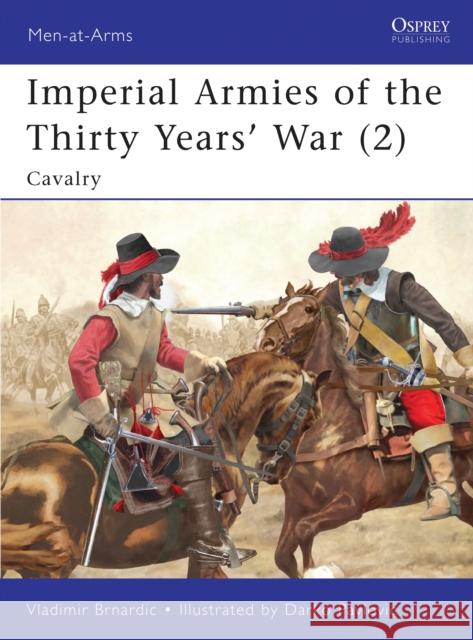
This history of the Catholic armies of the Habsburg Empire that fought in the Thirty Years' War (1618-1648) explores the role of cavalry during the last major religious war in mainland Europe, which saw the end of the large mercenary forces and the beginnings of the well-disciplined national army. This book charts this progression, illustrating and explaining the forces of the key Catholic armies, while exploring the organization, tactics, and colorful uniforms of the cavalry forces as they were expertly wielded by the great captains of the period including Tilly, Conde and Gustavus.
This history of the Catholic armies of the Habsburg Empire that fought in the Thirty Years' War (1618-1648) explores the role of cavalry during the la...
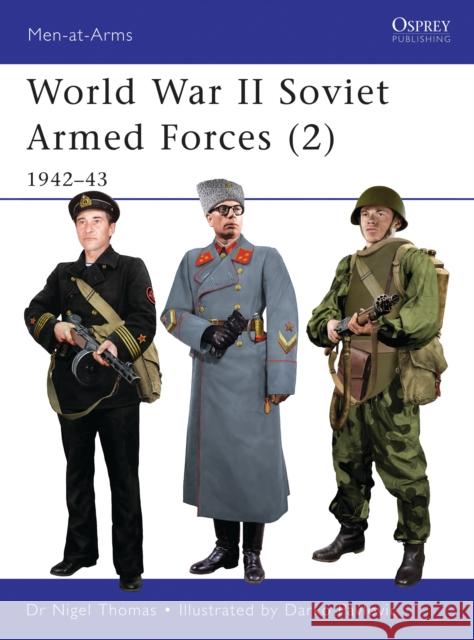
In this second volume of a three-part series on the Soviet Armed Forces in World War II (1939-1945), author Nigel Thomas turns his attention to the mid-war period. Focusing on the uniforms and organization of Soviet troops during the campaigns of the Caucasus, Stalingrad and Kursk, this book offers a detailed breakdown of all the armed forces which conducted the valiant defensive campaigns, including the army, air force, paratroopers, navy and NKVD troops. It also covers equipment and insignia and the changes brought about by the new regulations of 1943. An invaluable resource for those...
In this second volume of a three-part series on the Soviet Armed Forces in World War II (1939-1945), author Nigel Thomas turns his attention to the mi...