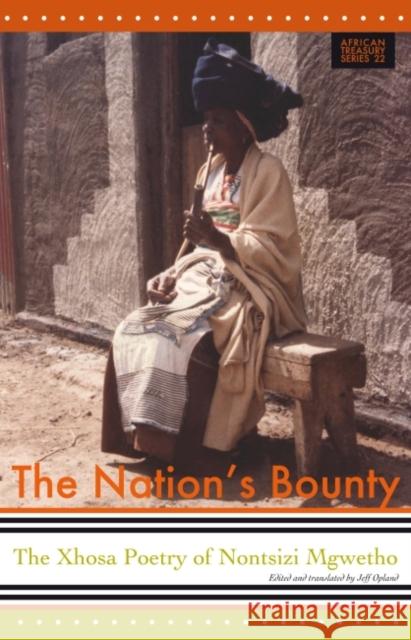
For nearly a decade Nontsizi Mgqwetho contributed poetry to a Johannesburg newspaper, Umteteli wa Bantu, the first and only female poet to produce a substantial body of work in Xhosa. Apart from what is revealed in these writings, very little is known about her life. She explodes on the scene with her swaggering, urgent, confrontational woman's poetry on October 23, 1920, sends poems to the newspaper regularly throughout the three years from 1924 to 1926, withdraws for two years until two final poems appear in December 1928 and January 1929, then disappears into the shrouding...
For nearly a decade Nontsizi Mgqwetho contributed poetry to a Johannesburg newspaper, Umteteli wa Bantu, the first and only female poet to ...
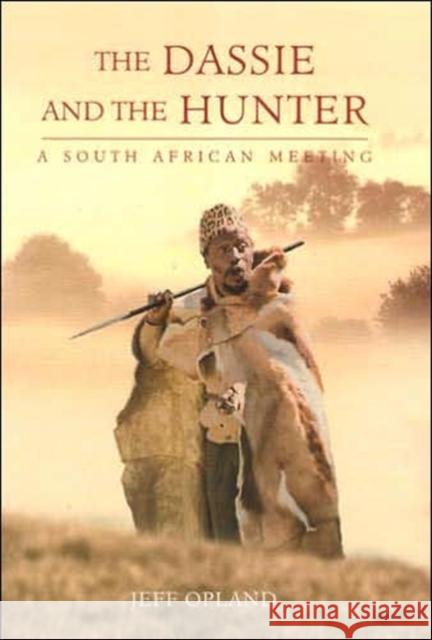
This book chronicles the life, times and poetry of extraordinary Xhosa praise poet, the late David Yali-Manisi, and his growing friendship and fruitful working relationship with author Jeff Opland. Opland is a renowned scholar who is recognized world-wide as a foremost authority on Xhosa izibongo or praises. His perceptive account gives insight not only into Manisi himself, but the complex art form of praise poetry-a spontaneous performance art of extraordinary subtlety and sophistication that, as Opland notes, embodies in itself the ancestral culture, history and politics of the Xhosa...
This book chronicles the life, times and poetry of extraordinary Xhosa praise poet, the late David Yali-Manisi, and his growing friendship and fruitfu...
For 40 years, between 1900 and 1939, John Solilo (1864-1940) was a prolific contributor to Xhosa-language newspapers under his own name and under the pseudonyms Mde-ngelimi (Master Wordsmith) and Kwanguye (It's Still Him). He submitted letters and articles on a variety of issues, local news reports from Cradock and Uitenhage, and a considerable body of poetry. Solilo's major literary contribution was his collection of poems entitled Izala, published in 1925, the earliest volume of poetry by a single author in the history of Xhosa literature. His poetry was inspired by umoya wembongi, the...
For 40 years, between 1900 and 1939, John Solilo (1864-1940) was a prolific contributor to Xhosa-language newspapers under his own name and under the ...
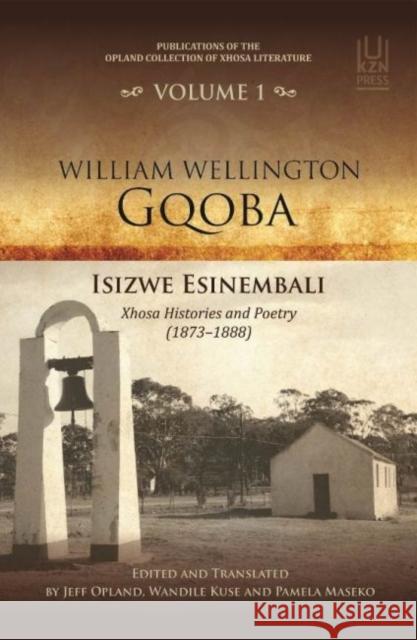
William Wellington Gqoba (1840-1888) was prominent among the African intellectuals emerging in the Eastern Cape region of South Africa towards the end of the 19th century. By trade, he was a wagon maker, licensed preacher of the Free Church of Scotland, teacher, historian, poet, folklorist, and editor. For much of his brief life, he served at mission stations as a catechist, and he ended his career as editor of the Lovedale newspaper Isigidimi sama-Xosa, to which he contrived to contribute subversive poetry that was outspokenly critical of Western education, the European administration of...
William Wellington Gqoba (1840-1888) was prominent among the African intellectuals emerging in the Eastern Cape region of South Africa towards the end...
David Livingstone Phakamile Yali-Manisi (1926-1999) was a Thembu imbongi, the most powerful exponent of the art of praise poetry in the Xhosa language in the second half of the 20th century. His literary career, however, was blighted by circumstances beyond his control, and he died in total obscurity. Manisi was obliged to seek his audiences throughout the lifetime of South Africa's reviled policy of apartheid; and, the poet's reputation, initially full of promise, waned as a consequence. He was a lifelong supporter of Nelson Mandela and the author of the earliest poem in praise of Mandela...
David Livingstone Phakamile Yali-Manisi (1926-1999) was a Thembu imbongi, the most powerful exponent of the art of praise poetry in the Xhosa language...