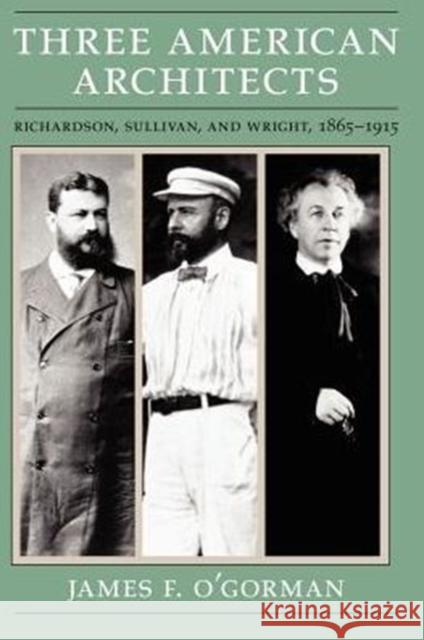
O'Gorman discusses the individual and collective achievement of the recognized trinity of American architecture: Henry Hobson Richardson (1838-86), Louis Sullivan (1856-1924), and Frank Lloyd Wright (1867-1959). He traces the evolution of forms created during these architects' careers, emphasizing the interrelationships among them and focusing on the designs and executed buildings that demonstrate those interrelationships. O'Gorman also shows how each envisioned the building types demanded by the growth of nineteenth-century cities and suburbs the downtown skyscraper and the single-family...
O'Gorman discusses the individual and collective achievement of the recognized trinity of American architecture: Henry Hobson Richardson (1838-86), Lo...
ABC of Architecture James F. O'Gorman. Drawings by Dennis E. McGrath "May be the best-written work on the subject."--New York Times "Thank goodness for James F. O'Gorman, who has given us this refreshingly clear guide to the indispensable convergence of art and science we call architecture."--Forbes " O'Gorman's] mastery of the subject shows in his straightforward, lucid prose."--Publishers Weekly "James O'Gorman's ABC of Architecture takes its rightful place among the few paragons this century of clear and direct introductions to the field."--Robert Venturi ABC...
ABC of Architecture James F. O'Gorman. Drawings by Dennis E. McGrath "May be the best-written work on the subject."--New York Times "Thank good...
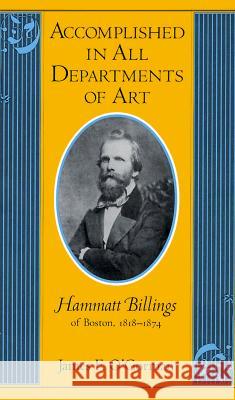
This work reconstructs the career of Hammatt Billings, one of the most versatile artists of the 19th century. Skilled in a wide range of media, Billings designed furniture, statuary, monuments, architecture, and public and private gardens, was a painter, and a private and public artist.
This work reconstructs the career of Hammatt Billings, one of the most versatile artists of the 19th century. Skilled in a wide range of media, Billin...
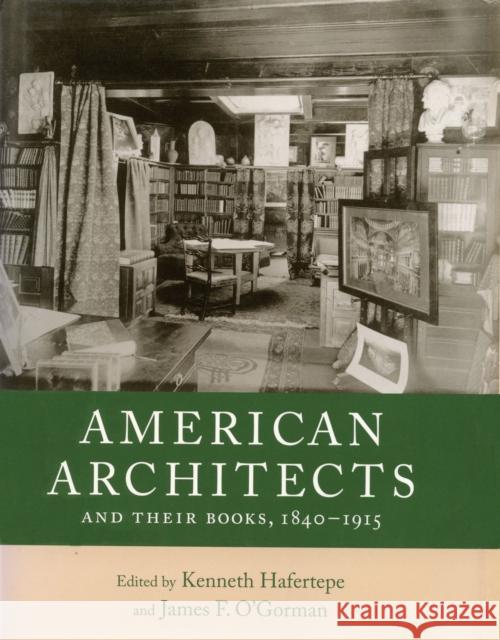
Since the Renaissance, books and drawings have been a primary means of communication among architects and their colleagues and clients. In this volume, twelve historians explore the use of books by architects in America in the late eighteenth and early nineteenth centuries, a period when the profession of architecture was first emerging in the United States.
As architects separated themselves from amateur and gentlemen designers on the one hand and masons and carpenters on the other, members of the profession were distinguished by their ability to draw and their possession of a common body...
Since the Renaissance, books and drawings have been a primary means of communication among architects and their colleagues and clients. In this volume...
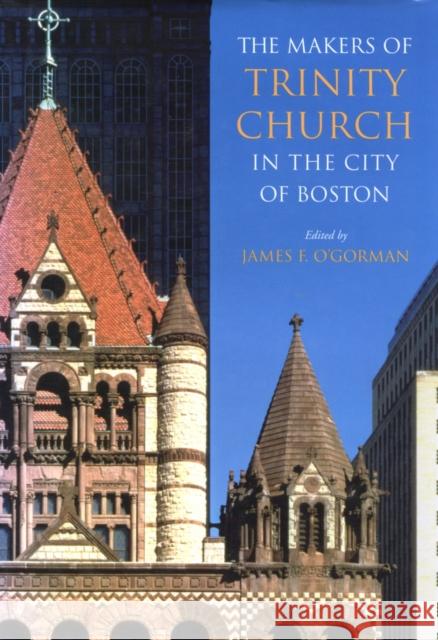
Explores the process of collaboration in the creation of an American architectural masterpiece; Since its dedication in 1877, Trinity Church on Copley Square in Boston has been widely regarded as one of the most important and successful monuments of American architecture. It has long been halled as the cornerstone of the career of America's first celebrity architect, H. H. Richardson. But architecture is not solely the expression of individual genius. Buildings result from collaboration and compromise. They are the concrete manifestations of competing needs, desires, and expectations...
Explores the process of collaboration in the creation of an American architectural masterpiece; Since its dedication in 1877, Trinity Church on Copley...
Since the Renaissance, architects have been authors and architecture has been the subject of publications. Architectural forms and theories are spread not just by buildings, but by the distribution of images and descriptions fed through the printing press. The study of an architect's library is an essential avenue to understanding that architect's intentions and judging his or her achievements. In this well-illustrated volume, a chronological sequel to American Architects and Their Books to 1848, twelve distinguished historians of architecture discuss from various points of view the books...
Since the Renaissance, architects have been authors and architecture has been the subject of publications. Architectural forms and theories are spread...
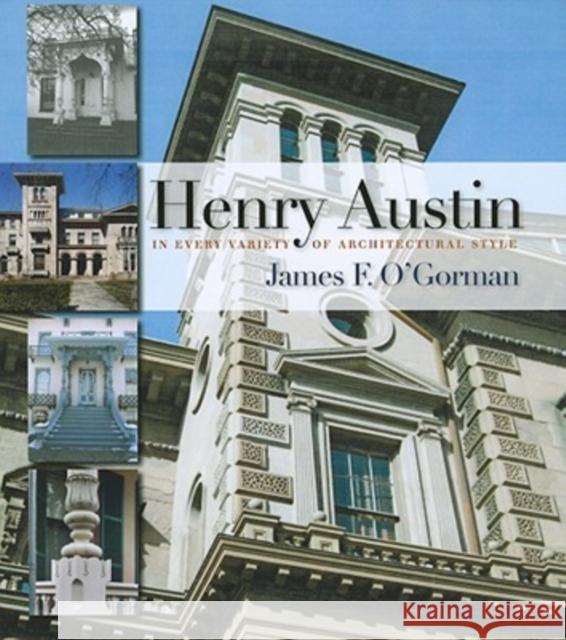
Winner of the Historic New England Book Prize (2009) Winner of the Henry-Russell Hitchcock Book Award (2010) Henry Austin's (1804-1891) works receive consideration in books on nineteenth-century architecture, yet no book has focused scholarly attention on his primary achievements in New Haven, Connecticut, in Portland, Maine, and elsewhere. Austin was most active during the antebellum era, designing exotic buildings that have captured the imaginations of many for decades. James F. O'Gorman deftly documents Austin's work during the 1840s and '50s, the time when Austin was...
Winner of the Historic New England Book Prize (2009) Winner of the Henry-Russell Hitchcock Book Award (2010) Henry Austin's (1804...