In 1932, two years after D. H. Lawrence's death, a young woman wrote a book about him and presented it to a Paris publisher. She recorded the event in her diary: It will not be published and out by tomorrow, which is what a writer would like when the book is hot out of the oven, when it is alive within oneself. He gave it to his assistant to revise. The woman was Anais Nin. Nin examined Lawrence's poetry, novels, essays, and travel writing. She analyzed and explained the more important philosophical concepts contained in his writings, particularly the themes of love, death, and religion,...
In 1932, two years after D. H. Lawrence's death, a young woman wrote a book about him and presented it to a Paris publisher. She recorded the event in...
The Four-Chambered Heart, Anais Nin's 1950 novel, recounts the real-life affair she conducted with cafe guitarist Gonzalo More in 1936. Nin and More rented a house-boat on the Seine, and under the pervading influence of the boat's watchman and More's wife Helba, developed a relationship. More named the boat Nanankepichu, meaning "not really a home." In the novel, which Nin drew from her experiences on the boat, the characters are clearly based. Djuna is an embodiment of Nin herself. A young dancer in search of fulfillment, she encapsulates all that the author was striving for at that time....
The Four-Chambered Heart, Anais Nin's 1950 novel, recounts the real-life affair she conducted with cafe guitarist Gonzalo More in 1936. Nin and More r...
Ladders to Fire, Children of the Albatross, The Four-Chambered Heart, A Spy in the House of Love, Seduction of the Minotaur. Haunting and hypnotic, these five novels by Anais Nin began in 1946 to appear in quiet succession. Though published separately over the next fifteen years, the five were conceived as a continuous experience--a continuous novel like Proust's, real and flowing as a river. The full impact of Anais Nin's genius is only to be found through reading the novels in context and in succession. They form a rich, luminous tapestry whose...
Ladders to Fire, Children of the Albatross, The Four-Chambered Heart, A Spy in the House of Love, Seduction of the Mino...
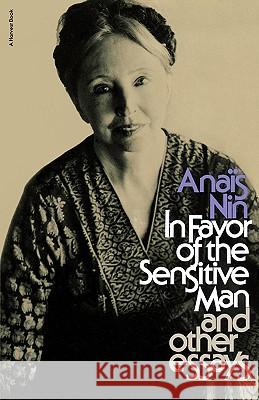
In this book Anais Nin speaks with warmth and urgency on those themes which have always been closest to her: relationships, creativity, the struggle for wholeness, the unveiling of woman, the artist as magician, women reconstructing the world, moving from the dream outward, and experiencing our lives to the fullest possible extent.
In this book Anais Nin speaks with warmth and urgency on those themes which have always been closest to her: relationships, creativity, the struggle f...
The New Diary is about a completely modern concept of journal writing. It has little to do with the rigid daily calendar diary you may have kept as a child or the factual travelogue you wrote to recall the Grand Canyon. Instead, it is a tool for tapping the full power of your inner resources. The New Diary is as much for those who already keep a journal as it is for those who have never kept one. It does not tell you the "right" way to keep a diary; rather, it offers numerous possibilities for using the diary to achieve your own purposes. It is a place for you to clarify...
The New Diary is about a completely modern concept of journal writing. It has little to do with the rigid daily calendar diary you may have kep...
Largely ignored by mainstream audiences for the first thirty years of her career, Anais Nin (1903-1977) finally came into her own with the publication of the first part of her diary in 1966. Thereafter she was catapulted into fame. Throughout the late sixties and the seventies she attracted a host of devoted and admiring readers in the counter culture, who were magnetized by her personal liberation and openness. For a woman to make such probing exploration of the intimate recesses of her psyche made her a cult figure with a large and lasting readership. Born in France, Anais Nin lived much of...
Largely ignored by mainstream audiences for the first thirty years of her career, Anais Nin (1903-1977) finally came into her own with the publication...
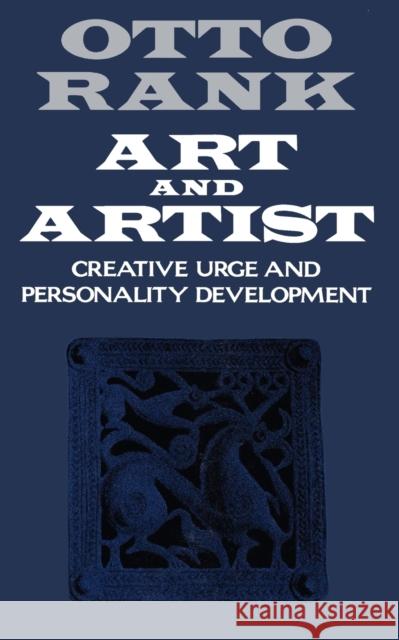
Art and Artist explores the human urge to create in all its complex aspects, in terms not only of individual works of art but of religion, mythology, and social institutions as well. Based firmly on Rank's knowledge of psychology and psychoanalysis, it ranges widely through anthropology and cultural history, reaching beyond psychology to a broad understanding of human nature.
Art and Artist explores the human urge to create in all its complex aspects, in terms not only of individual works of art but of religion, my...
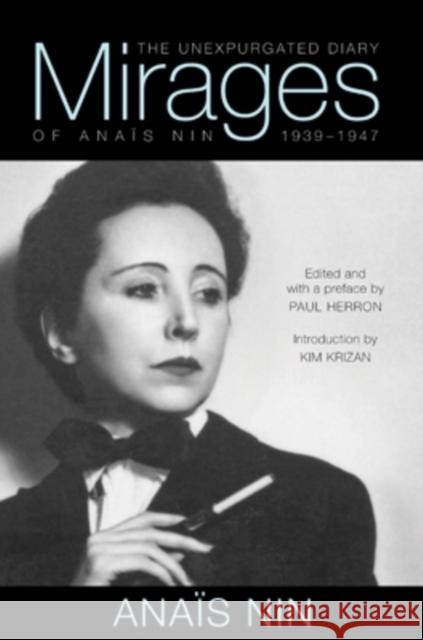
"Mirages" opens at the dawn of World War II, when Anais Nin fled Paris, where she lived for fifteen years with her husband, banker Hugh Guiler, and ends in 1947 when she meets the man who would be the One, the lover who would satisfy her insatiable hunger for connection. In the middle looms a period Nin describes as hell, during which she experiences a kind of erotic madness, a delirium that fuels her search for love. As a child suffering abandonment by her father, Anais wrote, Close your eyes to the ugly things, and, against a horrifying backdrop of war and death, Nin combats the world s...
"Mirages" opens at the dawn of World War II, when Anais Nin fled Paris, where she lived for fifteen years with her husband, banker Hugh Guiler, and...
"Under a Glass Bell" is one of Nin's finest collections of stories. First published in 1944, it attracted the attention of Edmond Wilson, who reviewed the collection in "The New Yorker." It was in these stories that Nin's artistic and emotional vision took shape. This edition includes a highly informative and insightful foreword by Gunther Stuhlmann that places the collection in its historical context as well as illuminates the sequence of events and persons recorded in the diary that served as its inspiration.
"Under a Glass Bell" is one of Nin's finest collections of stories. First published in 1944, it attracted the attention of Edmond Wilson, who reviewed...