The Halakhah constitutes a coherent construction comprised by category-formations defined by topics purposively amplified. These category-formations everywhere pursue a cogent analytical program, addressing diverse subjects, treated systematically, a single set of questions of definition and analysis. Is Scripture the origin of the Halakhic system, which defines the norms of Judaism? At stake is not the starting point of discrete bits of legal data. At issue is the origin of the comprehensive structure comprised by the Halakhic category-formations, by these topics and no others. Scripture...
The Halakhah constitutes a coherent construction comprised by category-formations defined by topics purposively amplified. These category-formations e...
The first group of essays in Judaism in Monologue and Dialogue raises issues concerning the religious tradition of Judaism: what is normative in ethics; what it means to "be religious" or practice Judaism in the context of the Judaism defined in its own native categories; and the interior life of Judaic religiosity. The second set of essays examines relationships between the communities of Judaism and those of Christianity.
The first group of essays in Judaism in Monologue and Dialogue raises issues concerning the religious tradition of Judaism: what is normative in ethic...
After publishing a number of books in the history, literature, social thought, history of religion, and theology of formative Judaism, in the first six centuries C.E., Neusner explains the principal stages in the unfolding of his oeuvre.
After publishing a number of books in the history, literature, social thought, history of religion, and theology of formative Judaism, in the first si...
Judaism's two native categories, narrative theology and law (also known as parable and praxis or Aggadah and Halakhah) form two distinct modes of discourse. The one expounds norms of attitude and belief, the other, norms of action and behavior. Each possesses its own modes of thought, topical program, and medium for expression. Joined together, they create a remarkably coherent statement. Any understanding of Rabbinic Judaism depends on a theory of how these two modes of thought and expression relate to form a single cogent system. In Praxis and Parable, author Jacob Neusner explores how that...
Judaism's two native categories, narrative theology and law (also known as parable and praxis or Aggadah and Halakhah) form two distinct modes of disc...
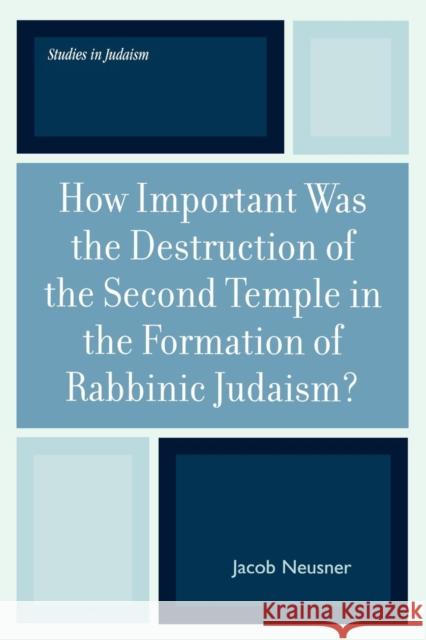
The destruction of the First Temple (586 B.C.E.), destruction of the Second Temple (70 C.E.), and the defeat of the Bar Kokhba (132-135 C.E.) are discussed in great detail in the covenantal theology of the Torah and Scripture. This books uses extensive textual evidence to explore the importance of the second temple's destruction and the aforementioned events in the creation of Rabbinic Judaism.
The destruction of the First Temple (586 B.C.E.), destruction of the Second Temple (70 C.E.), and the defeat of the Bar Kokhba (132-135 C.E.) are disc...
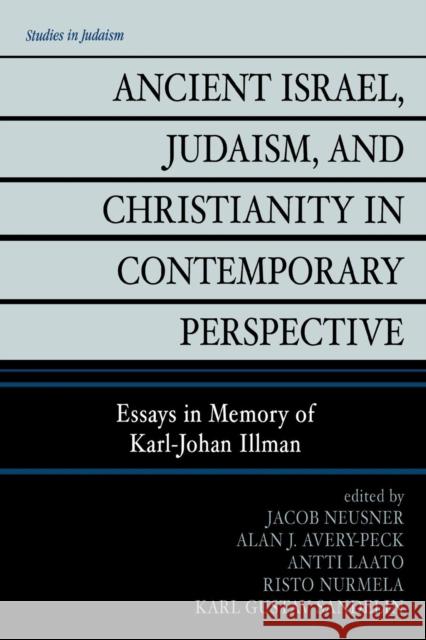
The late Karl-Johan Illman was a professor of Biblical and Judaic studies at Abo Akademi University in bo/Turku, Finland. A beloved and respected figure in the Judeo-Christian dialogue and an accomplished scholar of Judaism, he is remembered in this memorial volume by leading scholars of Biblical and Judaic studies in Europe and North America.
The late Karl-Johan Illman was a professor of Biblical and Judaic studies at Abo Akademi University in bo/Turku, Finland. A beloved and respected figu...
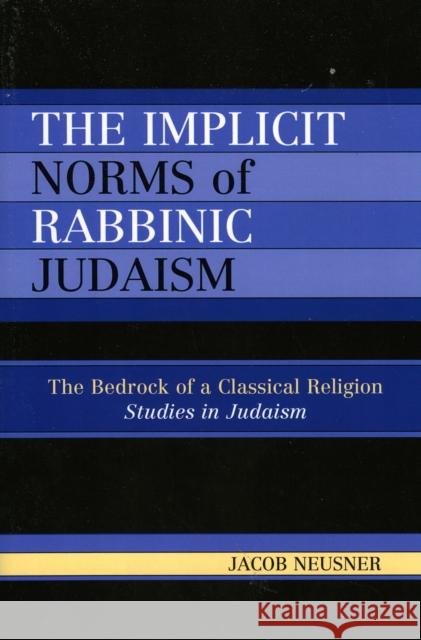
This book explores the theological premises of the documents upon which the Rabbinic canon was built and asks whether these premises cohere in a tight theological system? The Implicit Norms of Rabbinic Judaism examines these documents and their premise and reveals that orthodoxy and heresy constituted native categories of the Rabbinic system of thought inherent.
This book explores the theological premises of the documents upon which the Rabbinic canon was built and asks whether these premises cohere in a tight...
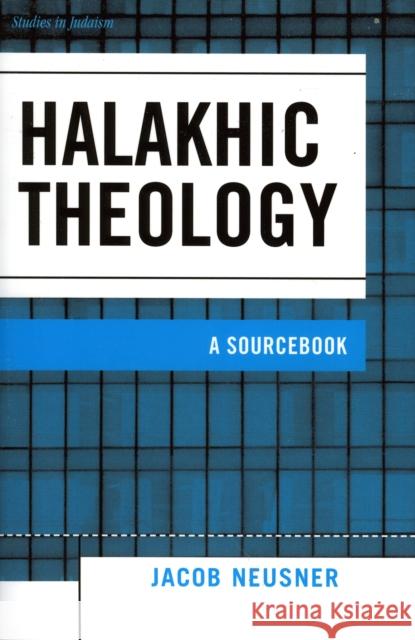
In this sourcebook, author Jacob Neusner derives from details of legal expositions some of the Halakhah's theological propositions, in order to show how normative laws of conduct express the narrative monotheism of the Torah. An introductory overview of the Halakhic theological program, seen through topical expositions of law, briefly compares Halakhic texts with Aggadic theological programs.
In this sourcebook, author Jacob Neusner derives from details of legal expositions some of the Halakhah's theological propositions, in order to show h...
The documentary reading of the Rabbinic canon continues to create engaging questions and interesting problems for study. This collection of essays and book reviews represents two years of work from 2003 to 2005 focused on the Rabbinic canon. The collection is divided into four main groups. The first set of essays represents examples of historical and history-of-religion questions precipitated by the documentary perspective. The second group of essays focuses on the treatment of 56 B.C.E., 70 C.E., and 132-135 C.E. in successive canonical compilations. This section compares and contrasts...
The documentary reading of the Rabbinic canon continues to create engaging questions and interesting problems for study. This collection of essays and...
In the Mishnah (ca. 200 C.E.), the Tosefta (ca. 300 C.E.), and the commentaries that joined them-the Yerushalmi, the Talmud of the Land of Israel (ca. 400) and the Bavli, and the Talmud of Babylonia (ca. 600)-the law of Judaism is outlined topic by topic. The exposition of these topics, however, is shaped in part by a generic analytical program. In this project, author Jacob Neusner identifies the occurrences of the four intellectual templates and shows, in complete detail, where and how the same problems recur time and again.
In the Mishnah (ca. 200 C.E.), the Tosefta (ca. 300 C.E.), and the commentaries that joined them-the Yerushalmi, the Talmud of the Land of Israel (ca....