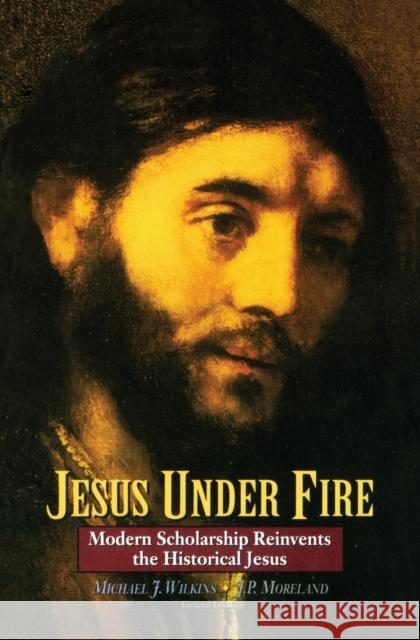
Who is Jesus? What did he do? What did he say? -Are the traditional answer to these questions still to be trusted? - Did the early church and tradition "Christianize" Jesus? - Was Christianity built on clever conceptions of the church, or on the character and actions of an actual person? These and similar questions have come under scrutiny by a forum of biblical scholars called the Jesus Seminar. Their conclusions have been widely publicized in magazines such as Time and Newsweek. Jesus Under Fire challenges the methodology and findings of the Jesus Seminar, which generally clash with the...
Who is Jesus? What did he do? What did he say? -Are the traditional answer to these questions still to be trusted? - Did the early church and tradi...
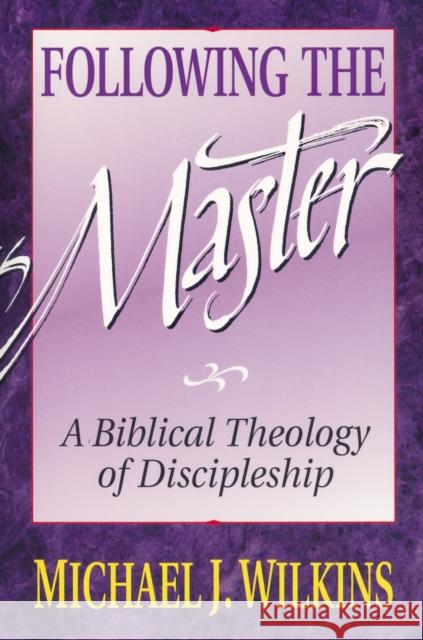
In the aftermath of the waves of discipleship programs that have swept over the church in the last 30 years, clergy, and laypersons alike are more confused than ever about what it means to be a disciple of Jesus Christ. What should a disciple of Jesus look and act like today? What is the relationship between discipleship and salvation, between discipleship and sanctification, between discipleship and ministry? How were disciples of Jesus different from other disciples in the ancient world? How did the early church carry out Jesus' agenda in "making disciples of all the nations"? In...
In the aftermath of the waves of discipleship programs that have swept over the church in the last 30 years, clergy, and laypersons alike are more ...
An indispensable guide for undergraduate, graduate, or seminary students, this book provides valuable insight into the best reference tools available for Bible research. Not only do the authors provide general information on atlases, concordances, lexicons, dictionaries, and the like, but they also evaluate their usefulness. Titles reviewed range from theologically conservative to theologically liberal in their orientation. Electronic databases are included within the scope of the book's coverage. A highly useful resource, the book will certainly find a permanent place on the desk of anyone...
An indispensable guide for undergraduate, graduate, or seminary students, this book provides valuable insight into the best reference tools available ...
This Christian approach to the relationship between science and theology analyzes how the two disciplines have historically interacted with one another -- and how they should.
This Christian approach to the relationship between science and theology analyzes how the two disciplines have historically interacted with one anothe...
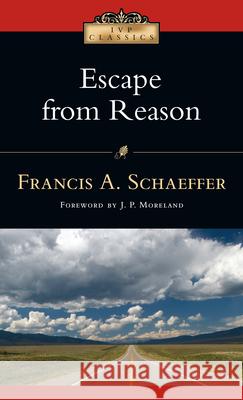
How did we get here? And where do we find a remedy? In this modern classic, Francis A. Schaeffer traces trends in twentieth-century thought and unpacks how key ideas have shaped our society. Wide-ranging in his analysis, Schaeffer examines philosophy, science, art and popular culture to identify dualism, fragmentation and the decline of reason. Schaeffer's work takes on a newfound relevance today in his prescient anticipation of the contemporary postmodern ethos. His critique demonstrates Christianity's promise for a new century, one in as much need as ever of purpose and hope.
How did we get here? And where do we find a remedy? In this modern classic, Francis A. Schaeffer traces trends in twentieth-century thought and unpack...
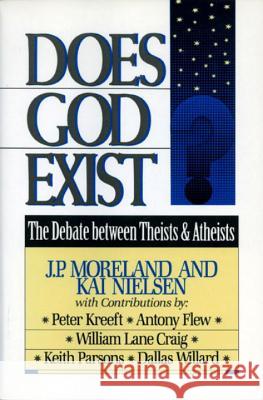
Is there a God? What is the evidence for belief in such a being? What is God like? Or, is God a figment of human inspiration? How do we know that such a being might not exist? Should belief or disbelief in God's existence make a difference in our opinions and moral choices, in the way we see ourselves and relate to those around us? These are fundamental questions, and their answers have shaped individual lives, races, and nations throughout history. On March 24, 1988, at the University of Mississippi, J.P. Moreland, a leading Christian philosopher and ethicist, and Kai Nielsen, one of...
Is there a God? What is the evidence for belief in such a being? What is God like? Or, is God a figment of human inspiration? How do we know that such...
Using the latest evidence from various fields of study, two Christian scholars present a strong biblical, rational and even scientific case for the belief in life after death.
Using the latest evidence from various fields of study, two Christian scholars present a strong biblical, rational and even scientific case for the be...
Argues that the existence of finite, irreducible consciousness provides evidence for the existence of God. Considering Searle's contingent correlation, O'Connor's emergent necessitation, and Nagel's mysterian 'naturalism,' the author concludes that these v
Argues that the existence of finite, irreducible consciousness provides evidence for the existence of God. Considering Searle's contingent correlation...
This work is an introductory treatment of issues and options in social and bioethics which center on the end of life. Moreland and Geisler have attempted to simplify and summarize various end-of-life topics without being simplistic or caricaturing different viewpoints, even though the authors' own viewpoints are made perfectly clear. A comprehensive bibliography, glossary, and subject and author index make this a valuable textbook as well as a resource for further study.
The major purpose of this book is to make the reader think more clearly and deeply about the important issues...
This work is an introductory treatment of issues and options in social and bioethics which center on the end of life. Moreland and Geisler have att...
Winner of an Award of Excellence in the 2003 Chicago Book Clinic
What is real?
What is truth?
What can we know?
What should we believe?
What should we do and why?
Is there a God?
Can we know him?
Do Christian doctrines make sense?
Can we believe in God in the face of evil?
These are fundamental questions that any thinking person wants answers to. These are questions that philosophy addresses. And the answers we give to these kinds of...
Winner of a 2004 ECPA Gold Medallion Award
Winner of an Award of Excellence in the 2003 Chicago Book Clinic