In this inventive work on Emily Dickinson's poetry, Cristanne Miller traces the roots of Dickinson's unusual, compressed, ungrammatical, and richly ambiguous style, finding them in sources as different as the New Testament and the daily patterns of women's speech. Dickinson writes as she does both because she is steeped in the great patriarchal texts of her culture, from the Bible and hymns to Herbert's poetry and Emerson's prose, and because she is conscious of writing as a woman in an age and culture that assume great and serious poets are male.
Miller observes that Dickinson's...
In this inventive work on Emily Dickinson's poetry, Cristanne Miller traces the roots of Dickinson's unusual, compressed, ungrammatical, and richly...
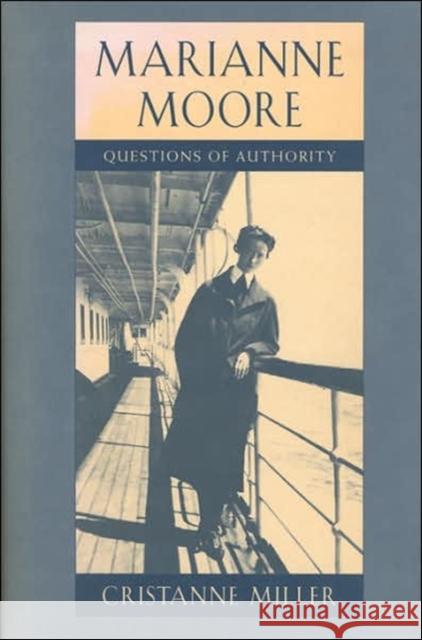
Not confessional or autobiographical, not openly political or gender-conscious: all that Marianne Moore's poetry is not has masked what it actually is. Cristanne Miller's aim is to lift this mask and reveal the radically oppositional, aesthetic, and political nature of the poet's work. A new Moore emerges from Miller's persuasive book--one whose political engagement and artistic experiments, though not cut to the fashion of her time, point the way to an ambitious new poetic.
Miller locates Moore within the historical, literary, and family environments that shaped her life and work,...
Not confessional or autobiographical, not openly political or gender-conscious: all that Marianne Moore's poetry is not has masked what it actually...
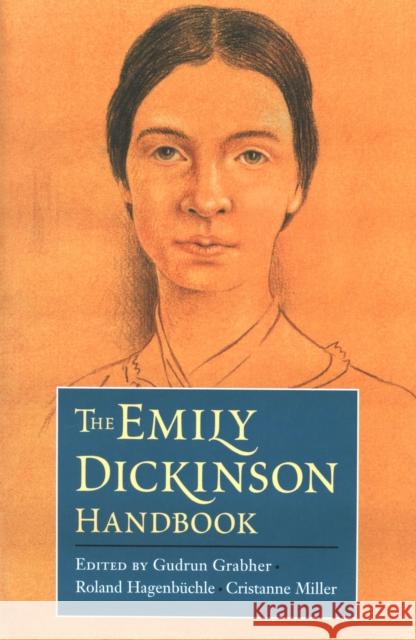
Gudrun Grabher Roland Hagenbuchle Cristanne Miller
In addition to the editors, contributors include Martha Ackmann, Kerstin Behnke, Sharon Cameron, Paul Crumbley. Margaret Dickie, Jane Donahue Eberwein, Judith Farr, Margaret H. Freeman, Jonnie Guerra, Suzanne Juhasz, Marietta Messmer, Vivian R. Pollak, David Porter, Josef Raab, Agnieszka Salska, Richard Sewall, Martha Nell Smith, Gary Lee Stonum, and Robert Weisbuch.
In addition to the editors, contributors include Martha Ackmann, Kerstin Behnke, Sharon Cameron, Paul Crumbley. Margaret Dickie, Jane Donahue Eberwein...
"Words for the Hour" presents a readable and illuminating account of the Civil War, told through the words of poets North and South. From bathos to profound philosophical meditation and sorrow, the range of these poems illuminates the complexity of their era while also revealing the continuing power of this turning point in American history to speak to readers in the present day.
The volume is divided into three parts, each offering a different perspective on the poetry generated by the war. Part I samples the extraordinary range of poems written immediately preceding and during the war...
"Words for the Hour" presents a readable and illuminating account of the Civil War, told through the words of poets North and South. From bathos to...
This book provides new information about Emily Dickinson as a writer and new ways of situating this poet in relation to nineteenth-century literary culture, examining how we read her poetry and how she was reading the poetry of her own day. Cristanne Miller argues both that Dickinsons poetry is formally far closer to the verse of her day than generally imagined and that Dickinson wrote, circulated, and retained poems differently before and after 1865. Many current conceptions of Dickinson are based on her late poetic practice. Such conceptions, Miller contends, are inaccurate for the time...
This book provides new information about Emily Dickinson as a writer and new ways of situating this poet in relation to nineteenth-century literary cu...