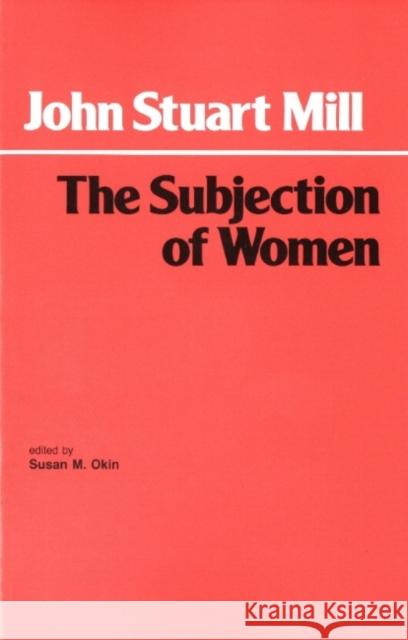
"Reasonably priced and beautifully produced. A clear and helpful introduction by Susan Okin, one of the leading feminist scholars of our generation, as well as a useful bibliography and chronology of Mill's life. . . . Invaluable for teaching and scholarship alike." --Ian Shapiro, Yale University
"Reasonably priced and beautifully produced. A clear and helpful introduction by Susan Okin, one of the leading feminist scholars of our generation, a...
John Stuart Mill (1806-1873) zahlt mit seinen philosophischen, okonomischen und politischen Schriften zu den einflussreichsten Denkern des Liberalismus im 19. Jahrhundert. Der vorliegende Band enthalt Artikel und Aufsatze Mills, in denen der Facettenreichtum seines liberalen politischen Denkens dokumentiert wird. Der grote Teil dieser Schriften wird erstmals auf Deutsch publiziert.
John Stuart Mill (1806-1873) zahlt mit seinen philosophischen, okonomischen und politischen Schriften zu den einflussreichsten Denkern des Liberali...
John Stuart Mill (1806 - 1873), British philosopher, political economist, civil servant and Member of Parliament, was an influential liberal thinker of the 19th century. He addressed matters of social concern in Principles of Political Economy (1848).
John Stuart Mill (1806 - 1873), British philosopher, political economist, civil servant and Member of Parliament, was an influential liberal thinker o...
This volume includes the complete texts of two of John Stuart Mill's most important works, Utilitarianism and On Liberty, and selections from his other writings, including the complete text of his Remarks on Bentham's Philosophy. The selection from Mill's A System of Logic is of special relevance to the debate between those who read Mill as an Act-Utilitarian and those who interpret him as a Rule-Utilitarian.
Also included are selections from the writings of Jeremy Bentham, founder of modern Utilitarianism and mentor (together with James Mill) of John Stuart Mill. Bentham's "Principles...
This volume includes the complete texts of two of John Stuart Mill's most important works, Utilitarianism and On Liberty, and selections from his o...
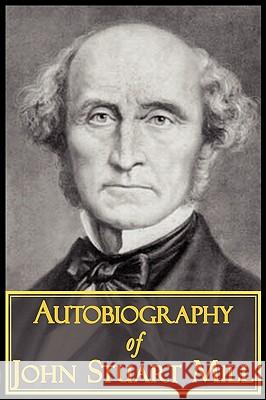
John Stuart Mill's Autobiography, published posthumously, is an honest account of the education of this great thinker of the nineteenth century. It is an amazing account of an extraordinary life.
John Stuart Mill's Autobiography, published posthumously, is an honest account of the education of this great thinker of the nineteenth century. It is...
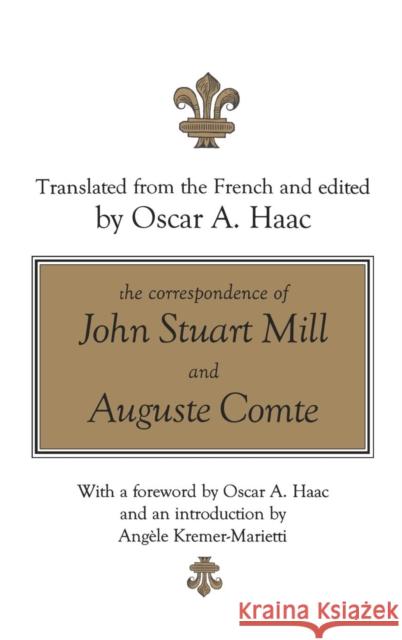
This volume presents eighty-nine letters exchanged between John Stuart Mill and Auguste Comte between 1841 and 1847. They address important issues of the mid-nineteenth century in philosophy, science, economics, and politics. Cumulatively, these letters provide a humanistic view of Western Europe and its social problems. They add valuable perspective to what we know about the work of Mill and Comte, in a critical period of English and French thought.
The correspondence begins with an admiring letter from Mill who considers himself a positivist at the tune and writes to Comte as to an...
This volume presents eighty-nine letters exchanged between John Stuart Mill and Auguste Comte between 1841 and 1847. They address important issues ...
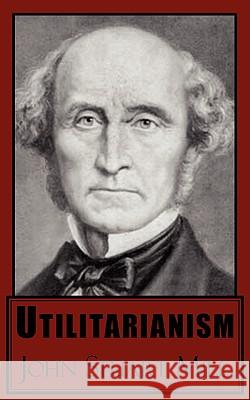
John Stuart Mill's book Utilitarianism is a philosophical defense of utilitarianism in ethics. The essay first appeared as a series of three articles published in Fraser's Magazine in 1861. Utilitarianism is the idea that the moral worth of an action is determined solely by its contribution to overall utility: that is, its contribution to happiness or pleasure as summed among all people. It is thus a form of consequentialism, meaning that the moral worth of an action is determined by its outcome.
John Stuart Mill's book Utilitarianism is a philosophical defense of utilitarianism in ethics. The essay first appeared as a series of three articles ...
John Stuart Mill was a 19th century English philosopher. Mill wrote supporting the defense of individual liberty in terms of social utility. Mill was concerned with defending the freedom of the individual against the power of society, and the freedom of minorities against the power of the majority. Mill developed the "harm principle," which states that each individual has the right to act as he wants, so long as these actions do not harm others. If the act only affects the person undertaking the action, then society has no right to intervene.
John Stuart Mill was a 19th century English philosopher. Mill wrote supporting the defense of individual liberty in terms of social utility. Mill was ...