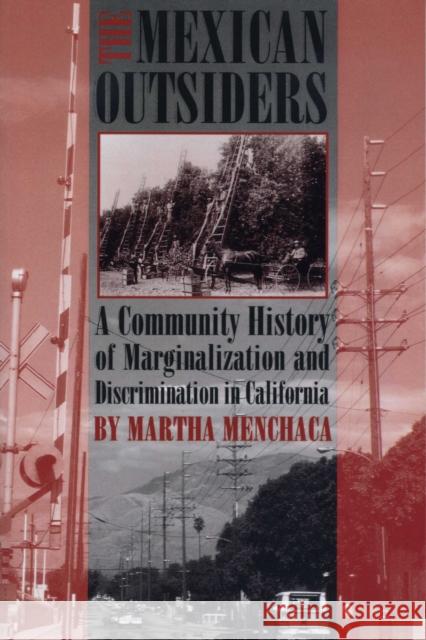
People of Mexican descent and Anglo Americans have lived together in the U.S. Southwest for over a hundred years, yet relations between them remain strained, as shown by recent controversies over social services for undocumented aliens in California. In this study, covering the Spanish colonial period to the present day, Martha Menchaca delves deeply into interethnic relations in Santa Paula, California, to document how the residential, social, and school segregation of Mexican-origin people became institutionalized in a representative California town.
Menchaca lived in Santa Paula...
People of Mexican descent and Anglo Americans have lived together in the U.S. Southwest for over a hundred years, yet relations between them remain...
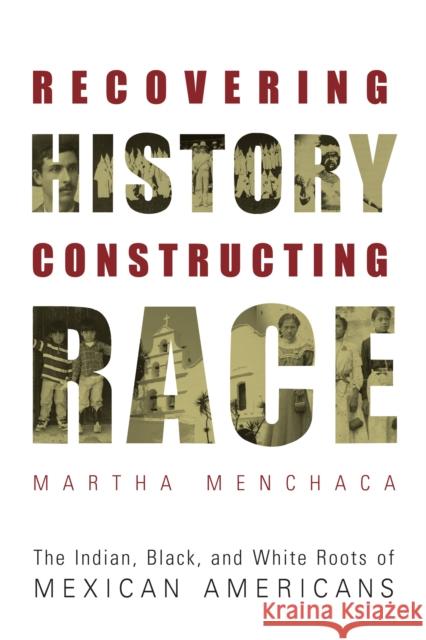
The history of Mexican Americans is a history of the intermingling of races--Indian, White, and Black. This racial history underlies a legacy of racial discrimination against Mexican Americans and their Mexican ancestors that stretches from the Spanish conquest to current battles over ending affirmative action and other assistance programs for ethnic minorities. Asserting the centrality of race in Mexican American history, Martha Menchaca here offers the first interpretive racial history of Mexican Americans, focusing on racial...
Winner, A Choice Outstanding Academic Book, 2002
The history of Mexican Americans is a history of the intermingling of races--Indian, ...
Winner, NACCS Book Award, National Association for Chicana and Chicano Studies, 2013
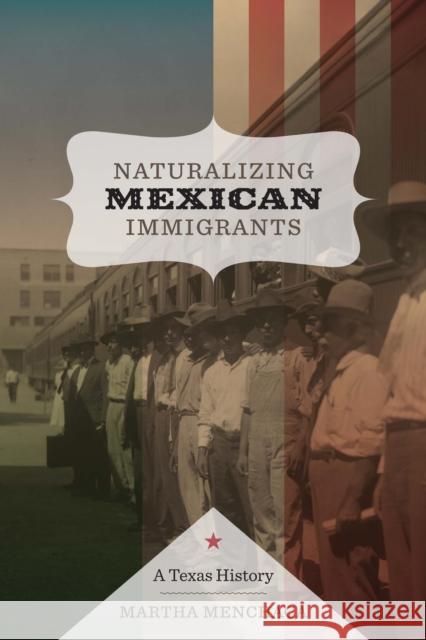
During the nineteenth and early twentieth centuries, a majority of the Mexican immigrant population in the United States resided in Texas, making the state a flashpoint in debates over whether to deny naturalization rights. As Texas federal courts grappled with the issue, policies pertaining to Mexican immigrants came to reflect evolving political ideologies on both sides of the border.
Drawing on unprecedented historical analysis of state archives, U.S. Congressional records, and other...
Winner, NACCS Book Award, National Association for Chicana and Chicano Studies, 2013
During the nineteenth and early twentieth centuri...
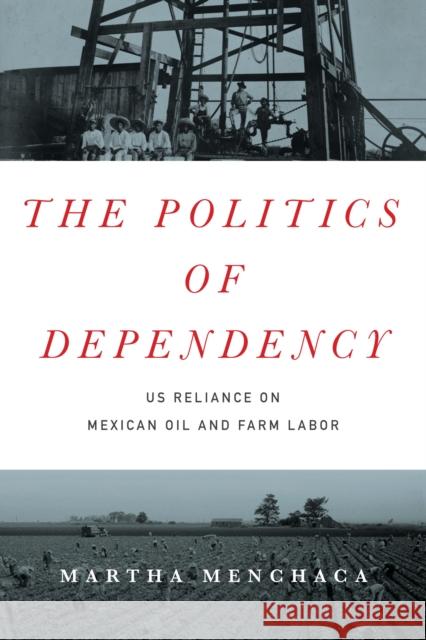
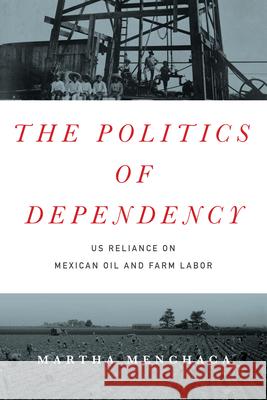
The United States and Mexico trade many commodities, the most important of which are indispensable sources of energy--crude oil and agricultural labor. Mexican oil and workers provide cheap and reliable energy for the United States, while US petro dollars and agricultural jobs supply much-needed income for the Mexican economy. Mexico's economic dependence on the United States is well-known, but The Politics of Dependency makes a compelling case that the United States is also economically dependent on Mexico.
Expanding dependency theory beyond the traditional premise that...
The United States and Mexico trade many commodities, the most important of which are indispensable sources of energy--crude oil and agricultural la...
The United States and Mexico trade many commodities, the most important of which are indispensable sources of energy--crude oil and agricultural labor. Mexican oil and workers provide cheap and reliable energy for the United States, while US petro dollars and agricultural jobs supply much-needed income for the Mexican economy. Mexico's economic dependence on the United States is well-known, but The Politics of Dependency makes a compelling case that the United States is also economically dependent on Mexico.
Expanding dependency theory beyond the traditional premise that...
The United States and Mexico trade many commodities, the most important of which are indispensable sources of energy--crude oil and agricultural la...