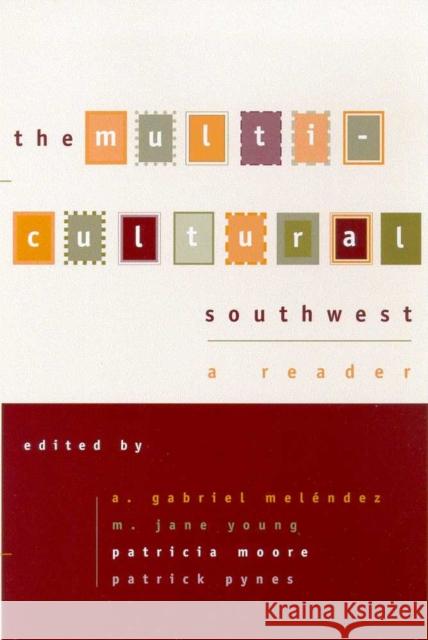
As Americans debate what it means to be a multicultural society, one need only turn for lessons to the Southwest, where distinct peoples have coexisted over centuries. Here difference has not only survived but thrived in a melting pot of races and customs.
This book presents a montage of differing perspectives demonstrating that there is no single, definitive description of the Southwest. It brings together a host of writers, from early travelers and historians to contemporary commentators, who explore a region diverse in its people and ecology and show it to be not just a...
As Americans debate what it means to be a multicultural society, one need only turn for lessons to the Southwest, where distinct peoples ha...
For more than a century, Mexican American journalists used their presses to voice socio-historical concerns and to represent themselves as a determinant group of communities in Nuevo Mexico, a particularly resilient corner of the Chicano homeland. This book draws on exhaustive archival research to review the history of newspapers in these communities from the arrival of the first press in the region to publication of the last edition of Santa Fe s El Nuevo Mexicano. Gabriel Melendez details the education and formation of a generation of Spanish-language journalists who were...
For more than a century, Mexican American journalists used their presses to voice socio-historical concerns and to represent themselves as a d...
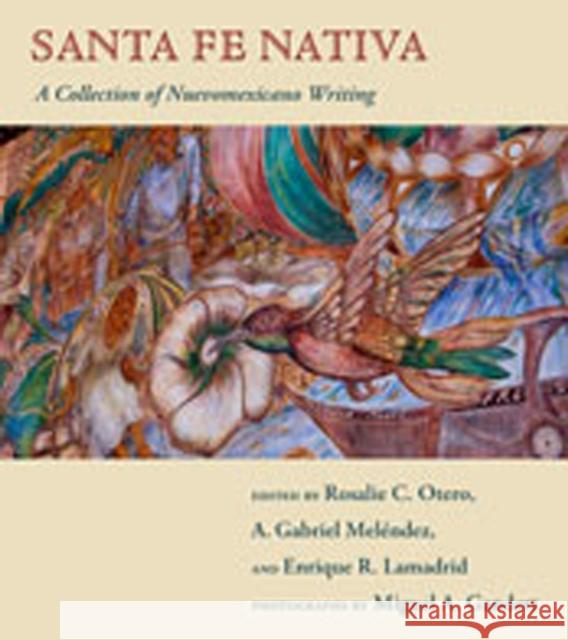
The belief that land is sacred, embodying the memory and inheritance of those who sacrificed to settle it, is common among New Mexican Hispanos, or Nuevomexicanos, and Santa Fe serves as their unique geographic and symbolic center. The city will celebrate the four hundredth anniversary of its founding in 2010 and this anthology honors its role as the foundation of New Mexican Hispanic culture.
Divided into nine parts, this collection reflects the displacement that many Hispanos feel having watched their hometown transform into a tourist and art Mecca. Parts I and II pay homage to...
The belief that land is sacred, embodying the memory and inheritance of those who sacrificed to settle it, is common among New Mexican Hispanos, or...
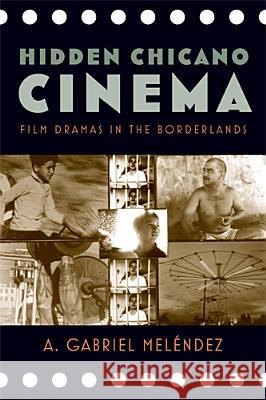
Hidden Chicano Cinema examines how New Mexico, situated within the boundaries of the United States, became a stand-in for the exotic non-western world that tourists, artists, scientists, and others sought to possess at the dawn of early filmmaking, a disposition stretching from the silent era to today as filmmakers screen their fantasies of what they wished the Southwest Borderlands to be. The book highlights "film moments" in this region's history including the "filmic turn" ushered in by Chicano/a filmmakers who created new ways to represent their community and region. A. Gabriel Melendez...
Hidden Chicano Cinema examines how New Mexico, situated within the boundaries of the United States, became a stand-in for the exotic non-western world...
Hidden Chicano Cinema examines how New Mexico, situated within the boundaries of the United States, became a stand-in for the exotic non-western world that tourists, artists, scientists, and others sought to possess at the dawn of early filmmaking, a disposition stretching from the silent era to today as filmmakers screen their fantasies of what they wished the Southwest Borderlands to be. The book highlights "film moments" in this region's history including the "filmic turn" ushered in by Chicano/a filmmakers who created new ways to represent their community and region. A. Gabriel Melendez...
Hidden Chicano Cinema examines how New Mexico, situated within the boundaries of the United States, became a stand-in for the exotic non-western world...