"An indispensable and riveting account" of the CIA's development and use of torture, from the cold war to Abu Ghraib and beyond (Naomi Klein, The Nation)
In this revelatory account of the CIA's fifty-year effort to develop new forms of torture, historian Alfred W. McCoy locates the deep roots of recent scandals at Abu Ghraib and Guantanamo in a long-standing, covert program of interrogation. A Question of Torture investigates the CIA's practice of "sensory deprivation" and "self-inflicted pain," in which techniques including isolation, hooding, hours of standing,...
"An indispensable and riveting account" of the CIA's development and use of torture, from the cold war to Abu Ghraib and beyond (Naomi Klein,
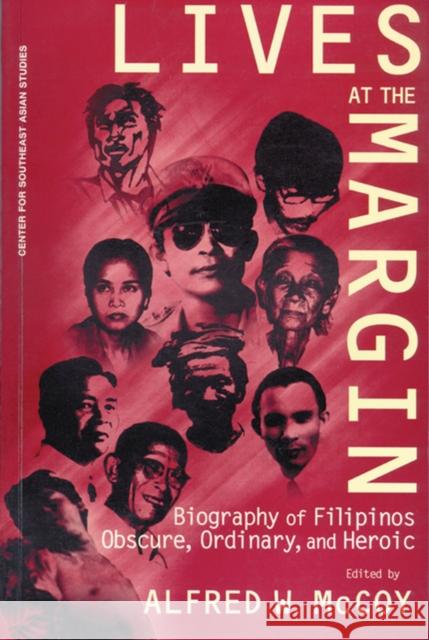
This book examines the lives of the men and women who emerged from the margins of Philippine society to mobilize a mass following. Distributed for the Center for Southeast Asian Studies, University of Wisconsin-Madison
This book examines the lives of the men and women who emerged from the margins of Philippine society to mobilize a mass following. Distributed for...
This book examines the lives of the men and women who emerged from the margins of Philippine society to mobilize a mass following. Distributed for the Center for Southeast Asian Studies, University of Wisconsin-Madison
This book examines the lives of the men and women who emerged from the margins of Philippine society to mobilize a mass following. Distributed for...
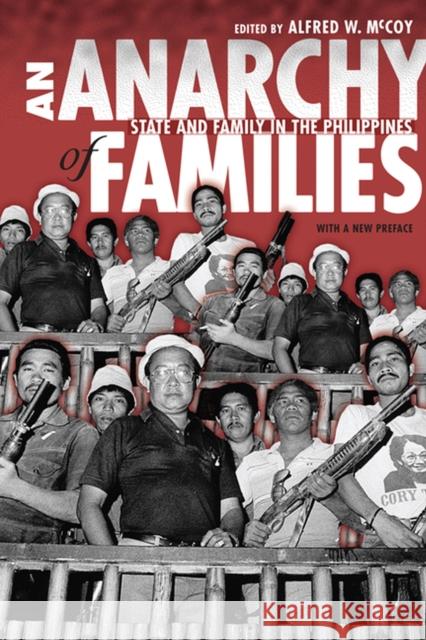
Winner of the Philippine National Book Award, this pioneering volume reveals how the power of the country s family-based oligarchy both derives from and contributes to a weak Philippine state. From provincial warlords to modern managers, prominent Filipino leaders have fused family, politics, and business to compromise public institutions and amass private wealth a historic pattern that persists to the present day. Edited by Alfred W. McCoy, An Anarchy of Families explores the pervasive influence of the modern dynasties that have led the Philippines during the past century....
Winner of the Philippine National Book Award, this pioneering volume reveals how the power of the country s family-based oligarchy both derives from a...
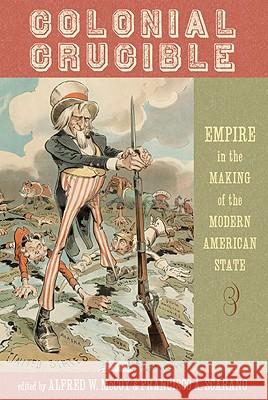
At the end of the nineteenth century the United States swiftly occupied a string of small islands dotting the Caribbean and Western Pacific, from Puerto Rico and Cuba to Hawaii and the Philippines. Colonial Crucible: Empire in the Making of the Modern American State reveals how this experiment in direct territorial rule subtly but profoundly shaped U.S. policy and practice--both abroad and, crucially, at home. Edited by Alfred W. McCoy and Francisco A. Scarano, the essays in this volume show how the challenge of ruling such far-flung territories strained the U.S. state to its limits,...
At the end of the nineteenth century the United States swiftly occupied a string of small islands dotting the Caribbean and Western Pacific, from Puer...
At the dawn of the twentieth century, the U.S. Army swiftly occupied Manila and then plunged into a decade-long pacification campaign with striking parallels to today s war in Iraq. Armed with cutting-edge technology from America s first information revolution, the U.S. colonial regime created the most modern police and intelligence units anywhere under the American flag. In Policing America s Empire Alfred W. McCoy shows how this imperial panopticon slowly crushed the Filipino revolutionary movement with a lethal mix of firepower, surveillance, and incriminating information. Even...
At the dawn of the twentieth century, the U.S. Army swiftly occupied Manila and then plunged into a decade-long pacification campaign with striking pa...
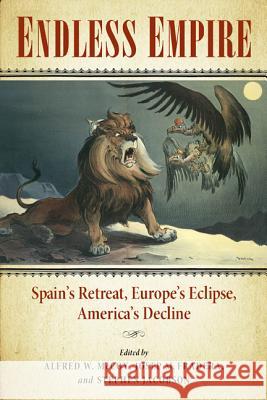
Throughout four millennia of recorded history there has been no end to empire, but instead an endless succession of empires. After five centuries of sustained expansion, the half-dozen European powers that ruled half of humanity collapsed with stunning speed after World War II, creating a hundred emerging nations in Asia and Africa. Amid this imperial transition, the United States became the new global hegemon, dominating this world order with an array of power that closely resembled that of its European predecessors.Brazil, Russia, India, China, and the European Union now rise in global...
Throughout four millennia of recorded history there has been no end to empire, but instead an endless succession of empires. After five centuries of s...
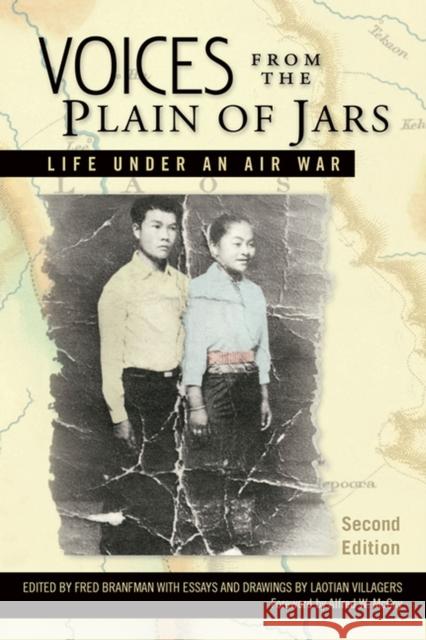
During the Vietnam War the United States government waged a massive, secret air war in neighboring Laos. Two million tons of bombs were dropped on one million people. Fred Branfman, an educational advisor living in Laos at the time, interviewed over 1,000 Laotian survivors. Shocked by what he heard and saw, he urged them to record their experiences in essays, poems, and pictures. "Voices from the Plain of Jars" was the result of that effort. When first published in 1972, this book was instrumental in exposing the bombing. In this expanded edition, Branfman follows the story forward in time,...
During the Vietnam War the United States government waged a massive, secret air war in neighboring Laos. Two million tons of bombs were dropped on one...