A Special Edition with a New Introduction and an Updated Discography
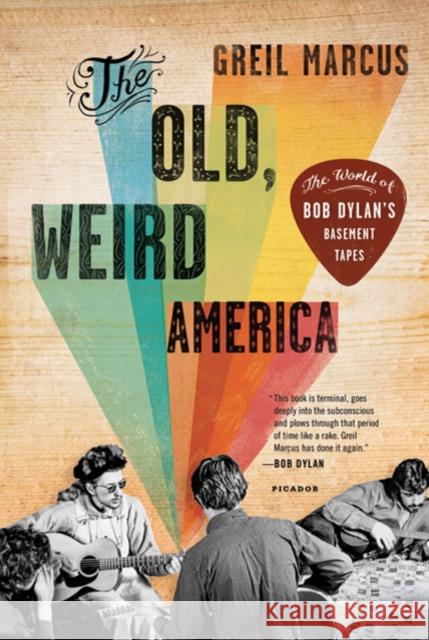
This is Greil Marcus's acclaimed book on the secret music made by Bob Dylan and the Band in 1967, which introduced a phrase that has become part of the culture: "the old, weird America." It is this country that the book maps--the "playground of God, Satan, tricksters, Puritans, confidence men, illuminati, braggarts, preachers, anonymous poets of all stripes" (Luc Sante, New York magazine). In honor of Dylan's seventieth birthday, this special edition includes a new introduction, an updated discography, and a...
A Special Edition with a New Introduction and an Updated Discography
This is Greil Marcus's acclaimed book on the secret music made by Bob Dy...
Nobel Prize winner Bob Dylan's life in music is revisted by his foremost interpreter--weaving individual moods and moments into a brilliant history of their changing times The book begins in Berkeley in 1968, and ends with a piece on Dylan's show at the University of Minnesota--his very first appearance at his alma mater--on election night 2008. In between are moments of euphoric discovery: From Marcus's liner notes for the 1967 Basement Tapes (pop music's most famous bootlegged archives) to his exploration of Dylan's reimagining of the American experience in the 1997 Time Out of...
Nobel Prize winner Bob Dylan's life in music is revisted by his foremost interpreter--weaving individual moods and moments into a brilliant history of...
Greil Marcus once said to an interviewer, -There is an infinite amount of meaning about anything, and I free associate.- For more than four decades, Marcus has explored the connections among figures, sounds, and events in culture, relating unrelated points of departure, mapping alternate histories and surprising correspondences. He is a unique and influential voice in American letters.
Marcus was born in 1945 in San Francisco. In 1968 he published his first piece, a review of Magic Bus: The Who on Tour, in Rolling Stone, where he became the magazine's first records editor....
Greil Marcus once said to an interviewer, -There is an infinite amount of meaning about anything, and I free associate.- For more than four decades...
From the author of The History of Rock 'n' Roll in Ten Songs comes his "Basement Tapes" the complete "Real Life Rock Top 10" columns
For nearly thirty years, Greil Marcus has written a remarkable column called "Real Life Rock Top Ten." It has been a laboratory where he has fearlessly explored and wittily dissected an enormous variety of cultural artifacts, from songs to books to movies to advertisements. Taken together, his musings, reflections, and sallies amount to a subtle and implicit theory of how cultural objects fall through time and circumstance and often...
From the author of The History of Rock 'n' Roll in Ten Songs comes his "Basement Tapes" the complete "Real Life Rock Top 10" columns
For over two centuries, America has celebrated the same African-American culture it attempts to control and repress, and nowhere is this phenomenon more apparent than in the strange practice of blackface performance. Born of extreme racial and class conflicts, the blackface minstrel show appropriated black dialect, music, and dance; at once applauded and lampooned black culture; and, ironically, contributed to a "blackening of America." Drawing on recent research in cultural studies and social history, Eric Lott examines the role of the blackface minstrel show in the political struggles...
For over two centuries, America has celebrated the same African-American culture it attempts to control and repress, and nowhere is this phenomenon mo...
Greil Marcus has been one of the most distinctive voices in American music criticism for over forty years. His books, including Mystery Train and The Shape of Things to Come, traverse soundscapes of folk and blues, rock and punk, attuning readers to the surprising, often hidden affinities between the music and broader streams of American politics and culture.
Drawn from Marcus's 2013 Massey Lectures at Harvard, his new work delves into three episodes in the history of American commonplace song: Bascom Lamar Lunsford's 1928 "I Wish I Was a Mole in the Ground," Geeshie...
Greil Marcus has been one of the most distinctive voices in American music criticism for over forty years. His books, including Mystery Train