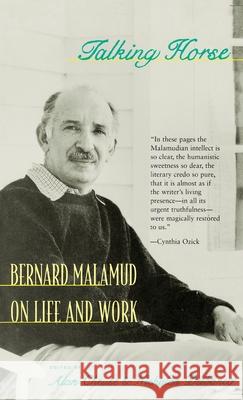
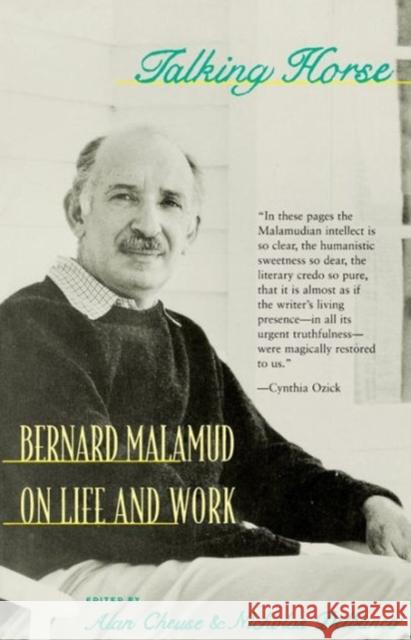
Designed to provide writers with insights into the way a master thinks about and practices his craft, this collection includes discussions of the novel, the short story, subject matter, work in progress, revision, and the Jewish experience. Malamud also discusses the responsibilities of the writer.
Designed to provide writers with insights into the way a master thinks about and practices his craft, this collection includes discussions of the nove...
"An impressive gathering of the late Malamud's essays, interviews, lectures and notes. . . . In addition to admirers of Malamud's fiction, this book should also be of considerable interest to aspiring writers, as Malamud is open and revealing about his own creative process, and consistently engaging in his often politicized and outspoken views on the artist's role in society".--PUBLISHERS WEEKLY.
"An impressive gathering of the late Malamud's essays, interviews, lectures and notes. . . . In addition to admirers of Malamud's fiction, this book s...
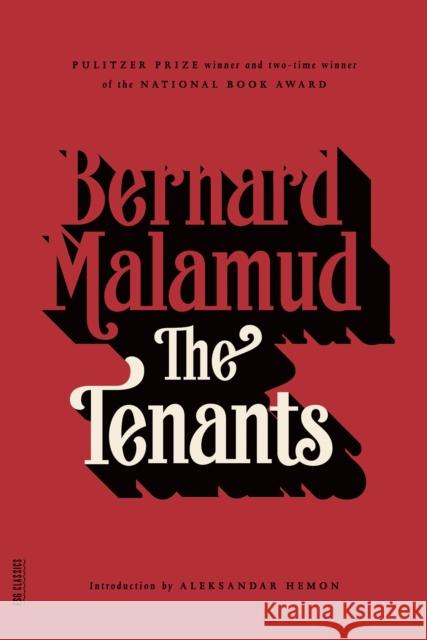
In The Tenants (1971), Bernard Malamud brought his unerring sense of modern urban life to bear on the conflict between blacks and Jews then inflaming his native Brooklyn. The sole tenant in a rundown tenement, Henry Lesser is struggling to finish a novel, but his solitary pursuit of the sublime grows complicated when Willie Spearmint, a black writer ambivalent toward Jews, moves into the building. Henry and Willie are artistic rivals and unwilling neighbors, and their uneasy peace is disturbed by the presence of Willie's white...
With a new introduction by Aleksandar Hemon
In The Tenants (1971), Bernard Malamud brought his unerring sense of modern urban life to ...
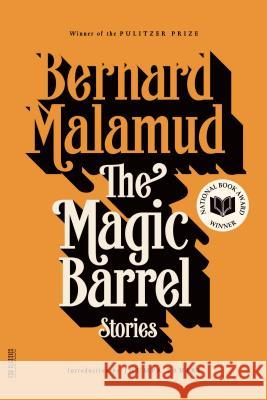
Bernard Malamud's first book of short stories, The Magic Barrel, has been recognized as a classic from the time it was published in 1959. The stories are set in New York and in Italy (where Malamud's alter ego, the struggleing New York Jewish Painter Arthur Fidelman, roams amid the ruins of old Europe in search of his artistic patrimony); they tell of egg candlers and shoemakers, matchmakers, and rabbis, in a voice that blends vigorous urban realism, Yiddish idiom, and a dash of artistic...
Winner of the National Book Award for Fiction
Introduction by Jhumpa Lahiri
Bernard Malamud's first book of short stories, T...
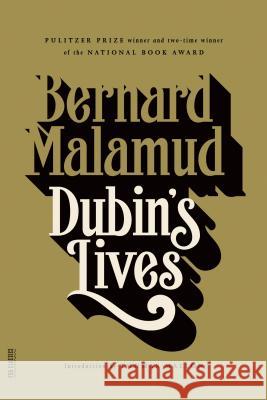
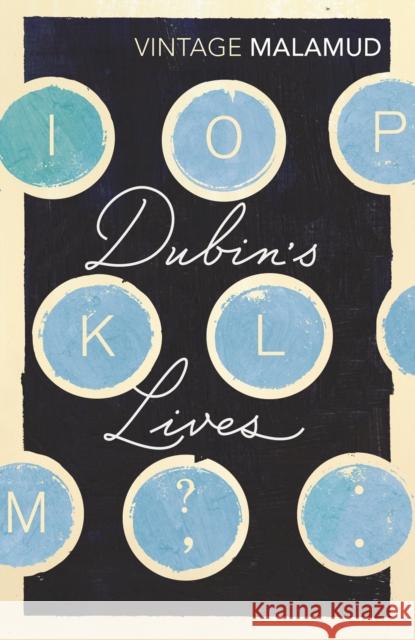
Dubin's Lives (1979) is a compassionate and wry commedia, a book praised by Christopher Lehmann-Haupt in The New York Times as Malamud's "best novel since The Assistant. Possibly, it is the best he has written of all."
Its protagonist is one of Malamud's finest characters; prize-winning biographer William Dubin, who learns from lives, or thinks he does: those he writes, those he shares, the life he lives. Now in his later middle age, he seeks his own secret self, and the obsession of biography is supplanted by the...
With a new introduction by Thomas Mallon
Dubin's Lives (1979) is a compassionate and wry commedia, a book praised by Christopher Lehma...
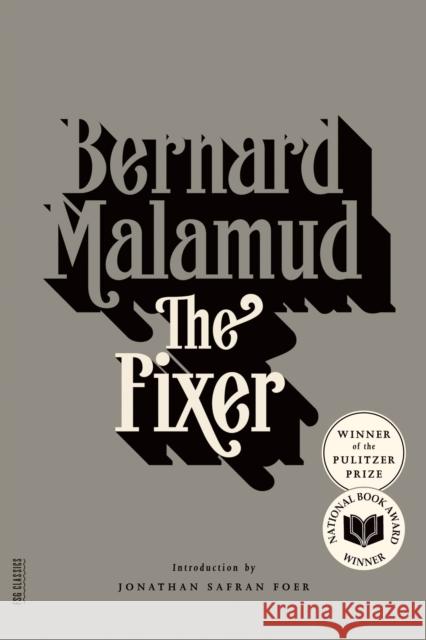
The Fixer is the winner of the 1967 National Book Award for Fiction and the 1967 Pulitzer Prize for Fiction.
The Fixer (1966) is Bernard Malamud's best-known and most acclaimed novel -- one that makes manifest his roots in Russian fiction, especially that of Isaac Babel.
Set in Kiev in 1911 during a period of heightened anti-Semitism, the novel tells the story of Yakov Bok, a Jewish handyman blamed for the brutal murder of a young Russian boy. Bok leaves his village to try his luck in Kiev, and after denying his Jewish identity, finds himself...
The Fixer is the winner of the 1967 National Book Award for Fiction and the 1967 Pulitzer Prize for Fiction.
"An overlooked masterpiece. It may still be undervalued as Malamud's funniest and most embracing novel." --Jonathan Lethem
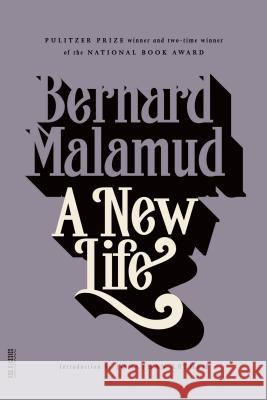
In A New Life, Bernard Malamud--generally thought of as a distinctly New York writer--took on the American myth of the West as a place of personal reinvention.
When Sy Levin, a high school teacher beset by alcohol and bad decisions, leaves the city for the Pacific Northwest to start over, it's no surprise that he conjures a vision of the extraordinary new life awaiting him there: "He imagined the pioneers in covered wagons entering this valley for...
"An overlooked masterpiece. It may still be undervalued as Malamud's funniest and most embracing novel." --Jonathan Lethem
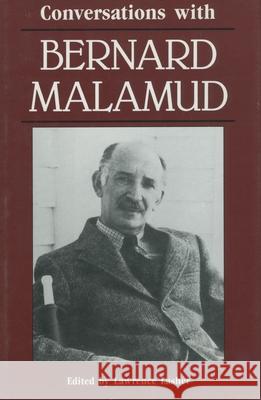
Bernard Malamud gave his first interview in 1958, his last in 1986. During the intervening twenty-eight years he was formally interviewed at least forty times. This book collects twenty-eight of the best interviews, ranging from brief conversations with journalists to more extended and leisurely conversations with academics and writers.
Winner of two National Book Awards and a Pulitzer Prize, this universally praised author of The Magic Barrel, The Fixer, The Natural, and many stories that are acclaimed among the masterpieces of American fiction appears in these...
Bernard Malamud gave his first interview in 1958, his last in 1986. During the intervening twenty-eight years he was formally interviewed at least for...
William Dublin is middle-aged, a distinguished biographer seeking increased accomplishment and the key to his inner feelings. His marriage is stable if unexciting, and he lives comfortably with his wife in Vermont. Then his imagination is caught by Fanny, a young girl of twenty-three.
William Dublin is middle-aged, a distinguished biographer seeking increased accomplishment and the key to his inner feelings. His marriage is stable i...
Arthur Fidelman, Bronx-born and raised, is a self-confessed failure as a painter. When he goes to Italy to prepare a critical study of Giotto, a picaresque tale of comedy and adventure ensues.
Arthur Fidelman, Bronx-born and raised, is a self-confessed failure as a painter. When he goes to Italy to prepare a critical study of Giotto, a picar...