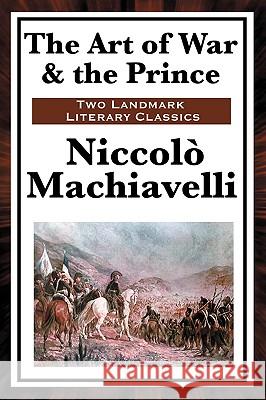
Collected here in one omnibus edition are Niccolo Machiavelli's most import works, The Art of War and The Prince. It was Niccolo Machiavelli who essentially removed ethics from government. He did it with The Prince, when he asserted that The Prince (president, dictator, prime minister, etc.) does not have to be concerned with ethics, as long as their motivation is to protect the state. It is this questionable belief that in many ways had lead to the modern world as we know it. His assertion was that the head of state must protect the state no matter the cost and no matter what rules he or she...
Collected here in one omnibus edition are Niccolo Machiavelli's most import works, The Art of War and The Prince. It was Niccolo Machiavelli who essen...
Because the average prince is likely to be focused upon his own interests, a prince's private interests are generally in opposition to those of his subjects. Fortunate is the kingdom ruled by a virtuous prince (virtue here defined as being able to pursue his own interests without conflict). In Machiavelli's view, virtue is that which increases power; vice is that which decreases it. Far shorter than most classic works, and more accessible to current readers because of their familiarity with politics, this work yields benefits and insights to all who read, digest, and critically examine the...
Because the average prince is likely to be focused upon his own interests, a prince's private interests are generally in opposition to those of his su...
El Principe, de Nicholas Maquiavelo, es una obra clasica en materia poli-tica y de gran trascendencia dentro de la cultura occidental. Maquiavelo es, ademas de un gran teorico del pensamiento politico, y uno de los grandes prosistas en lengua italiana del s. XVI.
Atacado por muchos y defendido tambien con firmeza, Maquiavelo nos demuestra su talento de escritor y la forma de conseguir y mantener el poder.
El Principe, de Nicholas Maquiavelo, es una obra clasica en materia poli-tica y de gran trascendencia dentro de la cultura occidental. Maquiavelo es, ...
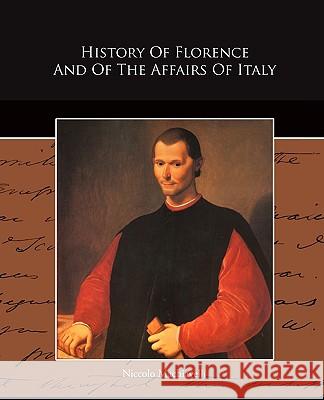
This fascinating book contains an extensive history of Italy, from about mid 5th century to mid 15th century, with the death of Lorenzo the Magnificent. This book is predominantly a political history of the country, and is highly recommended for inclusion on the bookshelf of anyone with an interest in the subject.
This fascinating book contains an extensive history of Italy, from about mid 5th century to mid 15th century, with the death of Lorenzo the Magnificen...
Voltaire said, "Machiavelli taught Europe the art of war; it had long been practiced, without being known." For Machiavelli, victory was the supreme aim to which all other considerations must be subordinated. The Art of War is far from an anachronism--its pages outline fundamental questions that theorists of war continue to examine today, making it essential reading for any student of military history or strategy. Newly designed and typeset in a modern 6-by-9-inch format by Waking Lion Press.
Voltaire said, "Machiavelli taught Europe the art of war; it had long been practiced, without being known." For Machiavelli, victory was the supreme a...
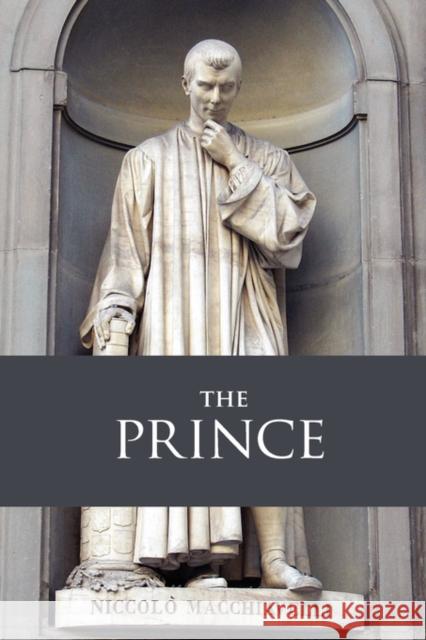
A new translation of the infamous Renaissance classic, in a striking deluxe edition The original blueprint for realpolitik, The Prince shocked sixteenth-century Europe with its advocacy of ruthless tactics for gaining absolute power and its abandonment of conventional morality. For this treatise on statecraft, Machiavelli drew upon his own experience of office under the turbulent Florentine republic, rejecting traditional values of political theory and recognizing the complicated, transient nature of political life. Concerned not with lofty ideals, but with a regime that...
A new translation of the infamous Renaissance classic, in a striking deluxe edition The original blueprint for realpolitik, The Prince<...
Niccolo di Bernardo dei Machiavelli (May 3, 1469 - June 21, 1527) was an Italian diplomat, political philosopher, musician, poet and playwright. He is most known for writing The Prince, Discourses on Livy, and the History of Florence - all commissioned by the Medici family. Machiavelli was born in Florence and in 1498, following the ouster and execution of Savonarola the Great Council elected Machiavelli as the Secretary to the second Chancery of the Republic of Florence. History of Florence and of the Affairs of Italy is an excellent reference work for historians.
Niccolo di Bernardo dei Machiavelli (May 3, 1469 - June 21, 1527) was an Italian diplomat, political philosopher, musician, poet and playwright. He is...
Niccolo Machiavelli Colin J. E. Lupton W. K. Marriott
A new edition of the highly exalted and infamous discourse containing observations and instructions on the significance of a rise to power. For nearly half a millennium, its logical and direct analysis of diplomacy, war-craft, and human nature has commanded a wise ruler in all who read it. No collection of political philosophy and history is complete without it.
A new edition of the highly exalted and infamous discourse containing observations and instructions on the significance of a rise to power. For nearl...
Niccolo di Bernardo dei Machiavelli (May 3, 1469 - June 21, 1527) was an Italian diplomat, political philosopher, musician, poet and playwright. He is most known for writing The Prince, Discourses on Livy, and the History of Florence - all commissioned by the Medici family. Machiavelli was born in Florence and in 1498, following the ouster and execution of Savonarola the Great Council elected Machiavelli as the Secretary to the second Chancery of the Republic of Florence. History of Florence and of the Affairs of Italy is an excellent reference work for historians.
Niccolo di Bernardo dei Machiavelli (May 3, 1469 - June 21, 1527) was an Italian diplomat, political philosopher, musician, poet and playwright. He is...
Niccolo Machiavelli Shawn Conners William K. Marriot
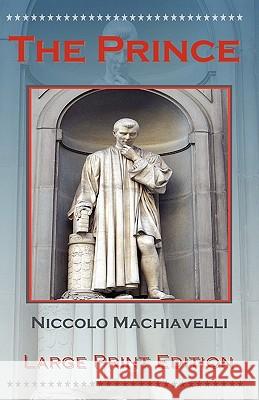
With "The Prince," Machiavelli made his name synonymous with intrigue and cunning for all time. His instructions to the Prince, on achieving and maintaining power, by any and all means available, became the archetypical philosophy of The Ends Justify The Means.
Machiavelli advocated that political expediency supersedes morality and that success, by any means, is its own justification. His cold, calculating logic sweeps aside and dismisses all arguments against the use of every manner of deceit and dishonesty for a ruler to achieve his ends on the basis that those ends, once...
With "The Prince," Machiavelli made his name synonymous with intrigue and cunning for all time. His instructions to the Prince, on achieving and maint...