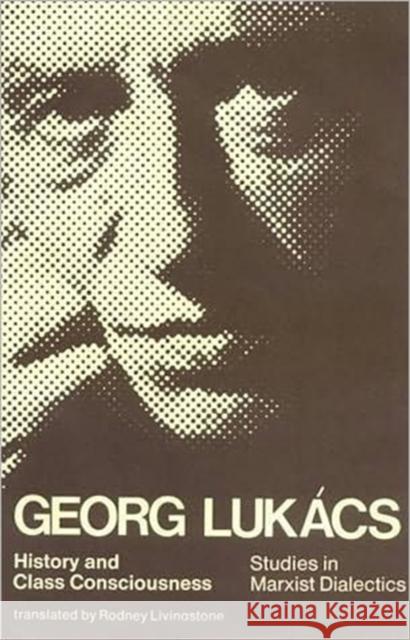
This is the first time one of the most important of Lukacs' early theoretical writings, published in Germany in 1923, has been made available in English. The book consists of a series of essays treating, among other topics, the definition of orthodox Marxism, the question of legality and illegality, Rosa Luxemburg as a Marxist, the changing function of Historic Marxism, class consciousness, and the substantiation and consciousness of the Proletariat. Writing in 1968, on the occasion of the appearance of his collected works, Lukacs evaluated the influence of this book as follows:...
This is the first time one of the most important of Lukacs' early theoretical writings, published in Germany in 1923, has been made available in En...
In the fall of 1960, during a three-month visit to Hungary, Arthur Kahn unsuccessfully asked his hosts to arrange a meeting with Gyorgy Lukacs, a persona non grata to the Communist regime. Kahn arranged to meet Lukacs on his own and proposed translating some Lukacs essays never before appearing in English. During the three years Kahn worked on the translations, he and Lukacs engaged in a voluminous correspondence, investigating Marxism as it applied to contemporary events like the Vietnam war. Extracts from this correspondence will be included in a forthcoming volume of Kahns' autobiography,...
In the fall of 1960, during a three-month visit to Hungary, Arthur Kahn unsuccessfully asked his hosts to arrange a meeting with Gyorgy Lukacs, a pers...
Georg Lukacs (1885 1971) is now recognized as one of the most innovative and best-informed literary critics of the twentieth century. Trained in the German philosophic tradition of Kant, Hegel, and Marx, he escaped Nazi persecution by fleeing to the Soviet Union in 1933. There he faced a new set of problems: Stalinist dogmatism about literature and literary criticism. Maneuvering between the obstacles of censorship, he wrote and published his longest work of literary criticism, The Historical Novel, in 1937.
Beginning with the novels of Sir Walter Scott, The Historical Novel...
Georg Lukacs (1885 1971) is now recognized as one of the most innovative and best-informed literary critics of the twentieth century. Trained in the G...
One of the greatest Marxist theorists of his generation, Georg Lukacs was a prolific writer of remarkably catholic, if moralistic, tastes. In The Lukacs Reader, his biographer Arpad Kadarkay represents the great range and variety of Lukacs's output. The reader includes, in original translations, and with introductory essays, Lukacs on: Kierkegaard, Shakespeare, Ford, Strindberg, Ibsen, Wilde, Shaw, Gaughin, Dostoevsky, Nietzsche, and Heidegger. Also collected are: the autobiographical essay 'On the Poverty of Spirit', material from Lukacs's diary, and such key articles as: 'Aesthetic...
One of the greatest Marxist theorists of his generation, Georg Lukacs was a prolific writer of remarkably catholic, if moralistic, tastes. In The Luka...
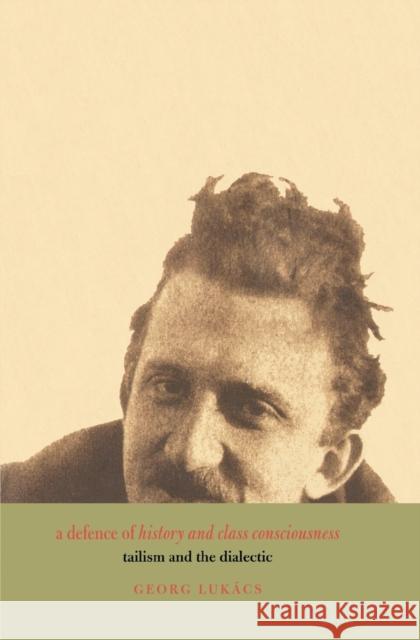
In the mid 1920s Lukacs wrote a sustained and passionate response to Stalin's onslaught on his earlier seminal work History and Class Consciousness. Unpublished at the time, Lukacs himself thought that the text had been destroyed. However, a group of researchers recently found the manuscript gathering dust in the newly opened archives of the CPSU in Moscow. Now for the first time, this fascinating, polemical and intense text is available in English. It is a crucial part of a hidden intellectual history and will transform interpretations of Lukacs's oeuvre.
In the mid 1920s Lukacs wrote a sustained and passionate response to Stalin's onslaught on his earlier seminal work History and Class Consciousness...
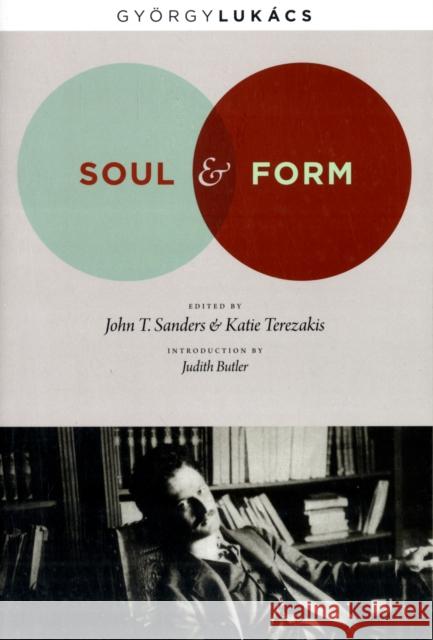
Gyorgy Lukacs was a Hungarian Marxist philosopher, writer, and literary critic who shaped mainstream European Communist thought. Soul and Form was his first book, published in 1910, and it established his reputation, treating questions of linguistic expressivity and literary style in the works of Plato, Kierkegaard, Novalis, Sterne, and others. By isolating the formal techniques these thinkers developed, Lukacs laid the groundwork for his later work in Marxist aesthetics, a field that introduced the historical and political implications of text. For this centennial edition, John T....
Gyorgy Lukacs was a Hungarian Marxist philosopher, writer, and literary critic who shaped mainstream European Communist thought. Soul and Form ...
Gyorgy Lukacs was a Hungarian Marxist philosopher, writer, and literary critic who shaped mainstream European Communist thought. Soul and Form was his first book, published in 1910, and it established his reputation, treating questions of linguistic expressivity and literary style in the works of Plato, Kierkegaard, Novalis, Sterne, and others. By isolating the formal techniques these thinkers developed, Lukacs laid the groundwork for his later work in Marxist aesthetics, a field that introduced the historical and political implications of text. For this centennial edition, John T....
Gyorgy Lukacs was a Hungarian Marxist philosopher, writer, and literary critic who shaped mainstream European Communist thought. Soul and Form ...