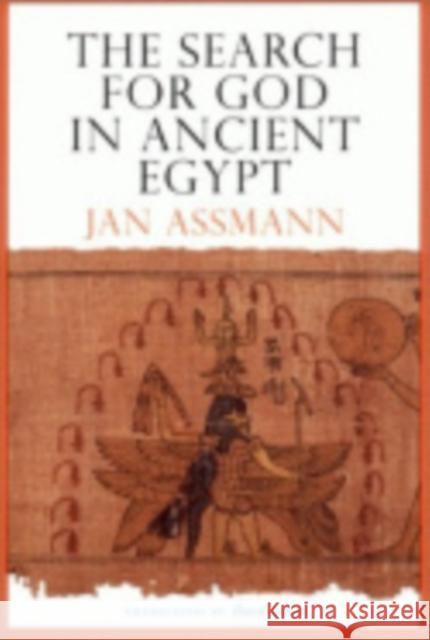
This classic work by one of the world's most distinguished Egyptologists was first published in German in 1984. The Search for God in Ancient Egypt offers a distillation of Jan Assmann's views on ancient Egyptian religion, with special emphasis on theology and piety. Deeply rooted in the texts of ancient Egypt and thoroughly informed by comparative religion, theology, anthropology, and semiotic analysis, Assmann's interpretations reveal the complexity of Egyptian thought in a new way.
Assmann takes special care to distinguish between the "implicit" theology of Egyptian polytheism and the...
This classic work by one of the world's most distinguished Egyptologists was first published in German in 1984. The Search for God in Ancient Egypt of...
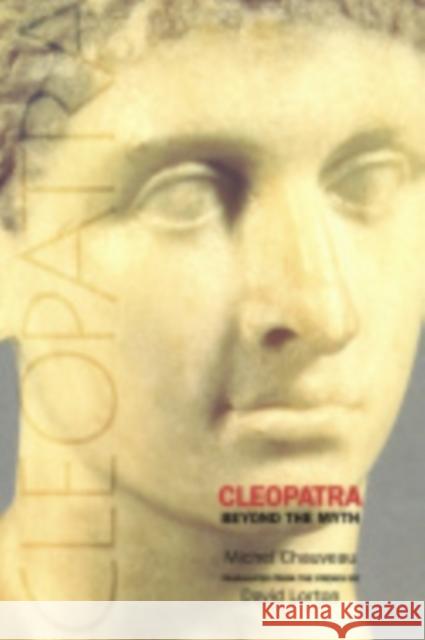
Cleopatra VII reigned in Egypt between 51 and 30 BCE. Her primary goal as a ruler was to restore over the eastern Mediterranean the supremacy of the Lagides, the dynasty of Macedonian origin of which she herself was a descendant. We know the queen best from Greek and Latin sources, though these must be used with caution because of their bias. Understandably enough, they reflect not only matters of interest to Romans, but also the propaganda that Octavian used against the queen during his struggles with Mark Antony. Chauveau combines his knowledge of Egyptian sources with judicious use of...
Cleopatra VII reigned in Egypt between 51 and 30 BCE. Her primary goal as a ruler was to restore over the eastern Mediterranean the supremacy of the L...
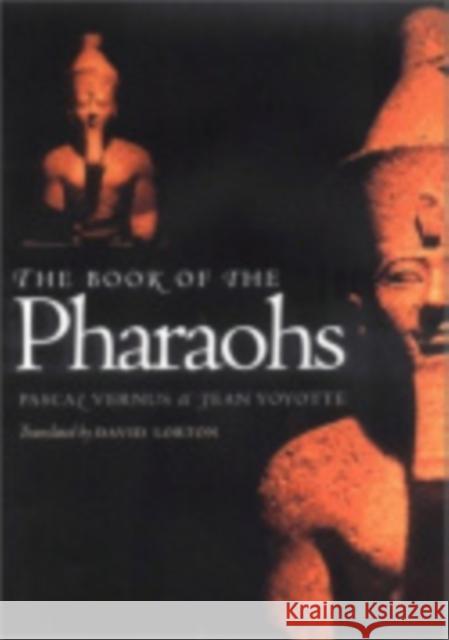
The names of ancient Egyptian kings such as Cheops, Akhenaten, and Ramesses II have become part of popular culture. Yet, for all the tombs and statuary that have survived over the millennia, surprisingly little remains that speaks to the workings of government, cabals in the palace, political factions, and the private lives of the royal families. In The Book of the Pharaohs, Pascal Vernus and Jean Yoyotte offer an indispensable, basic reference to the full human reality of royal Egypt.
The Book of the Pharaohs is an encyclopedia made up of short essays on the...
The names of ancient Egyptian kings such as Cheops, Akhenaten, and Ramesses II have become part of popular culture. Yet, for all the tombs and stat...
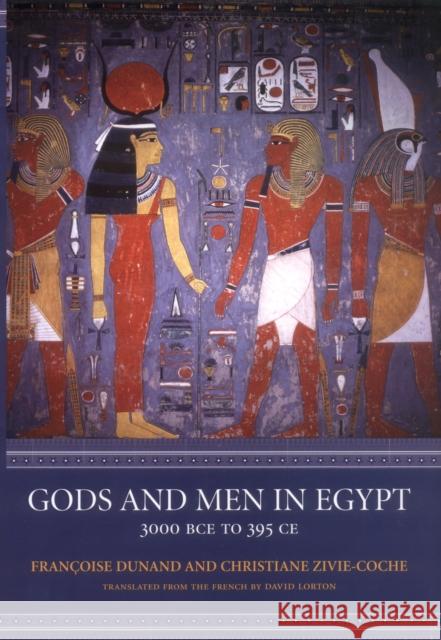
In their wide-ranging interpretation of the religion of ancient Egypt, Francoise Dunand and Christiane Zivie-Coche explore how, over a period of roughly 3500 years, the Egyptians conceptualized their relations with the gods. Drawing on the insights of anthropology, the authors discuss such topics as the identities, images, and functions of the gods; rituals and liturgies; personal forms of piety expressing humanity's need to establish a direct relation with the divine; and the afterlife, a central feature of Egyptian religion. That religion, the authors assert, was characterized by the...
In their wide-ranging interpretation of the religion of ancient Egypt, Francoise Dunand and Christiane Zivie-Coche explore how, over a period of rough...
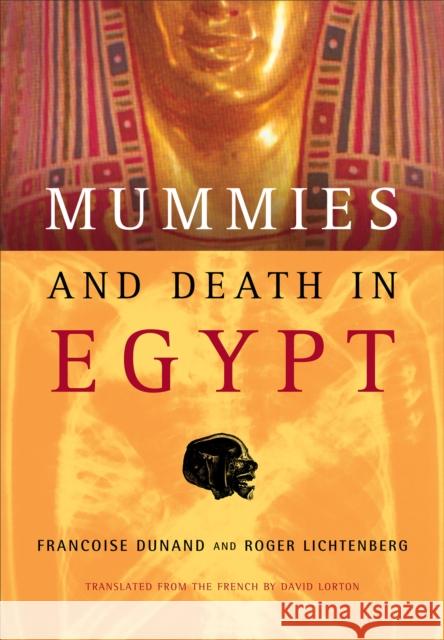
"Today, a good century after the first X-rays of mummies, Egyptology has the benefit of all the methods and means at the disposal of forensic medicine. The 'mummy stories' we tell have changed their tone, but they have enjoyed much success, with fantastic scientific and technological results resolving the mysteries of the ancient land of the pharaohs." from the ForewordMummies are the things that fascinate us most about ancient Egypt. But what are mummies? How did the Egyptians create them? And why? What became of the people they once were? We are learning more all the time about the cultural...
"Today, a good century after the first X-rays of mummies, Egyptology has the benefit of all the methods and means at the disposal of forensic medicine...
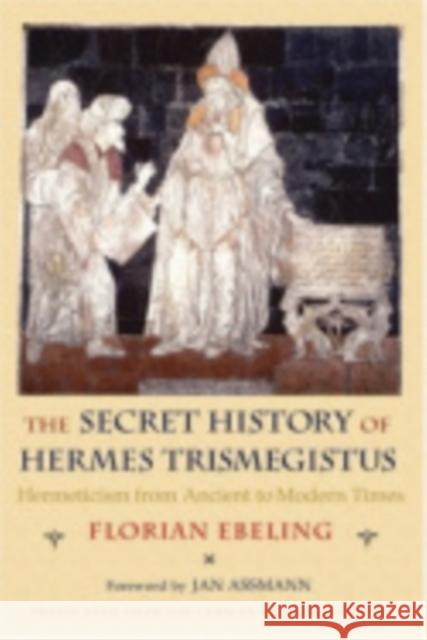
"Perhaps Hermeticism has fascinated so many people precisely because it has made it possible to produce many analogies and relationships to various traditions: to Platonism in its many varieties, to Stoicism, to Gnostic ideas, and even to certain Aristotelian doctrines. The Gnostic, the esoteric, the Platonist, or the deist has each been able to find something familiar in the writings. One just had to have a penchant for remote antiquity, for the idea of a Golden Age, in order for Hermeticism, with its aura of an ancient Egyptian revelation, to have enjoyed such outstanding success." from...
"Perhaps Hermeticism has fascinated so many people precisely because it has made it possible to produce many analogies and relationships to various...
The Golden Age of Ancient Egypt comes alive as Guillemette Andreu re-creates the details of daily life. Construction sites teem with workers building the Great Pyramids and the Sphinx. Administrators bustle to and fro, handling their assignments from the pharaoh's court. Scribes train themselves to draft a variety of letters.
The Golden Age of Ancient Egypt comes alive as Guillemette Andreu re-creates the details of daily life. Construction sites teem with workers building ...
The gods were everywhere in Ancient Egypt. Represented by statues, bas-reliefs, and funerary paintings, they even walked among the Egyptians in the person of Pharaoh, considered to be a living god, son of the divine Ra. What better way to understand that distant culture than by becoming familiar with the people who served those gods? Using as his sources the Egyptian texts and the testimony of classical authors, Serge Sauneron illuminates the role of the priesthood in Ancient Egypt.
He recreates the system of thought of one of the great civilizations of antiquity, addressing such...
The gods were everywhere in Ancient Egypt. Represented by statues, bas-reliefs, and funerary paintings, they even walked among the Egyptians in the...
Akhenaten, also known as Amenhotep IV, was king of Egypt during the Eighteenth Dynasty and reigned from 1375 to 1358 B.C. E. Called the "religious revolutionary," he is the earliest known creator of a new religion. The cult he founded broke with Egypt's traditional polytheism and focused its worship on a single deity, the sun god Aten. Erik Hornung, one of the world's preeminent Egyptologists, here offers a concise and accessible account of Akhenaten and his religion of light.Hornung begins with a discussion of the nineteenth-century scholars who laid the foundation for our knowledge of...
Akhenaten, also known as Amenhotep IV, was king of Egypt during the Eighteenth Dynasty and reigned from 1375 to 1358 B.C. E. Called the "religious rev...