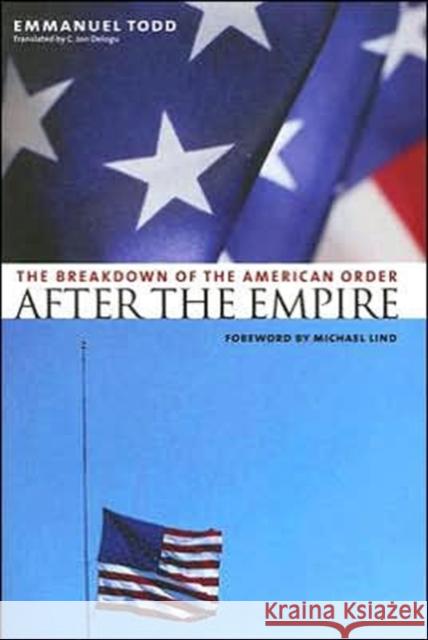
Widely reviewed and critically praised, Emmanuel Todd's After the Empire predicts that the United States is forfeiting its superpower status as it moves away from traditional democratic values of egalitarianism and universalism, lives far beyond its means economically, and continues to anger foreign allies and enemies alike with its military and ideological policies. As America's global dominance evaporates, Todd foresees the emergence of a Eurasian alliance bringing together Europe, Russia, Japan, and the Arab-Islamic world. Todd calmly and straightforwardly takes stock of many...
Widely reviewed and critically praised, Emmanuel Todd's After the Empire predicts that the United States is forfeiting its superpower status as...
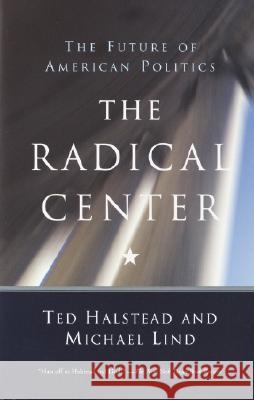
Record numbers of Americans describe themselves as independents and reject the conventional agendas of Left and Right. In this widely acclaimed book, Ted Halstead and Michael Lind explain why today s ideologies and institutions are so ill-suited to the Information Age, and offer a groundbreaking blueprint for updating all sectors of America society. Taking on partisans and experts on both sides of the political divide, they propose far-reaching reforms for the way we provide health and retirement security, collect taxes, organize elections, enforce civil rights, and educate our children....
Record numbers of Americans describe themselves as independents and reject the conventional agendas of Left and Right. In this widely acclaimed book, ...
What went wrong in Vietnam? Michael Lind casts new light on one of the most contentious episodes in American history in this controversial bestseller. In this groundgreaking reinterpretation of America's most disatrous and controversial war, Michael Lind demolishes enduring myths and put the Vietnam War in its proper context -- as part of the global conflict between the Soviet Union and the United States. Lind reveals the deep cultural divisions within the United States that made the Cold War consensus so fragile and explains how and why American public support for the war in...
What went wrong in Vietnam? Michael Lind casts new light on one of the most contentious episodes in American history in this controversial...
Countless books have been written about Abraham Lincoln, yet few historians and biographers have taken Lincoln seriously as a thinker or attempted to place him in the context of major intellectual traditions. In this refreshing, brilliantly argued portrait, Michael Lind examines the ideas and beliefs that guided Lincoln as a statesman and shaped the United States in its time of great crisis.In a century in which revolutions against monarchy and dictatorship in Europe and Latin America had failed, Lincoln believed that liberal democracy must be defended for the good of the world. During an age...
Countless books have been written about Abraham Lincoln, yet few historians and biographers have taken Lincoln seriously as a thinker or attempted to ...
Michael Lind has been described by Rolling Stone magazine as -that rarest of figures: an intellectual with name recognition.- Now the Whitehead Senior Fellow at the New America Foundation in Washington, DC, Lind has been an editor or staff writer for The New Yorker, Harper's Magazine, and The New Republic and writes frequently for The New York Times and Financial Times. He is the author of more than a dozen books of history, political journalism, and fiction, including a poetry chapbook, When You Are Someone Else (2002); Bluebonnet...
Michael Lind has been described by Rolling Stone magazine as -that rarest of figures: an intellectual with name recognition.- Now the Whiteh...
In The American Way of Strategy, Lind argues that the goal of U.S. foreign policy has always been the preservation of the American way of life--embodied in civilian government, checks and balances, a commercial economy, and individual freedom. Lind describes how successive American statesmen--from George Washington, Thomas Jefferson, and Alexander Hamilton to Franklin Roosevelt, Dwight Eisenhower, and Ronald Reagan--have pursued an American way of strategy that minimizes the dangers of empire and anarchy by two means: liberal internationalism and realism. At its best, the American way of...
In The American Way of Strategy, Lind argues that the goal of U.S. foreign policy has always been the preservation of the American way of life--embodi...
Abraham Lincoln was a skilled politician, an inspirational leader, and a man of humor and pathos. What many may not realize is how much he was also a man of ideas. Despite the most meager of formal educations, Lincoln's tremendous intellectual curiosity drove him into the circle of Enlightenment philosophy and democratic political ideology. And from these, Lincoln developed a set of political convictions that guided him throughout his life and his presidency. Abraham Lincoln as a Man of Ideas, a compilation of ten essays from Lincoln scholar, Allen C. Guelzo, uncovers the hidden...
Abraham Lincoln was a skilled politician, an inspirational leader, and a man of humor and pathos. What many may not realize is how much he was also a ...
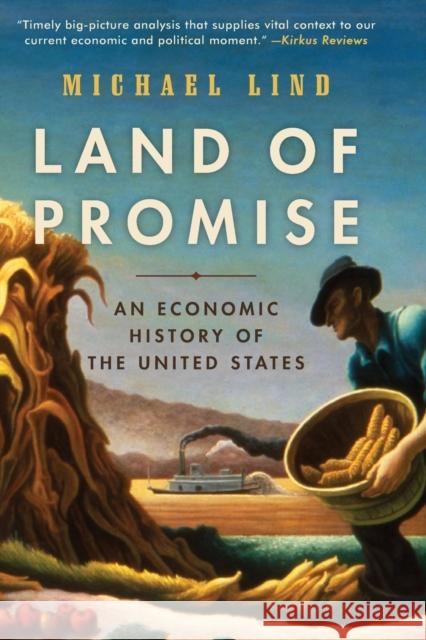
A sweeping and original work of economic history by Michael Lind, one of America's leading intellectuals, Land of Promise recounts the epic story of America's rise to become the world's dominant economy. As ideological free marketers continue to square off against Keynesians in Congress and the press, economic policy remains at the center of political debate.
Land of Promise An Economic History of the United States offers a much-needed historical framework that sheds new light on our past--wisdom that offers lessons essential to our future. Building upon...
A sweeping and original work of economic history by Michael Lind, one of America's leading intellectuals, Land of Promise recounts the epi...