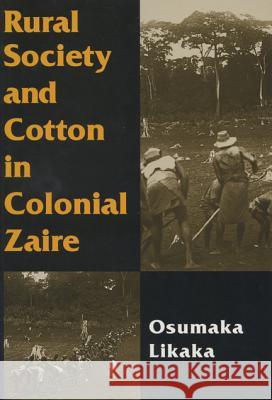
This masterful social and economic history of rural Zaire examines the complex and lasting effects of forced cotton cultivation in central Africa from 1917 to 1960. Osumaka Likaka recreates daily life inside the colonial cotton regime. He shows that, to ensure widespread cotton production and to overcome continued peasant resistance, the colonial state and the cotton companies found it necessary to augment their use of threats and force with efforts to win the cooperation of the peasant farmers, through structural reforms, economic incentives, and propaganda exploiting African popular...
This masterful social and economic history of rural Zaire examines the complex and lasting effects of forced cotton cultivation in central Africa from...
Focusing on the years 1917 to 1960, this work examines the complex and lasting effects of forced cotton cultivation in central Africa. Local plots gave way to commercial fields, creating social, environmental and economic change.
Focusing on the years 1917 to 1960, this work examines the complex and lasting effects of forced cotton cultivation in central Africa. Local plots gav...
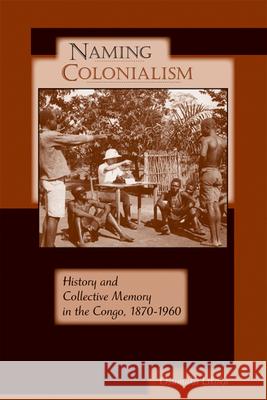
What's in a name? As Osumaka Likaka argues in this illuminating study, the names that Congolese villagers gave to European colonizers reveal much about how Africans experienced and reacted to colonialism. The arrival of explorers, missionaries, administrators, and company agents allowed Africans to observe Westerners' physical appearances, behavior, and cultural practices at close range--often resulting in subtle yet trenchant critiques. By naming Europeans, Africans turned a universal practice into a local mnemonic system, recording and preserving the village's understanding of colonialism...
What's in a name? As Osumaka Likaka argues in this illuminating study, the names that Congolese villagers gave to European colonizers reveal much abou...