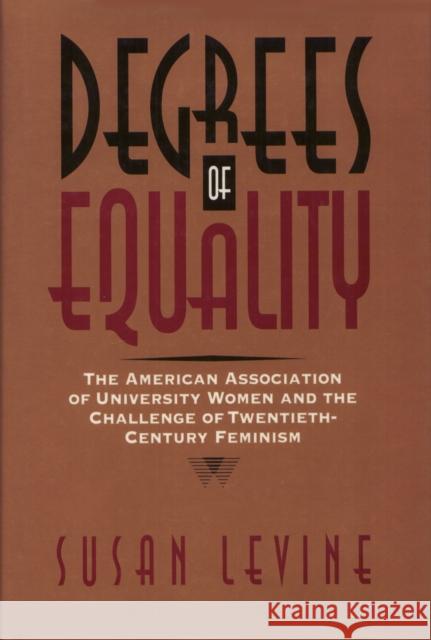
The American Association of University Women (AAUW) is one of the nation's oldest and most influential voices for equality in education, the professions, and public life. Tracing the history of the AAUW, this title provides a perspective on the meaning of feminism for women in mainstream liberal organizations.
The American Association of University Women (AAUW) is one of the nation's oldest and most influential voices for equality in education, the professio...
Whether kids love or hate the food served there, the American school lunchroom is the stage for one of the most popular yet flawed social welfare programs in our nation's history. School Lunch Politics covers this complex and fascinating part of American culture, from its origins in early twentieth-century nutrition science, through the establishment of the National School Lunch Program in 1946, to the transformation of school meals into a poverty program during the 1970s and 1980s. Susan Levine investigates the politics and culture of food; most specifically, who decides what...
Whether kids love or hate the food served there, the American school lunchroom is the stage for one of the most popular yet flawed social welfare p...
The stories in "Children of a Bitter Harvest" document moments in the lives of children who worked in the heart of South Africa's wine industry between 1996 and 2010, as framed by the uprisings on farms at the start of 2013. The book is made up of more than 100 interconnected flashes, or fragments of stories, taken from the lives of farm workers, farmers, child workers, human rights lawyers, and ordinary people affected by the agricultural industry in the Western Cape. The children in the book are no longer children; they are young adults in a new South Africa that offers them certain...
The stories in "Children of a Bitter Harvest" document moments in the lives of children who worked in the heart of South Africa's wine industry betwee...
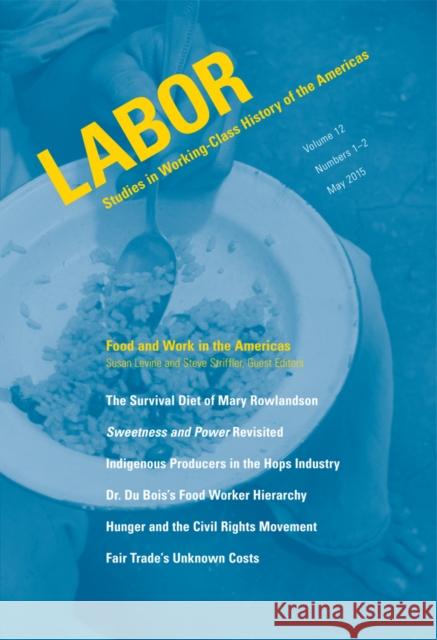
This special issue challenges historians to think about food and labor by considering how not only producing but acquiring, preparing, eating, and enjoying food are central to working-class life and capitalist transformation. Its essays bring labor history into closer conversation with the interdisciplinary perspectives of food studies to explore how broadly and deeply food experiences and working lives shape one another. Contributors trace this relationship through a series of case studies from across the Americas, including discussions of Native American life during the seventeenth and...
This special issue challenges historians to think about food and labor by considering how not only producing but acquiring, preparing, eating, and enj...