At the time of his death in 1925, William Jennings Bryan was, as Henry Steele Commager wrote, "the most representative American of his time." To understand Bryan is to understand the United States on the cusp of modernity as regionalism declined, national political and economic institutions expanded, and the urban way of life began to eclipse the rural. Bryan's time, as today, was one of profound transition and tumult in the United States. The late nineteenth century and early twentieth century saw significant changes in economic, social, and political life which were to result in the modern...
At the time of his death in 1925, William Jennings Bryan was, as Henry Steele Commager wrote, "the most representative American of his time." To under...
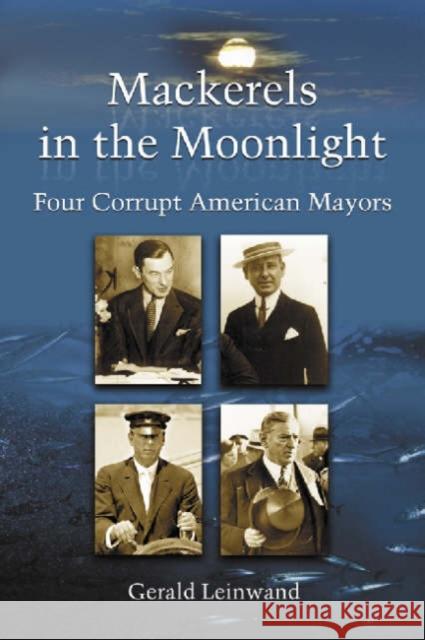
Political corruption is easy to define - the use of public office for private gain - but it isn't so readily seen because politicians cover their tracks so well. Four of America's most corrupt mayors and their shady dealings are covered in this work. Big Bill Thompson, who was mayor of Chicago three times, is considered America's worst mayor, having, among other questionable activities, accepted support from gangster Al Capone. Frank Hague of Jersey City described his town as the moralest city in the nation and banished prostitution and pornography, but he saw no evil in gambling and Jersey...
Political corruption is easy to define - the use of public office for private gain - but it isn't so readily seen because politicians cover their trac...
A tumultuous stock market, a media obsessed with celebrity and scandal, a time new technologies were rocking society: the 1920s bear more than a little semblance to today, and 1927 is a snapshot of the period. Photographs and illustrations bring to life a year with astonishing parallels to the present. "[An] encyclopedic study with all the verve and excitement of a finely tuned novel.... An outstanding book." -- Library Journal
A tumultuous stock market, a media obsessed with celebrity and scandal, a time new technologies were rocking society: the 1920s bear more than a littl...