Modern Westerners say the lights in the sky are stars, but culturally they are whatever we humans say they are. Some say they are Forces that determine human lives, some declare they are burning gaseous masses, and some see them as reminders of a gloried past by which elders can teach and guide the young mnemonics for narratives. Lankford s volume focuses on the ancient North Americans and the ways they identified, patterned, ordered, and used the stars to light their culture and illuminate their traditions. They knew them as regions that could be visited by human spirits, and so the lights...
Modern Westerners say the lights in the sky are stars, but culturally they are whatever we humans say they are. Some say they are Forces that determin...
Modern Westerners say the lights in the sky are stars, but culturally they are whatever we humans say they are. Some say they are Forces that determine human lives, some declare they are burning gaseous masses, and some see them as reminders of a gloried past by which elders can teach and guide the young--mnemonics for narratives. Lankford's volume focuses on the ancient North Americans and the ways they identified, patterned, ordered, and used the stars to light their culture and illuminate their traditions. They knew them as regions that could be visited by human spirits, and so the lights...
Modern Westerners say the lights in the sky are stars, but culturally they are whatever we humans say they are. Some say they are Forces that determin...
The first edition of Bearing Witness brought together for the first time 176 slave narratives from the state of Arkansas. Now, this new edition adds ten previously undiscovered accounts. No one knew the truths of slavery better than the slaves themselves, but no one consulted them until the 1930s. Then, recognizing that this generation of unique witnesses would soon be lost to history, the Works Progress Administration's Federal Writers' Project acted to interview as many former slaves as possible. In a continuation of the project's interest in the life histories of ordinary people, writers...
The first edition of Bearing Witness brought together for the first time 176 slave narratives from the state of Arkansas. Now, this new edition adds t...
By the 1840s American literature tradition had become fascinated with the frontier. The rural folk humor of the "Devil's Fork" letters that a young Charles Fenton Mercer Noland (1810-1858) of central Arkansas began writing in 1837 was something the country wanted. His pieces were published regularly in New York's Spirit of the Times, and he quickly achieved a reputation as one of the southwest's best humorists. His tall tales told in dialect reflected the peculiar characteristics of the people of a backwoods region.
Noland's semiautobiographical "Letters" were built around the...
By the 1840s American literature tradition had become fascinated with the frontier. The rural folk humor of the "Devil's Fork" letters that a young...
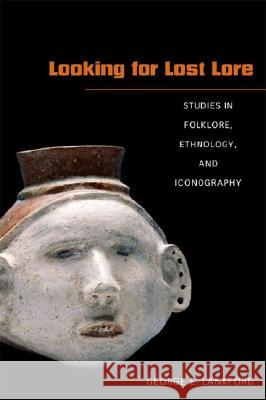
All students of the past bump into what seem to be impenetrable walls and are left looking longingly beyond the barrier for the lore that seems hopelessly lost. This book is an argument that all that information is not necessarily lost. It may just need a different approach-perhaps multidisciplinary, perhaps a new method, or maybe just with a new hypothesis for testing. Vanished societies have left behind masses of raw data, but it is up to us to discover new ways to look through these windows into the past. Especially in light of the growing relationship--and tensions--between cultural...
All students of the past bump into what seem to be impenetrable walls and are left looking longingly beyond the barrier for the lore that seems hopele...
The study of legends has long been a critical component of cultural anthropological analysis. In Native American Legends of the Southeast, George E. Lankford has compiled and analyzed a collection of unique and rare legends that will continue to appeal to scholars and students of Native American culture and the study of legends in general."
The study of legends has long been a critical component of cultural anthropological analysis. In Native American Legends of the Southeast, Geor...
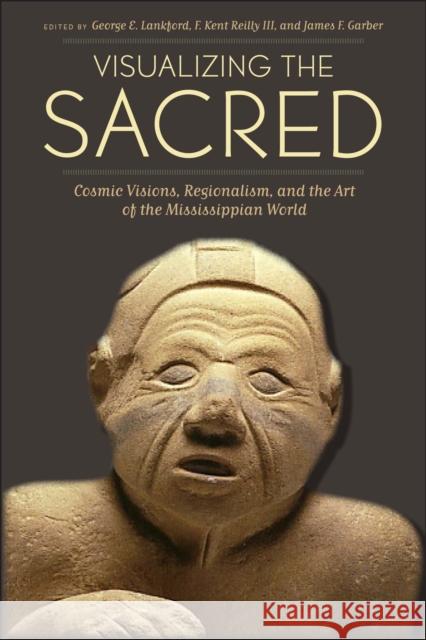
The prehistoric native peoples of the Mississippi River Valley and other areas of the Eastern Woodlands of the United States shared a complex set of symbols and motifs that constituted one of the greatest artistic traditions of the pre-Columbian Americas. Traditionally known as the Southeastern Ceremonial Complex, these artifacts of copper, shell, stone, clay, and wood were the subject of the groundbreaking 2007 book Ancient Objects and Sacred Realms: Interpretations of Mississippian Iconography, which presented a major reconstruction of the rituals, cosmology, ideology, and...
The prehistoric native peoples of the Mississippi River Valley and other areas of the Eastern Woodlands of the United States shared a complex set o...
Mary Adelia Byers Samuel R. Phillips George E. Lankford
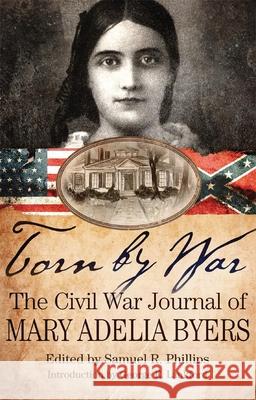
The Civil War divided the nation, communities, and families. The town of Batesville, Arkansas, found itself occupied three times by the Union army. This compelling book gives a unique perspective on the war's western edge through the diary of Mary Adelia Byers (1847-1918), who began recording her thoughts and observations during the Union occupation of Batesville in 1862.
Only fifteen when she starts her diary, Mary is beyond her years in maturity, as revealed by her acute observations of the world around her. At the same time, she appears very much a child of her era. Having lost...
The Civil War divided the nation, communities, and families. The town of Batesville, Arkansas, found itself occupied three times by the Union army. Th...