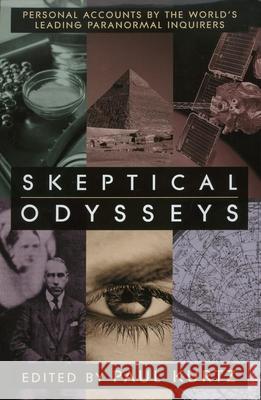
Issued on the 25th anniversary of the Committee for the Scientific Investigation of Claims of the Paranormal (CSICOP), this book brings together personal statements by the leading skeptics of the world. CSICOP, the first major organization of skeptics on the contemporary scene, is worldwide in scope and is dedicated to the skeptical evaluation of both paranormal and religious claims in the light of scientific inquiry.
The contributors focus on ESP and parapsychology, astrology, UFOlogy, the difference between science and pseudoscience, alternative medicine, magic, near-death experiences,...
Issued on the 25th anniversary of the Committee for the Scientific Investigation of Claims of the Paranormal (CSICOP), this book brings together perso...
Is it possible to live the good life and be morally responsible without religious belief? In this translation from the English original for Spanish-language readers, Paul Kurtz, America's leading secular-humanist philosopher, affirms that it is. Although orthodox theists and fundamentalists deny this possibility and reject secularism, Kurtz is firmly convinced that we can transcend the limits of parochial loyalties and achieve a higher stage of ethics. Since history has shown that belief in God is no guarantee of moral virtue, Kurtz maintains that we need to move beyond now-outmoded theistic...
Is it possible to live the good life and be morally responsible without religious belief? In this translation from the English original for Spanish-la...
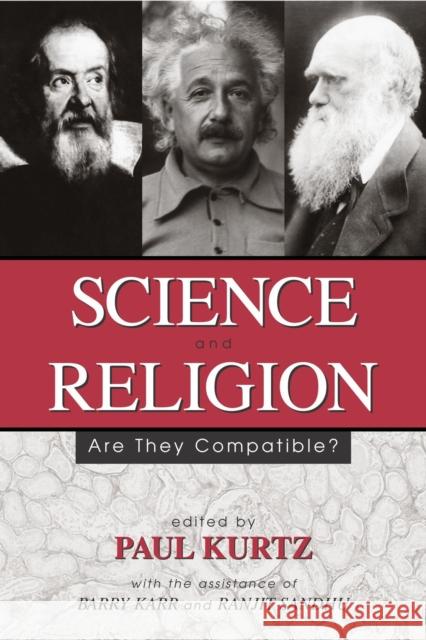
In this stimulating collection of articles, contributors discuss the Big Bang and the origin of the universe, the nature of the "soul, " near-death experiences, and spiritualism.
In this stimulating collection of articles, contributors discuss the Big Bang and the origin of the universe, the nature of the "soul, " near-death ex...
Does life have meaning if one rejects belief in God? This book responds affirmatively to that question. Paul Kurtz, America's leading secular humanist, provides a powerful defense of the humanist alternative, rejecting both religious spirituality and nihilism. In this inspirational book, Kurtz outlines the basic virtues of the secular humanist outlook. These virtues include "courage," not simply to be or to survive, but to overcome and "become"; that is, to fulfill our highest aspirations and ideals in the face of obstacles. The two other virtues Kurtz identifies are "cognition" (reason...
Does life have meaning if one rejects belief in God? This book responds affirmatively to that question. Paul Kurtz, America's leading secular human...
In his final book, the late Paul Kurtz outlines his personal vision for a planetary ethics inspired by scientific wisdom. Blending realism and optimism, he lays out the basic principles of an ethical approach that he calls humanist eupraxsophy--that is, the application of practical moral choices inspired by scientific wisdom. Emphasizing the dramatic character of the biosphere, human affairs, and the physical universe itself, Kurtz has structured the book in terms of an operatic scenario, with an overture, intermezzo, nine acts, and a grand finale. Citing the emergence of a new...
In his final book, the late Paul Kurtz outlines his personal vision for a planetary ethics inspired by scientific wisdom. Blending realism and optimis...
A landmark work. Mandatory reading for anyone who wants to learn to be a good skeptic. In this widely acclaimed and highly controversial book, Paul Kurtz examines the reasons why people accept supernatural and paranormal belief systems in spite of substantial evidence to the contrary. According to the author, it is because there is within the human species a deeply rooted tendency toward magical thinking - the "transcendental temptation" - which undermines critical judgment and paves the way for willful beliefs. He explores in detail the three major monotheistic religions - Judaism,...
A landmark work. Mandatory reading for anyone who wants to learn to be a good skeptic. In this widely acclaimed and highly controversial book, Pau...
The contemporary world is witness to an intense controversy about secularism. This controversy has intensified due to the presence of fundamentalism, which challenges secular society and the secularization of philosophical ideas and ethical values. Secularists maintain that the state should not impose a religious creed upon citizens and should respect freedom of conscience, the right to believe or disbelieve in the prevailing orthodoxy. This right is guaranteed by the First Amendment to the US Constitution and the Rights of Man enunciated in the French Revolution. Yet many powerful religious...
The contemporary world is witness to an intense controversy about secularism. This controversy has intensified due to the presence of fundamentalism, ...