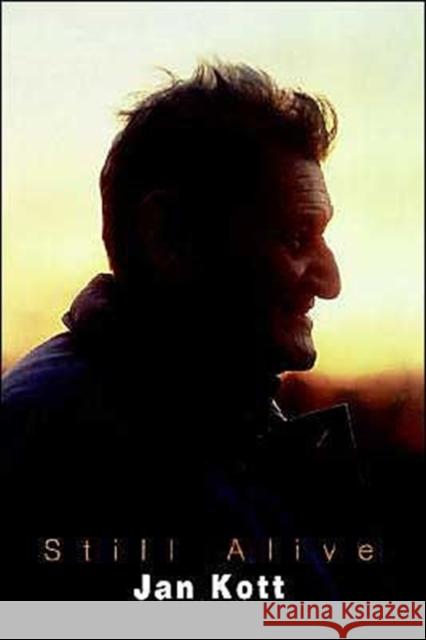
In the first English translation of Still Alive, the renowned Polish essayist and theater critic Jan Kott recounts his perilous odyssey through the endless political crises of Eastern Europe in the mid-twentieth-century, illuminating not only the fate of a whole generation of intellectuals, but also his main concern: how to make sense of one's own existence "As a portrayal of turbulent times, the book is priceless, in particular because of its extraordinarily vivid depictions of the atmosphere of everyday life under Communism."-Stanislaw Baranczak, Harvard University "An incisive and vivid...
In the first English translation of Still Alive, the renowned Polish essayist and theater critic Jan Kott recounts his perilous odyssey through the en...
Janusz Glowacki's highly theatrical and often hilarious works concern the immigrant experience of the Eastern European in America, the struggles of the individual in a repressive state, and the manipulations of political and social power. The girls' reform school of "Cinders, "the Lower East Side tenement of "Hunting Cockroaches, "and the Norwegian court littered with bodies in "Fortinbras Gets Drunk" serve as backdrops for Glowacki's tragicomic explorations of the play within the play of contemporary existence.
Janusz Glowacki's highly theatrical and often hilarious works concern the immigrant experience of the Eastern European in America, the struggles of th...
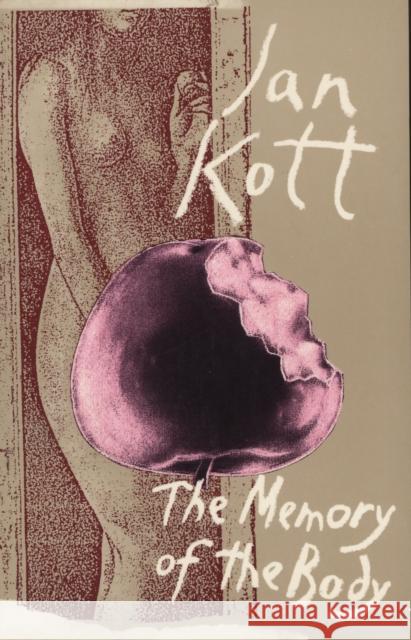
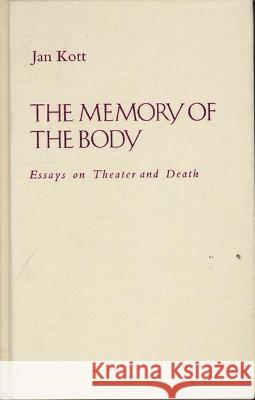
To see through the eyes of essayist and dramaturge Jan Kott is to gain in knowledge not just of the theater but also of human culture. Since his "Shakespeare Our Contemporary" appeared in English in 1964, Kott's work has altered--and strengthened--the way critics and the public approach the theater as a whole. "The Memory of the Body" highlights a number of dramatic personalities and personages: authors and directors Witkiewicz, Brecht, Kantor, Grotoswki, Ingmar Bergman, Wedekind; Tilly Newes on the stage in turn-of-the-century Vienna; the all-too-mortal, two-thirds divine Gilgamesh; and a...
To see through the eyes of essayist and dramaturge Jan Kott is to gain in knowledge not just of the theater but also of human culture. Since his "Shak...
The translation of Felicja Kruszewska's A Dream introduces a major play by a twentieth-century female playwright to the English-speaking world. On March 7, 1927 A Dream - a large-scale expressionistic drama by an unknown poet - burst on the Polish theatrical scene in a dazzling debut production by the young actor Edmund Wiercinski, who would become one of the outstanding directors of his time. The play's hallucinatory visions of the rise of fascism and the heroine's longing for a providential savior on a white horse spoke directly to Polish audiences about their deepest...
The translation of Felicja Kruszewska's A Dream introduces a major play by a twentieth-century female playwright to the English-speaking worl...