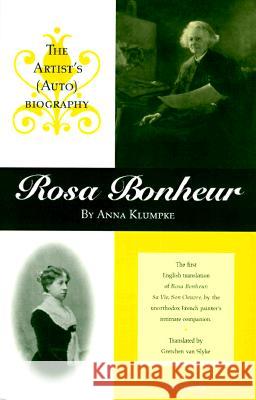
Hailed by her contemporaries as the most popular animal-painter, male or female, of the nineteenth century, the French artist Rosa Bonheur (1822-99) lived to see her name become a household word. In a century that did its best to keep women "in their place," Bonheur, like George Sand--to whom she was often compared--defined herself outside of the social and legal codes of her time. To the horror and bewilderment of many, she earned her own money, managed her own property, wore trousers, hunted, smoked, and lived in retreat with female companions in a little chateau near Fountainebleau named...
Hailed by her contemporaries as the most popular animal-painter, male or female, of the nineteenth century, the French artist Rosa Bonheur (1822-99) l...
Hailed by her contemporaries as the most popular animal-painter, male or female, of the nineteenth century, the French artist Rosa Bonheur (1822-99) lived to see her name become a household word. In a century that did its best to keep women "in their place," Bonheur, like George Sand--to whom she was often compared--defined herself outside of the social and legal codes of her time. To the horror and bewilderment of many, she earned her own money, managed her own property, wore trousers, hunted, smoked, and lived in retreat with female companions in a little chateau near Fountainebleau named...
Hailed by her contemporaries as the most popular animal-painter, male or female, of the nineteenth century, the French artist Rosa Bonheur (1822-99) l...