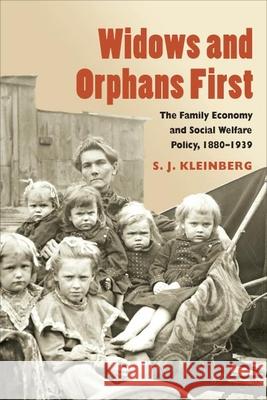
Widows and Orphans First investigates the importance of local economies and values in the origins of the welfare state through an exploration of widows' lives in three industrial American cities with widely differing economic, ethnic, and racial bases. In Fall River, Massachusetts, employment was regarded as the solution to widows' poverty, so public charitable expenditure was drastically limited. In Pittsburgh, where few jobs were available for women or children--and where jobs for men were in "widowmaking" industries such as steel and railroading--the city's charitable...
Widows and Orphans First investigates the importance of local economies and values in the origins of the welfare state through an exploration o...
The profound disruption of family relationships caused by industrialization found its most dramatic expression in the steel mills of Pittsburgh in the 1880s. The work day was twelve hours, and the work week was seven days - with every other Sunday for rest.
In this major work, S. J. Kleinberg focuses on the private side of industrialization, on how the mills structured the everyday existence of the women, men, and children who lived in their shadows. What did industrialization and urbanization really mean to the people who lived through the these processes? What solutions did they find...
The profound disruption of family relationships caused by industrialization found its most dramatic expression in the steel mills of Pittsburgh in ...