This volume examines how presidents from Truman to Bush rhetorically approached and managed political, military, judicial, legislative, and economic crises during their presidencies. Editor Amos Kiewe assembles new essays by communications scholars who look at rhetoric initiated during national crises, and account for various rhetorical developments affected by crises, changes in presidential rhetoric, and rhetorical and situational crisis constraints. Their studies suggest similarities in rhetoric in different types of crises, and yield resources for postulating patterns of crisis rhetoric....
This volume examines how presidents from Truman to Bush rhetorically approached and managed political, military, judicial, legislative, and economic c...
This new anthology rounds out Ronald Reagan's rhetorical persona and fills a major gap in the literature about the man by offering an unbiased and a multi-dimensional picture of his public speeches during all phases of his political life. The 52 speech texts are arranged, with short introductions, into six topical chapters covering his Hollywood years, his eight years as governor of California, his presidential campaigns of 1976 and 1980, and his two terms as president. This compact reference will be handy for professionals and students at all levels who are looking for a well-rounded...
This new anthology rounds out Ronald Reagan's rhetorical persona and fills a major gap in the literature about the man by offering an unbiased and ...
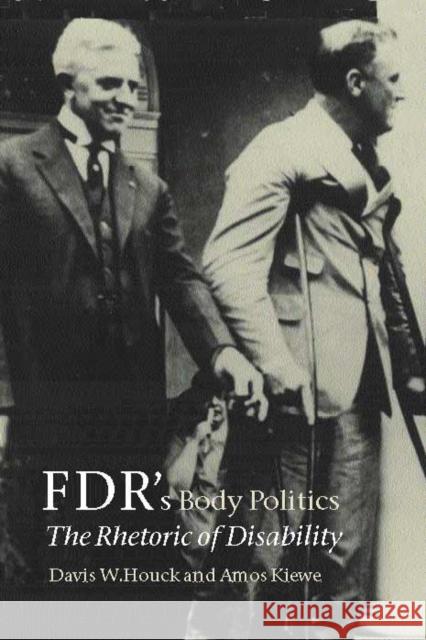
Franklin Roosevelt instinctively understood that a politician unable to control his own body would be perceived as unable to control the body politic. He took care to hide his polio-induced lameness both visually and verbally. Through his speeches--and his physical bearing when delivering them--he tried to project robust health for himself while imputing disability, weakness, and even disease onto his political opponents and their policies. In "FDR's Body Politics: ""The"" Rhetoric of Disability, " Davis W. Houck and Amos Kiewe analyze the silences surrounding Roosevelt's disability, the...
Franklin Roosevelt instinctively understood that a politician unable to control his own body would be perceived as unable to control the body politic....
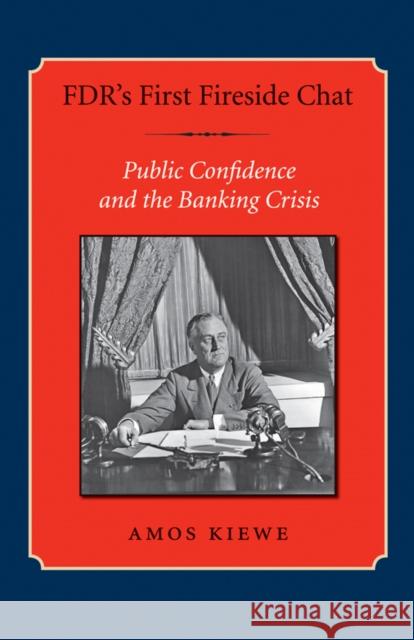
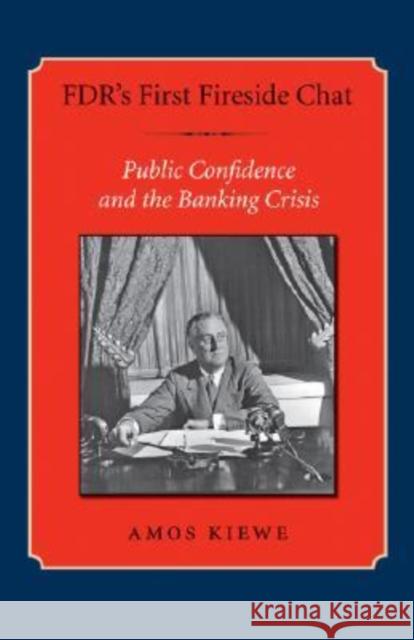
"I want to talk for a few minutes with the people of the United States." Thus began not only the first of Franklin Roosevelt's celebrated radio addresses, collectively called Fireside Chats, but also the birth of the media era of the rhetorical presidency. Humorist Will Rogers later said that the president took "such a dry subject as banking and made everyone understand it, even the bankers." Roosevelt also took a giant step toward restoring confidence in the nation's banks and, eventually, in its economy. Amos Kiewe tells the story of the First Fireside Chat, the context in which it...
"I want to talk for a few minutes with the people of the United States." Thus began not only the first of Franklin Roosevelt's celebrated radio ad...
"I want to talk for a few minutes with the people of the United States." Thus began not only the first of Franklin Roosevelt's celebrated radio addresses, collectively called Fireside Chats, but also the birth of the media era of the rhetorical presidency. Humorist Will Rogers later said that the president took "such a dry subject as banking and made everyone understand it, even the bankers." Roosevelt also took a giant step toward restoring confidence in the nation's banks and, eventually, in its economy. Amos Kiewe tells the story of the First Fireside Chat, the context in which...
"I want to talk for a few minutes with the people of the United States." Thus began not only the first of Franklin Roosevelt's celebrated radio a...
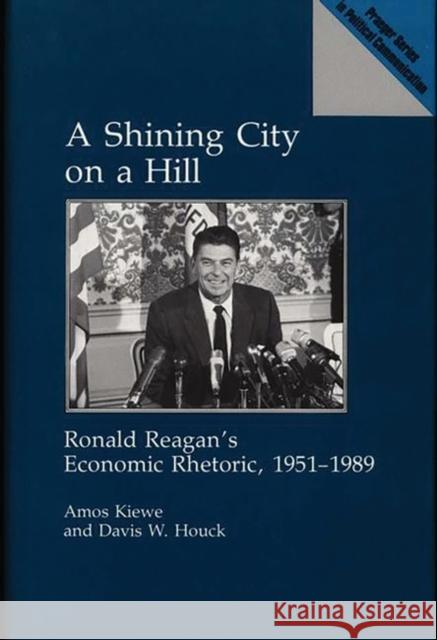
The results of a longitudinal study of Ronald Reagan's economic discourse beginning in his Hollywood years, this book shows how rhetorical forces can play a significant role in advancing economic matters.
The results of a longitudinal study of Ronald Reagan's economic discourse beginning in his Hollywood years, this book shows how rhetorical forces can ...
The Effects of Rhetoric and the Rhetoric of Effects tackles one of the thorniest and longest-standing issues in the discipline of rhetoric--the issue of effects. While the field's founders valued the assessment of a speech's effects, later scholars moved away from it, privileging textual analysis, symbols, and meaning. Though situated and strategic oral rhetoric is created for instrumental ends, its study has been limited in recent decades. Editors Amos Kiewe and Davis W. Houck seek to resurrect the study of effects and consider it as the cornerstone of the rhetorical critic's...
The Effects of Rhetoric and the Rhetoric of Effects tackles one of the thorniest and longest-standing issues in the discipline of rhetoric--the issue ...