For the Lucayan Arawaks of the Caribbean, the year 1492 marked the beginning of the end: the first people contacted by Christopher Columbus were the first extinguished. Within thirty years, a population of perhaps 80,000 had declined to, at most, a few refugees. Clearing new ground in the study of prehistoric societies, Keegan argues that a different perspective on the past provides an accurate portrait of a culture that became extinct almost 500 years ago. Keegan terms his approach paleoethnography, developing a portrait of the past by linking archaeological field data and historical...
For the Lucayan Arawaks of the Caribbean, the year 1492 marked the beginning of the end: the first people contacted by Christopher Columbus were the f...
Applying the legend of the stranger king to Caonabo, the mythologized Taino chief of the Hispaniola settlement Columbus invaded in 1492, Keegan examines how myths come to resonate as history--created by the chaotic interactions of the individuals who lived the events of the past as well as those who write and read about them. The stranger king story told in many cultures is that of a foreigner who comes from across the water, marries the king s daughter, and deposes the king. In this story, Caonabo, the most important Taino chief at the time of European conquest, claimed to be imbued with...
Applying the legend of the stranger king to Caonabo, the mythologized Taino chief of the Hispaniola settlement Columbus invaded in 1492, Keegan examin...
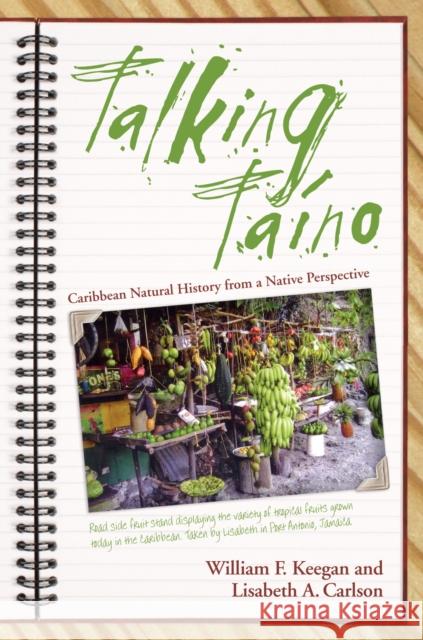
Keegan and Carlson, combined, have spent over 45 years conducting archaeological research in the Caribbean, directing projects in Trinidad, Grenada, St. Lucia, Puerto Rico, the Dominican Republic, Haiti, Cuba, Jamaica, Grand Cayman, the Turks & Caicos Islands, and throughout the Bahamas. Walking hundreds of miles of beaches, working without shade in the Caribbean sun, diving in refreshing and pristine waters, and studying the people and natural environment around them has given them insights into the lifeways of the people who lived in the Caribbean before the arrival of Christopher Columbus....
Keegan and Carlson, combined, have spent over 45 years conducting archaeological research in the Caribbean, directing projects in Trinidad, Grenada, S...
Keegan and Carlson, combined, have spent over 45 years conducting archaeological research in the Caribbean, directing projects in Trinidad, Grenada, St. Lucia, Puerto Rico, the Dominican Republic, Haiti, Cuba, Jamaica, Grand Cayman, the Turks & Caicos Islands, and throughout the Bahamas. Walking hundreds of miles of beaches, working without shade in the Caribbean sun, diving in refreshing and pristine waters, and studying the people and natural environment around them has given them insights into the lifeways of the people who lived in the Caribbean before the arrival of Christopher Columbus....
Keegan and Carlson, combined, have spent over 45 years conducting archaeological research in the Caribbean, directing projects in Trinidad, Grenada, S...
The islands of the Caribbean are remarkably diverse, environmentally and culturally. They range from low limestone islands barely above sea level to volcanic islands with mountainous peaks; from large islands to small cays; from islands with tropical rainforests to those with desert habitats. Today's inhabitants have equally diverse culture histories. The islands are home to a mosaic of indigenous communities and to the descendants of Spanish, French, Dutch, English, Swedish, Danish, Irish, African, East Indian, Chinese, Syrian, Seminole and other nationalities who settled there during...
The islands of the Caribbean are remarkably diverse, environmentally and culturally. They range from low limestone islands barely above sea level to v...
The islands of the Caribbean are remarkably diverse, environmentally and culturally. They range from low limestone islands barely above sea level to volcanic islands with mountainous peaks; from large islands to small cays; from islands with tropical rainforests to those with desert habitats. Today's inhabitants have equally diverse culture histories. The islands are home to a mosaic of indigenous communities and to the descendants of Spanish, French, Dutch, English, Swedish, Danish, Irish, African, East Indian, Chinese, Syrian, Seminole and other nationalities who settled there during...
The islands of the Caribbean are remarkably diverse, environmentally and culturally. They range from low limestone islands barely above sea level to v...