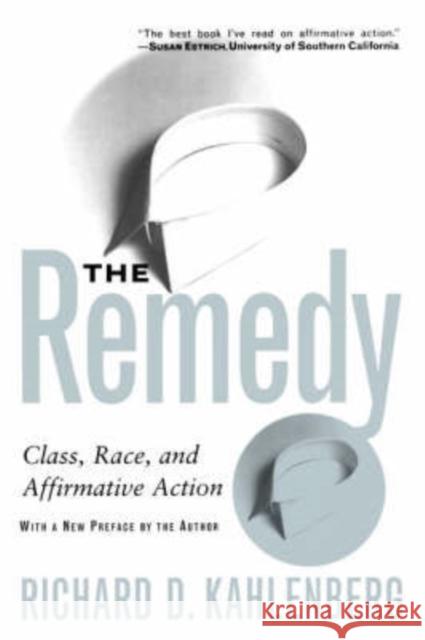
In this provocative and paradigm-shifting book, Richard D. Kahlenberg argues that affirmative action programs ought to be based not on race but on class. America's exclusive focus on race in determining how to allocate economic and educational opportunities has served only to undermine the moral legitimacy of affirmative action, the results clearly visible in the growing public sentiment to abolish such programs.Kahlenberg shows that it is time to return to affirmative action's roots, so that it works to the benefit of the truly disadvantaged, regardless of race. In a sweeping and damning...
In this provocative and paradigm-shifting book, Richard D. Kahlenberg argues that affirmative action programs ought to be based not on race but on cla...
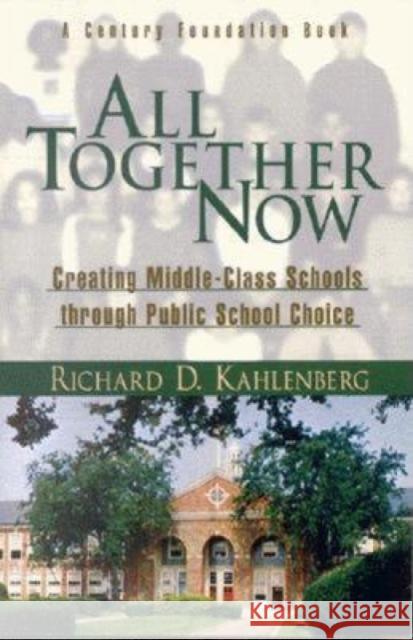
This provocative book asks a simple question: since we know that middle class schools tend to work best, why not give every child in America the opportunity to attend a public school in which the majority of students come from middle class households? Economically integrated schools, the author argues, will do far more to promote achievement and equal opportunity than vouchers, standards, class size reduction, or any of the other leading education proposals on the left and right that seek to make "separate but equal" schools work. Building on two recent education trends --the decline in...
This provocative book asks a simple question: since we know that middle class schools tend to work best, why not give every child in America the op...
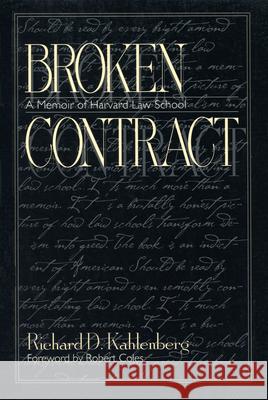
In 1986, 70 percent of the first-year class of Harvard Law School wanted to pursue careers in public-interest law. Ten years later, the same percentage of this class was pursuing careers in private corporate firms. How is it that these students began their careers interested in using law as a vehicle for social change, but ended up in those very law firms most resistant to change? How are law students able to reconcile liberal politics with careers in corporate law?
Richard D. Kahlenberg's Broken Contract serves to warn prospective law students on the transformation that happens during...
In 1986, 70 percent of the first-year class of Harvard Law School wanted to pursue careers in public-interest law. Ten years later, the same percen...
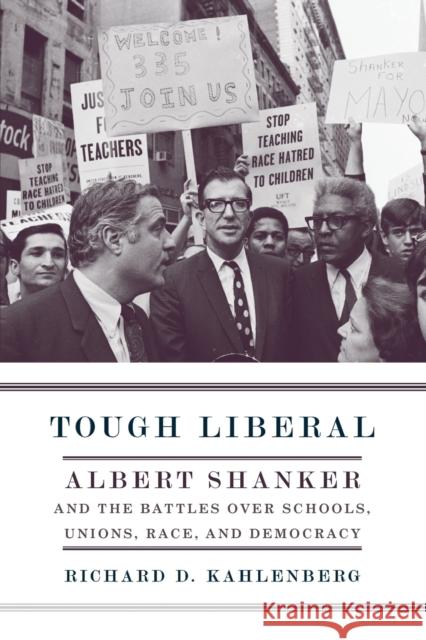
In Woody Allen's 1973 film, Sleeper, a character wakes up in the future to learn that civilization was destroyed when "a man by the name of Albert Shanker got hold of a nuclear warhead." Shanker was condemned by many when he shut down the New York City school system in the bitter strikes of 1967 and 1968, and he was denounced for stirring up animosity between black parents and Jewish teachers. Later, however, he built alliances with blacks, and at the time of his death in 1997, such figures as Bill Clinton celebrated Shanker for being an educational reformer, a champion of equality,...
In Woody Allen's 1973 film, Sleeper, a character wakes up in the future to learn that civilization was destroyed when "a man by the name of Alb...
Moving beyond the debate over whether or not charter schools should exist, A Smarter Charter wrestles with the question of what kind of charter schools we should encourage. The authors begin by tracing the evolution of charter schools from Albert Shanker's original vision of giving teachers room to innovate while educating a diverse population of students, to today's charter schools where student segregation levels are even higher than in traditional public schools. In the second half of the book, the authors examine two key reforms currently seen in a small but growing number of charter...
Moving beyond the debate over whether or not charter schools should exist, A Smarter Charter wrestles with the question of what kind of charter school...
Moving beyond the debate over whether or not charter schools should exist, A Smarter Charter wrestles with the question of what kind of charter schools we should encourage. The authors begin by tracing the evolution of charter schools from Albert Shanker's original vision of giving teachers room to innovate while educating a diverse population of students, to today's charter schools where student segregation levels are even higher than in traditional public schools. In the second half of the book, the authors examine two key reforms currently seen in a small but growing number of charter...
Moving beyond the debate over whether or not charter schools should exist, A Smarter Charter wrestles with the question of what kind of charter school...