"Kundalini yoga presented Jung with a model of something that was almost completely lacking in Western psychology--an account of the development phases of higher consciousness.... Jung's insistence on the psychogenic and symbolic significance of such states is even more timely now than then. As R. D. Laing stated... 'It was Jung who broke the ground here, but few followed him.'"--From the introduction by Sonu Shamdasani
Jung's seminar on Kundalini yoga, presented to the Psychological Club in Zurich in 1932, has been widely regarded as a milestone in the psychological...
"Kundalini yoga presented Jung with a model of something that was almost completely lacking in Western psychology--an account of the development ph...
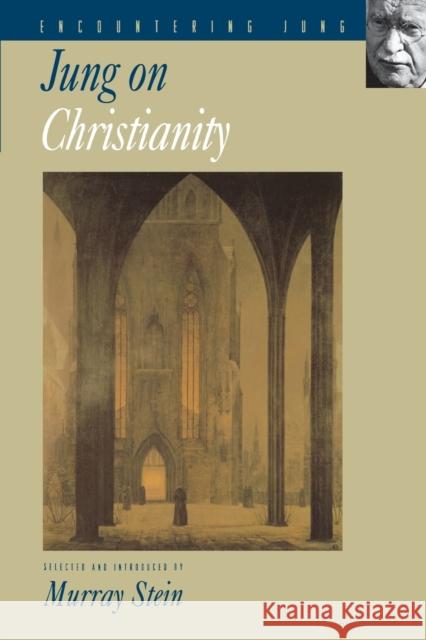
C. G. Jung, son of a Swiss Reformed pastor, used his Christian background throughout his career to illuminate the psychological roots of all religions. Jung believed religion was a profound, psychological response to the unknown--both the inner self and the outer worlds--and he understood Christianity to be a profound meditation on the meaning of the life of Jesus of Nazareth within the context of Hebrew spirituality and the Biblical worldview.
Murray Stein's introduction relates Jung's personal relationship with Christianity to his psychological views on religion in general,...
C. G. Jung, son of a Swiss Reformed pastor, used his Christian background throughout his career to illuminate the psychological roots of all religi...
Carl Gustav Jung Jung (Ed by Schwartz-Salant) Jung &Ed by Schwartz-Salant&
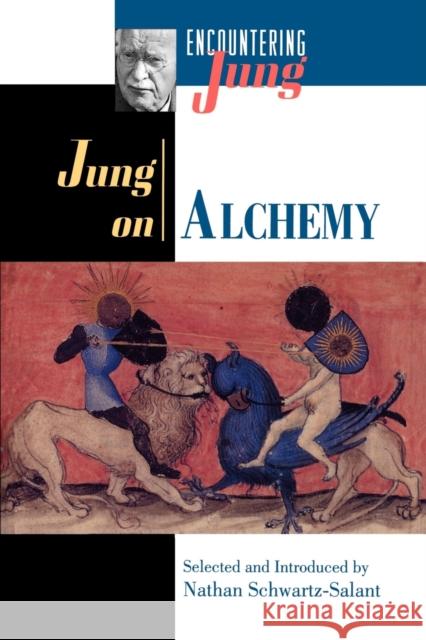
The ancient practice of alchemy, which thrived in Europe until the seventeenth century, dealt with the phenomenon of transformation--not only of materials (ore into gold) but also of the human spirit (self into Other). Through their work in the material realm, alchemists discovered personal rebirth as well as a linking between outer and inner dimensions.
C. G. Jung first turned to alchemy for personal illumination in coping with trauma brought on by his break with Freud. Alchemical symbolism eventually suggested to Jung that there was a process in the unconscious, one...
The ancient practice of alchemy, which thrived in Europe until the seventeenth century, dealt with the phenomenon of transformation--not only of ma...
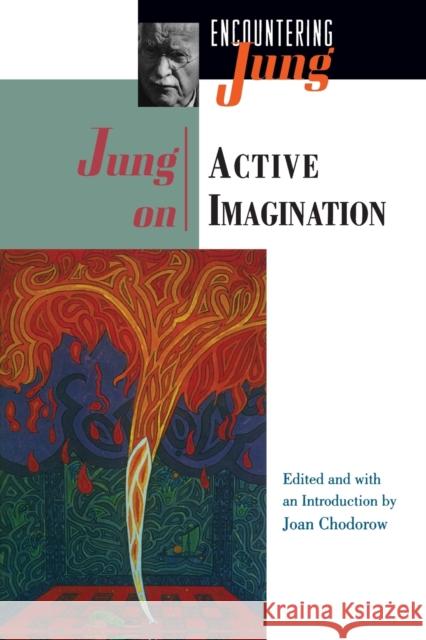
All the creative art psychotherapies (art, dance, music, drama, poetry) can trace their roots to C. G. Jung's early work on active imagination. Joan Chodorow here offers a collection of Jung's writings on active imagination, gathered together for the first time. Jung developed this concept between the years 1913 and 1916, following his break with Freud. During this time, he was disoriented and experienced intense inner turmoil --he suffered from lethargy and fears, and his moods threatened to overwhelm him. Jung searched for a method to heal himself from within, and finally decided to...
All the creative art psychotherapies (art, dance, music, drama, poetry) can trace their roots to C. G. Jung's early work on active imagination. Joa...
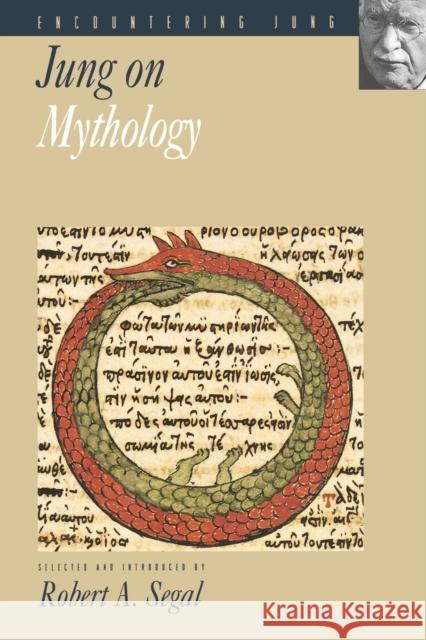
At least three major questions can be asked of myth: what is its subject matter? what is its origin? and what is its function? Theories of myth may differ on the answers they give to any of these questions, but more basically they may also differ on which of the questions they ask. C. G. Jung's theory is one of the few that purports to answer fully all three questions. This volume collects and organizes the key passages on myth by Jung himself and by some of the most prominent Jungian writers after him: Erich Neumann, Marie-Louise von Franz, and James Hillman. The book synthesizes the...
At least three major questions can be asked of myth: what is its subject matter? what is its origin? and what is its function? Theories of myth may...
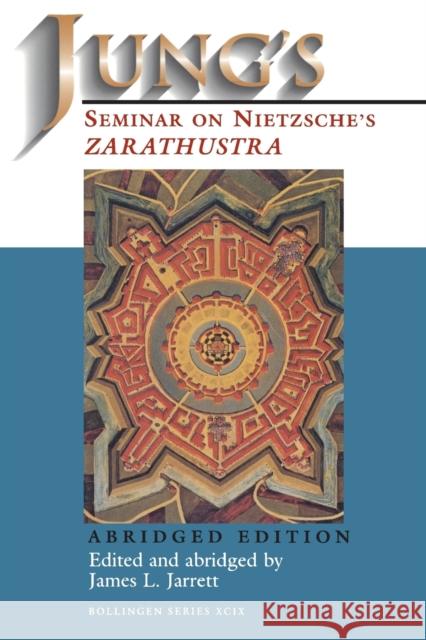
Nietzsche's infamous work Thus Spake Zarathustra is filled with a strange sense of religiosity that seems to run counter to the philosopher's usual polemics against religious faith. For some scholars, this book marks little but a mental decline in the great philosopher; for C. G. Jung, Zarathustra was an invaluable demonstration of the unconscious at work, one that illuminated both Nietzsche's psychology and spirituality and that of the modern world in general. The original two-volume edition of Jung's lively seminar on Nietzsche's Zarathustra has been an important...
Nietzsche's infamous work Thus Spake Zarathustra is filled with a strange sense of religiosity that seems to run counter to the philosopher'...
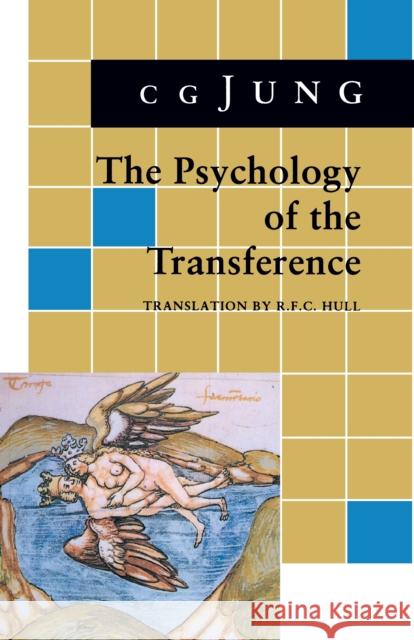
Extracted from Volume 16. An authoritative account, based on a series of 16th century alchemical pictures, of Jung's handling of the transference between analyst and patient.
Extracted from Volume 16. An authoritative account, based on a series of 16th century alchemical pictures, of Jung's handling of the transference b...
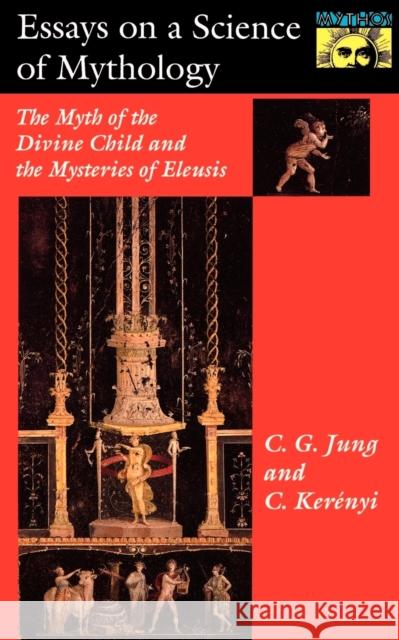
Essays on a Science of Mythology is a cooperative work between C. Kerenyi, who has been called "the most psychological of mythologists," and C. G. Jung, who has been called "the most mythological of psychologists." Kerenyi contributes an essay on the Divine Child and one on the Kore (the Maiden), together with a substantial introduction and conclusion. Jung contributes a psychological commentary on each essay. Both men hoped, through their collaboration, to elevate the study of mythology to the status of a science.
In "The Primordial Child in Primordial Times"...
Essays on a Science of Mythology is a cooperative work between C. Kerenyi, who has been called "the most psychological of mythologists,...
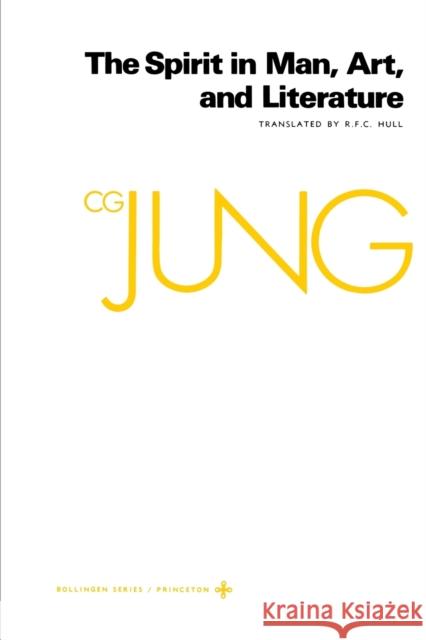
Nine essays, written between 1922 and 1941, on Paracelsus, Freud, Picasso, the sinologist Richard Wilhelm, Joyce's Ulysses, artistic creativity generally, and the source of artistic creativity in archetypal structures.
Nine essays, written between 1922 and 1941, on Paracelsus, Freud, Picasso, the sinologist Richard Wilhelm, Joyce's Ulysses, artistic creativity gen...