The Republic is a Socratic dialogue, written by Plato around 380 BC, concerning the definition of justice and the order and character of the just city-state and the just man. It is Plato's best-known work and has proven to be one of the most intellectually and historically influential works of philosophy and political theory. In it, Socrates along with various Athenians and foreigners discuss the meaning of justice and examine whether or not the just man is happier than the unjust man by considering a series of different cities coming into existence "in speech," culminating in a city...
The Republic is a Socratic dialogue, written by Plato around 380 BC, concerning the definition of justice and the order and character of the just city...
Timaeus is one of Plato's dialogues, mostly in the form of a long monologue given by the titular character, written circa 360 BC. The work puts forward speculation on the nature of the physical world and human beings and is followed by the dialogue Critias.
Timaeus is one of Plato's dialogues, mostly in the form of a long monologue given by the titular character, written circa 360 BC. The work puts forwar...
The First Alcibiades or Alcibiades I is a Plato dialogue featuring Alcibiades in conversation with Socrates. It is ascribed to Plato, although scholars are divided on the question of its authenticity. The Second Alcibiades or Alcibiades II is a dialogue traditionally ascribed to Plato. In it, Socrates attempts to persuade Alcibiades that it is unsafe for him to pray to the gods if he does not know whether what he prays for is actually good or bad for him.
The First Alcibiades or Alcibiades I is a Plato dialogue featuring Alcibiades in conversation with Socrates. It is ascribed to Plato, although scholar...
The Republic (Plato) The Republic (Latin: De Republica) is a Socratic dialogue, written by Plato around 380 BC, concerning the definition of justice, the order and character of the just city-state and the just man, reason by which ancient readers used the name On Justice as an alternative title (not to be confused with the spurious dialogue also titled On Justice). The dramatic date of the dialogue has been much debated and though it must take place some time during the Peloponnesian War, "there would be jarring anachronisms if any of the candidate specific dates between 432 and...
The Republic (Plato) The Republic (Latin: De Republica) is a Socratic dialogue, written by Plato around 380 BC, concerning the definition ...
Little is known of Cratylus beyond his status as a disciple of Heraclitus of Ephesus, Asia Minor. The modern biographical tradition has not reached consensus on his approximate date of birth, arguing alternately for an age comparable roughly either to Plato or Socrates.
Little is known of Cratylus beyond his status as a disciple of Heraclitus of Ephesus, Asia Minor. The modern biographical tradition has not reached co...
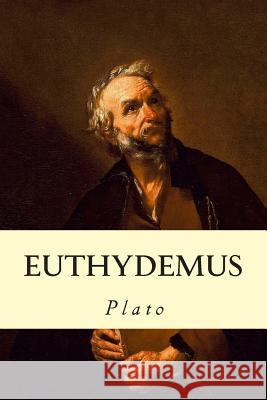
Euthydemus, written circa 384 BCE, is a dialogue by Plato which satirizes what Plato presents as the logical fallacies of the Sophists. In it, Socrates describes to his friend Crito a visit he and various youths paid to two brothers, Euthydemus and Dionysodorus, both of whom were prominent Sophists from Chios and Thurii
Euthydemus, written circa 384 BCE, is a dialogue by Plato which satirizes what Plato presents as the logical fallacies of the Sophists. In it, Socrate...