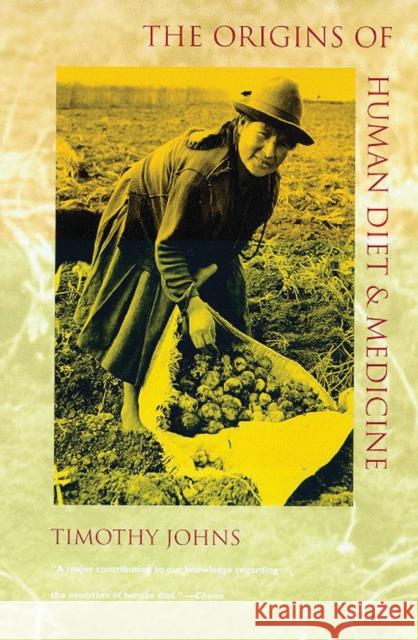
People have always been attracted to foods rich in calories, fat, and protein; yet the biblical admonition that meat be eaten "with bitter herbs" suggests that unpalatable plants play an important role in our diet. So-called primitive peoples show a surprisingly sophisticated understanding of how their bodies interact with plant chemicals, which may allow us to rediscover the origins of diet by retracing the paths of biology and culture. The domestication of the potato serves as the focus of Timothy Johns's interdisciplinary study, which forges a bold synthesis of ethnobotany and...
People have always been attracted to foods rich in calories, fat, and protein; yet the biblical admonition that meat be eaten "with bitter herb...
Contains papers from an August 1996 meeting of the Phytochemical Society of North America, held in New Orleans, Louisiana. Highlights new research in food phytochemicals as health promoters and chemopreventive agents, nutrient and toxicological aspects of food plants, indigenous root and tuber crops
Contains papers from an August 1996 meeting of the Phytochemical Society of North America, held in New Orleans, Louisiana. Highlights new research in ...
Phytochemists are aware that their focus of interest is receiving attention from a wider segment of society and from a greater diversity of disciplines within the scientific community than ever before. Nonetheless, they were bemused to learn three years ago that "until recently scientists didn't even know phytochemi cals existed" (Newsweek, April 24, 1994). Changing public perception of the positive contributions of phytochemicals to human well-being has foundations in scientific advances. With popular reports emphasizing the important implica tions of phytochemicals in the daily lives of...
Phytochemists are aware that their focus of interest is receiving attention from a wider segment of society and from a greater diversity of discipline...