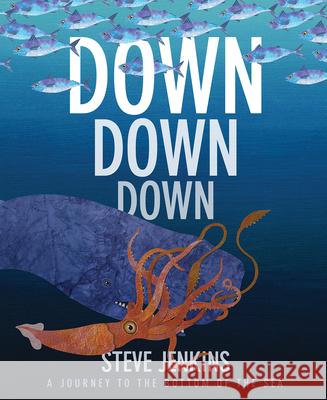
Half the earth's surface is covered by water more than a mile deep, but most of this watery world is a mystery to us. In fact, more people have stood on the surface of the moon than have visited the deepest spot in the ocean. Come along as we travel down, down, down, from the surface to the bottom of the sea. Along the way you can see jellyfish that flash like a neon sign, creatures with teeth so big, they can't close their mouths, and even a squid as long as a bus, which battles to the death with a sperm whale, the largest predator on earth. It'll be a journey you won't soon forget ...
Half the earth's surface is covered by water more than a mile deep, but most of this watery world is a mystery to us. In fact, more people have sto...
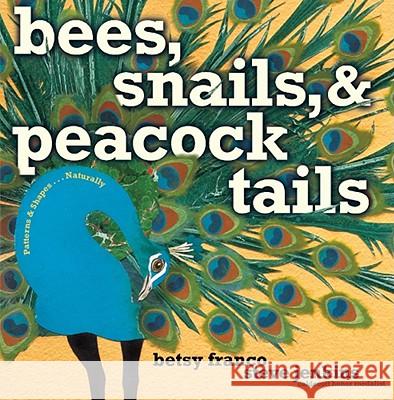
Come explore the hidden shapes and patterns in nature. The peacock's flashy tail is a masterpiece of color and shape. A buzzing beehive is built of tiny hexagons. Even a snake's skin is patterned with diamonds. Poet Betsy Franco and Caldecott Honor winner Steve Jenkins bring geometry to life in this lively, lyrical look at the shapes and patterns that can be found in the most unexpected places.
Come explore the hidden shapes and patterns in nature. The peacock's flashy tail is a masterpiece of color and shape. A buzzing beehive is built of ti...
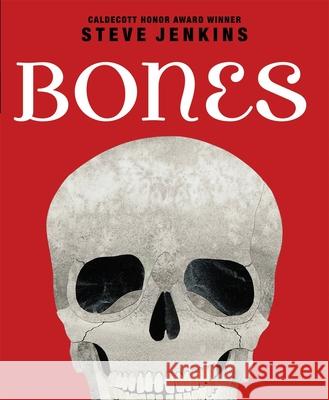
Kids come face to face with some head-to-toe boney comparisons, many of them shown at actual size. Includes three large gatefold spreads that reveal the hard (yet enjoyable) truths about the boney insides of Earth's many creatures. Full color.
Kids come face to face with some head-to-toe boney comparisons, many of them shown at actual size. Includes three large gatefold spreads that reveal t...
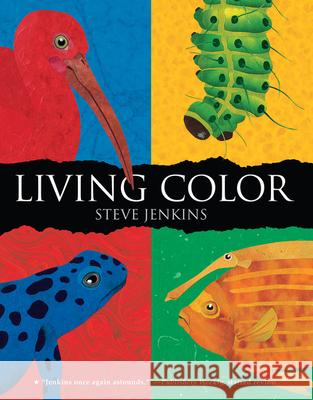
Jenkins, the Caldecott Honor winner for "What Do You Do with a Tail Like This?," explores just what makes the world's most eye-catching species look the way they do . . . "in living color!" Full color.
Jenkins, the Caldecott Honor winner for "What Do You Do with a Tail Like This?," explores just what makes the world's most eye-catching species look t...
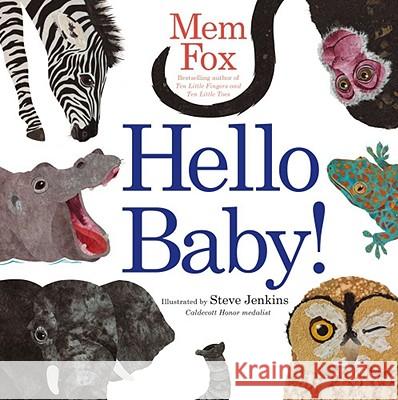
A playful favorite from Mem Fox is now a Classic Board Book After meeting a bevy of baby animals--including a clever monkey, a hairy warthog, and a dusty lion cub--the baby in this story discovers the most precious creature of all...itself, of course With an exuberant rhyming text by bestselling author Mem Fox and adorable cut-paper illustrations by Caldecott-Honor recipient Steve Jenkins, this book is an irresistible celebration of the joyful connection between parent and child. Now available for the first time as a Classic Board Book, this story is perfect for the youngest...
A playful favorite from Mem Fox is now a Classic Board Book After meeting a bevy of baby animals--including a clever monkey, a hairy warthog,...
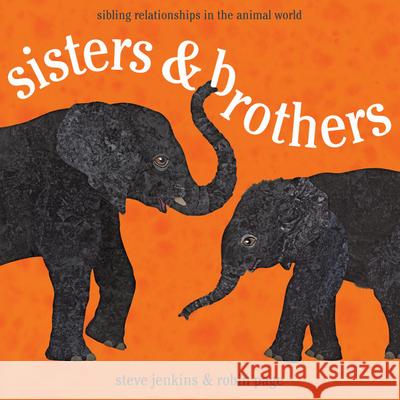
The award-winning team of Jenkins and Page presents fun and fascinating science facts in this stunningly illustrated nonfiction picture book about such animal sibling relationships as anteaters, armadillos, falcons, hyenas, and many more. Full color.
The award-winning team of Jenkins and Page presents fun and fascinating science facts in this stunningly illustrated nonfiction picture book about suc...
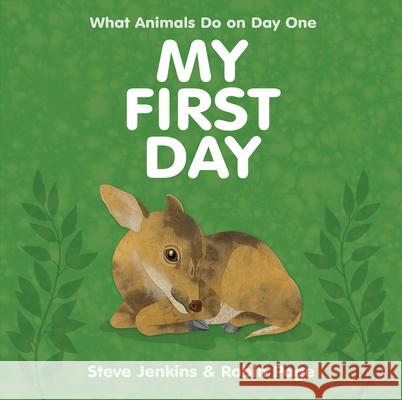
The first day of life is different for every animal. Human newborns don't do much at all, but some animals hit the ground running. The Caldecott Honor-winning team Steve Jenkins and Robin Page apply their considerable talents to revealing how twenty two different species, from the emperor penguin to the Siberian tiger, adapt to that traumatic first few hours of life, with or without parental help. Jenkins's vividly colorful cut-paper illustrations are eye-poppingly three-dimensional and as exquisite as ever. While the text is short and sweet, an illustrated guide provides descriptions of...
The first day of life is different for every animal. Human newborns don't do much at all, but some animals hit the ground running. The Caldecott Ho...
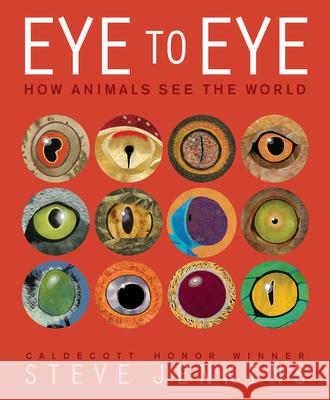
In his eye-popping work of picture book nonfiction, the Caldecott Honor-winning author-illustrator Steve Jenkins explains how for most animals, eyes are the most important source of information about the world in a biological sense. The simplest eyes--clusters of light-sensitive cells--appeared more than one billion years ago, and provided a big survival advantage to the first creatures that had them. Since then, animals have evolved an amazing variety of eyes, along with often surprising ways to use them.
In his eye-popping work of picture book nonfiction, the Caldecott Honor-winning author-illustrator Steve Jenkins explains how for most animals, eye...
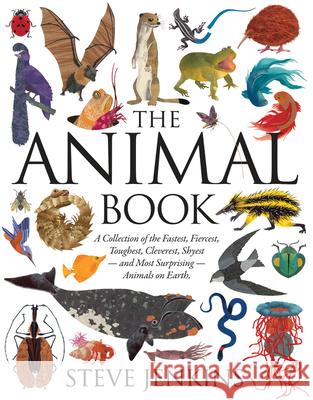
Animals smooth and spiky, fast and slow, hop and waddle through the two hundred plus pages of the Caldecott Honor artist Steve Jenkins's most impressive nonfiction offering yet. Sections such as "Animal Senses," "Animal Extremes," and "The Story of Life" burst with fascinating facts and infographics that will have trivia buffs breathlessly asking, "Do you know a termite queen can produce up to 30,000 eggs a day?" Jenkins's color-rich cut- and torn-paper artwork is as strikingly vivid as ever. Rounding out this bountiful browsers' almanac of more than three hundred animals is a discussion of...
Animals smooth and spiky, fast and slow, hop and waddle through the two hundred plus pages of the Caldecott Honor artist Steve Jenkins's most impressi...