From the revered author of the classic The Death and Life of Great American Cities comes a new book that will revolutionize the way we think about the economy. Starting from the premise that human beings "exist wholly within nature as part of natural order in every respect," Jane Jacobs has focused her singular eye on the natural world in order to discover the fundamental models for a vibrant economy. The lessons she discloses come from fields as diverse as ecology, evolution, and cell biology. Written in the form of a Platonic dialogue among five fictional characters, The...
From the revered author of the classic The Death and Life of Great American Cities comes a new book that will revolutionize the way we think ab...
In this anthology of his writings, spanning over sixty years of his professional career, Fitch's incisive ideas and observations on a range of subjects are brought to light in a single, readable volume. Whether a lament of the loss of functionalism in the wake of modernism, a celebration of the architectural perfection embodied in the University of Virginia campus, or an appeal to architects to heed factors of climate and environment in their designs, Fitch's essays are both provocative and pragmatic and always deeply rooted in the human element. In the face of contemporary concerns such as...
In this anthology of his writings, spanning over sixty years of his professional career, Fitch's incisive ideas and observations on a range of subject...
In this book, Jane Jacobs, building on the work of her debut, The Death and Life of Great American Cities, investigates the delicate way cities balance the interplay between the domestic production of goods and the ever-changing tide of imports. Using case studies of developing cities in the ancient, pre-agricultural world, and contemporary cities on the decline, like the financially irresponsible New York City of the mid-sixties, Jacobs identifies the main drivers of urban prosperity and growth, often via counterintuitive and revelatory lessons.
In this book, Jane Jacobs, building on the work of her debut, The Death and Life of Great American Cities, investigates the delicate way cities...
In this eye-opening work of economic theory, Jane Jacobs argues that it is cities not nations that are the drivers of wealth. Challenging centuries of economic orthodoxy, in Cities and the Wealth of Nations the beloved author contends that healthy cities are constantly evolving to replace imported goods with locally-produced alternatives, spurring a cycle of vibrant economic growth. Intelligently argued and drawing on examples from around the world and across the ages, here Jacobs radically changes the way we view our cities and our entire economy.
"
In this eye-opening work of economic theory, Jane Jacobs argues that it is cities not nations that are the drivers of wealth. Challenging centuries...
Dickens's widely read satirical account of the Industrial Revolution. Dickens creates the Victorian industrial city of Coketown, in northern England, and its unforgettable citizens, such as the unwavering utilitarian Thomas Gradgrind and the factory owner Josiah Bounderby, and the result is his famous critique of capitalist philosophy, the exploitative force he believed was destroying human creativity and joy. This edition includes new notes to the text.
Dickens's widely read satirical account of the Industrial Revolution. Dickens creates the Victorian industrial city of Coketown, in northern Engla...
Critics have long voiced concerns about the wisdom of living in cities and the effects of city life on physical and mental health. For a century, planners have tried to meet these issues. John Sewell traces changes in urban planning, from the pre-Depression garden cities to postwar modernism and a revival of interest in the streetscape grid.
In this far-ranging review, Sewell recounts the arrival of modern city planning with its emphasis on lower densities, limited access streets, segregated uses, and considerable green space. He makes Toronto a case history, with its pioneering...
Critics have long voiced concerns about the wisdom of living in cities and the effects of city life on physical and mental health. For a century, p...
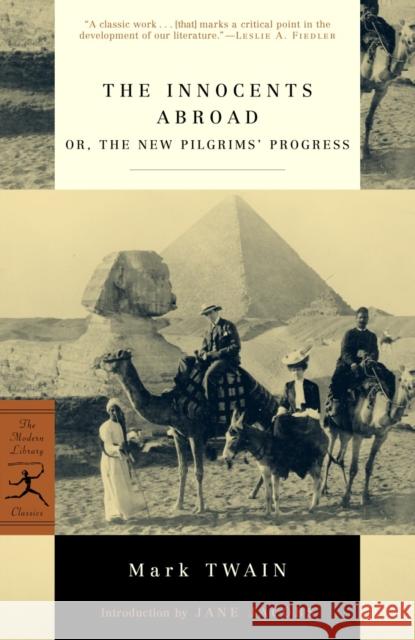
The Innocents Abroad is one of the most prominent and influential travel books ever written about Europe and the Holy Land. In it, the collision of the American "New Barbarians" and the European "Old World" provides much comic fodder for Mark Twain--and a remarkably perceptive lens on the human condition. Gleefully skewering the ethos of American tourism in Europe, Twain's lively satire ultimately reveals just what it is that defines cultural identity. As Twain himself points out, "Broad, wholesome, charitable views of men and things cannot be acquired by vegetating in one little...
The Innocents Abroad is one of the most prominent and influential travel books ever written about Europe and the Holy Land. In it, the collisio...