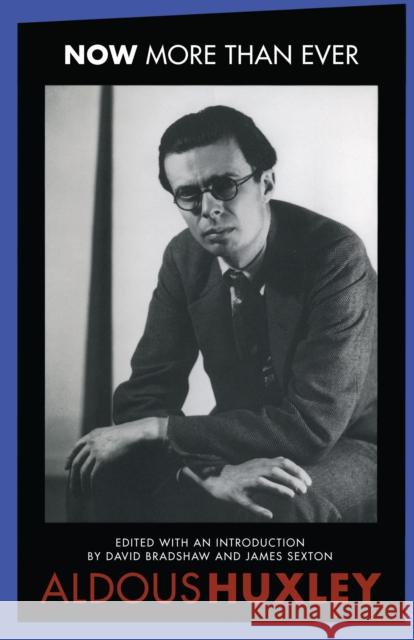
Over the course of his career, British writer Aldous Huxley (1894-1963) shifted away from elitist social satires and an atheistic outlook toward greater concern for the masses and the use of religious terms and imagery. This change in Huxley's thinking underlies the previously unpublished play Now More Than Ever.
Written in 1932-1933 just after Brave New World, Now More Than Ever is a response to the social, economic, and political upheavals of its time. Huxley's protagonist is an idealistic financier whose grandiose schemes for controlling the means of...
Over the course of his career, British writer Aldous Huxley (1894-1963) shifted away from elitist social satires and an atheistic outlook toward gr...
Un mundo feliz es un clasico de la literatura de este siglo. Con ironia mordiente, el genial autor ingles plasma una sombria metafora sobre el futuro, muchas de cuyas previsiones se han materializado, acelerada e inquietantemente, en los ultimos anos. La novela describe un mundo en el que finalmente se han cumplido los peores vaticinios: triunfan los dioses del consumo y la comodidad, y el orbe se organiza en diez zonas en apariencia seguras y estables. Sin embargo, este mundo ha sacrificado valores humanos esenciales, y sus habitantes son procreados in vitro a imagen y semejanza de una...
Un mundo feliz es un clasico de la literatura de este siglo. Con ironia mordiente, el genial autor ingles plasma una sombria metafora sobre el futuro,...
Brave New World author Aldous Huxley on enlightenment and the "ultimate reality."
In this anthology of twenty-six essays and other writings, Huxley discusses the nature of God, enlightenment, being, good and evil, religion, eternity, and the divine. Huxley consistently examined the spiritual basis of both the individual and human society, always seeking to reach an authentic and clearly defined experience of the divine. Featuring an introduction by renowned religious scholar Huston Smith, this celebration of "ultimate reality" proves relevant and prophetic in addressing the...
Brave New World author Aldous Huxley on enlightenment and the "ultimate reality."
In this anthology of twenty-six essays and other w...
This anthology is a thorough introduction to classic literature for those who have not yet experienced these literary masterworks. For those who have known and loved these works in the past, this is an invitation to reunite with old friends in a fresh new format. From Shakespeare's finesse to Oscar Wilde's wit, this unique collection brings together works as diverse and influential as The Pilgrim's Progress and Othello. As an anthology that invites readers to immerse themselves in the masterpieces of the literary giants, it is must-have addition to any library.
This anthology is a thorough introduction to classic literature for those who have not yet experienced these literary masterworks. For those who have ...
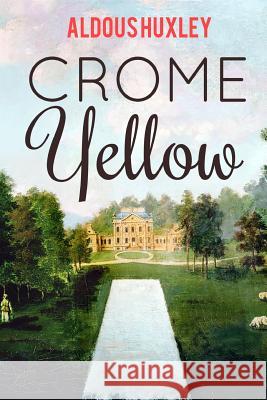
In Crome Yellow, Huxley satirises the fads and fashions of the time. It is the witty story of a house party at "Crome" (a lightly veiled reference to Garsington Manor, a house where authors such as Huxley and T. S. Eliot used to gather and write). We hear the history of the house from Henry Wimbush, its owner and self-appointed historian; apocalypse is prophesied, virginity is lost, and inspirational aphorisms are gained in a trance. Our hero, Denis Stone, tries to capture it all in poetry and is disappointed in love.
In Crome Yellow, Huxley satirises the fads and fashions of the time. It is the witty story of a house party at "Crome" (a lightly veiled reference to ...
On vacation from school, Denis goes to stay at Crome, an English country house inhabited by several of Huxley's most outlandish characters from Mr. Barbecue-Smith, who writes 1,500 publishable words an hour by "getting in touch" with his "subconscious," to Henry Wimbush, who is obsessed with writing the definitive History of Crome. Denis's stay proves to be a disaster amid his weak attempts to attract the girl of his dreams and the ridicule he endures regarding his plan to write a novel about love and art. Lambasting the post-Victorian standards of morality, Crome Yellow is a witty...
On vacation from school, Denis goes to stay at Crome, an English country house inhabited by several of Huxley's most outlandish characters from Mr. Ba...
Crome Yellow, is Huxley's first novel, published in 1921. It is a British manor satire where almost nothing happens - even less than normal for this genre. The characters are immaculately presented and manage to express immense profundity in tiny conversations. The writing is wonderful and each turn of phrase is a gem. Huxley's genius shines through the book. It is hilarious, wry and erudite. The Burning Wheel is Huxley's first collection of Poetry, published in 1916 before any of his novels. He was not allowed to fight in the Great War due to his very poor eyesight and so it is unsurprising...
Crome Yellow, is Huxley's first novel, published in 1921. It is a British manor satire where almost nothing happens - even less than normal for this g...
Young Spode was not a snob; he was too intelligent for that, too fundamentally decent. Not a snob; but all the same he could not help feeling very well pleased at the thought that he was dining, alone and intimately, with Lord Badgery. It was a definite event in his life, a step forward, he felt, towards that final success, social, material, and literary, which he had come to London with the fixed intention of making. The conquest and capture of Badgery was an almost essential strategical move in the campaign.
Young Spode was not a snob; he was too intelligent for that, too fundamentally decent. Not a snob; but all the same he could not help feeling very wel...