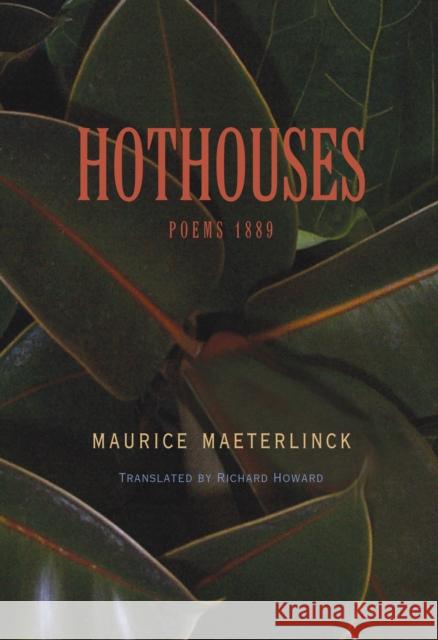
On May 31, 1889, a young Belgian lawyer from a wealthy bourgeois family in Ghent published a book of 33 poems in 155 copies. Maurice Maeterlinck's legal career was floundering but his road to literary greatness had begun. Long overshadowed by the plays that later won him the Nobel Prize, Serres chaudes (Hothouses) nonetheless came to be widely regarded as one of the cornerstones of literary Modernism after Baudelaire. While Max Nordau soon seized upon Maeterlinck's--tumult of images--as symptomatic of a pervasive social malaise, decades later Antonin Artaud pronounced,...
On May 31, 1889, a young Belgian lawyer from a wealthy bourgeois family in Ghent published a book of 33 poems in 155 copies. Maurice Maeterlinck's ...
Anti-globalization activism world-wide attests to the tensions between globalization and civil society. To better understand this fraught relationship, Dorval Brunelle compares two social orders separated by a half-century. The post-World War II order entailed a broad vision uniting three complementary objectives - security, justice, and welfare - which were entrusted to a network of international and national institutions. In contrast, globalization, with wealth as its only objective, is undermining and overhauling the values and institutions of the previous order, including the United...
Anti-globalization activism world-wide attests to the tensions between globalization and civil society. To better understand this fraught relations...
In The Fantastic, Tzvetan Todorov seeks to examine both generic theory and a particular genre, moving back and forth between a poetics of the fantastic itself and a metapoetics or theory of theorizing, even as he suggest that one must, as a critic, move back and forth between theory and history, between idea and fact. His work on the fantastic is indeed about a historical phenomenon that we recognize, about specific works that we may read, but it is also about the use and abuse of generic theory.
As an essay in fictional poetics, The Fantastic is consciously...
In The Fantastic, Tzvetan Todorov seeks to examine both generic theory and a particular genre, moving back and forth between a poetics of ...
-Nadja, - originally published in France in 1928, is the first and perhaps best Surrealist romance ever written, a book which defined that movement's attitude toward everyday life. The principal narrative is an account of the author's relationship with a girl in teh city of Paris, the story of an obsessional presence haunting his life. The first-person narrative is supplemented by forty-four photographs which form an integral part of the work -- pictures of various -surreal- people, places, and objects which the author visits or is haunted by in naja's presence and which inspire him to...
-Nadja, - originally published in France in 1928, is the first and perhaps best Surrealist romance ever written, a book which defined that movement's ...
The Conquest of America is a fascinating study of cultural confrontation in the New World, with implications far beyond sixteenth-century America. The book offers an original interpretation of the Spaniards conquest, colonization, and destruction of pre-Columbian cultures in Mexico and the Caribbean. Using sixteenth-century sources, the distinguished French writer and critic Tzvetan Todorov examines the beliefs and behavior of the Spanish conquistadors and of the Aztecs, adversaries in a clash of cultures that resulted in the near extermination of Mesoamerica s Indian...
The Conquest of America is a fascinating study of cultural confrontation in the New World, with implications far beyond sixteenth-century Am...
Poetry today holds mainstream attention as never before. From community workshops to reading groups, from coffee house poetry slams to small press lit mags, from universities to web 'zines, the world of poetry has become part of our everyday lives. Demonstrating the range and vitality of the new generation of American writers, The New Young American Poets features the work of forty poets born since 1960.
Poetry today holds mainstream attention as never before. From community workshops to reading groups, from coffee house poetry slams to small press lit...
The essays in this volume were written during the years that its author's first four books were published in France. They chart the course of Barthe's criticism from the vocabularies of existentialism and Marxism (reflections on the social situation of literature and writer's responsibility before History) to a psychoanalysis of substances (after Bachelard) and a psychoanalytical anthropology (which evidently brought Barthes to his present terms of understanding with Levi-Strauss and Lacan).
The essays in this volume were written during the years that its author's first four books were published in France. They chart the course of Barthe's...
Alain Robbe-Grillet, one of the leaders of the new French literary movement of the sixties, has long been regarded as the outstanding writer of the "nouveau roman, " as well as its major spokesman. "For a New Novel" reevaluates the techniques, ethos, and limits of contemporary fiction. This is a work of immense importance for any discussions of the history of the novel and for contemporary thinking about the future of fiction.
Alain Robbe-Grillet, one of the leaders of the new French literary movement of the sixties, has long been regarded as the outstanding writer of the "n...
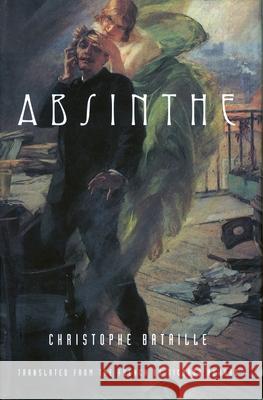
Absinthe is the story of Jean Mardet. In his house, a house noted on no official register, in his cellar, among his alembics and flagons, Jean, now known as Jose--priest, magician, sage--celebrates his curious mass, surrounded by his flock, distibuting his wonderful and bitter drink. And to a young boy in the village, Jose seems a wizard, and something more--revealing to the young boy the mysteries of absinthe and mesmerizing the youth with the fabulous stories and emotions that the drink inspires, until March 17, 1915. That day absinthe is outlawed in his country and Jose disappears, taking...
Absinthe is the story of Jean Mardet. In his house, a house noted on no official register, in his cellar, among his alembics and flagons, Jean, now kn...