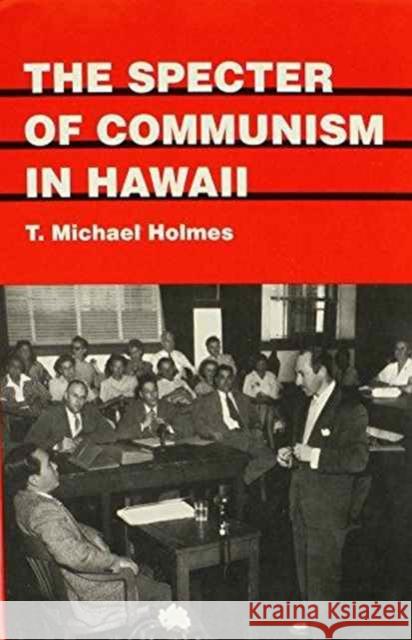
The end of the cold war and the collapse of the Soviet Union have spurred historian T. Michael Holmes to look back to the years 1947-1953, when the territory of Hawaii was gripped by the specter of communism. Holmes begins by remembering the U.S. response to communism from the time of the Russian Revolution through the careers of America's most famous anticommunists, Richard M. Nixon and Joseph R. McCarthy; he also provides a brief account of the events that led to Hawaii's "red scare". The focus then shifts to a single critical year, bounded by Governor Ingram M. Stainback's 1947 declaration...
The end of the cold war and the collapse of the Soviet Union have spurred historian T. Michael Holmes to look back to the years 1947-1953, when the te...
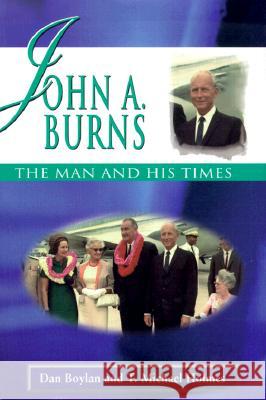
The period 1945-1975 is often referred to as The Burns Years in Hawai'i history books, and rightfully so. John A. Burns looms as Hawai'i's most significant political figure of the last half of the twentieth century. Burns entered politics at the close of World War II, working closely with organized labor leaders and Japanese-American war veterans to forge a Democratic party that would be an instrument of social change in Hawai'i. For twelve years, over the course of three successive terms as governor, Burns helped to shape many important elements of Hawai'i's social and political structure...
The period 1945-1975 is often referred to as The Burns Years in Hawai'i history books, and rightfully so. John A. Burns looms as Hawai'i's most sig...