Explanations of abnormal behavior that emphasize the importance of physiological determinants of disorder are relatively unpopular among psychologists, especially among those who work as clinicians in an ap plied setting. The reasons for this are theoretical and historical, as well as practical. Physiology and its associated biological disciplines of bio chemistry, pharmacology, and genetics are traditionally more associated with medicine; their use to underpin explanations and treatments of behavioral abnormality has consequently demanded knowledge to which most psychologists are not exposed...
Explanations of abnormal behavior that emphasize the importance of physiological determinants of disorder are relatively unpopular among psychologists...
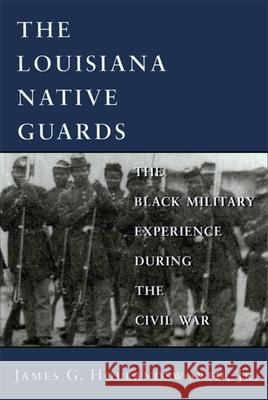
Early in the Civil War, Louisiana's Confederate government sanctioned a militia unit of black troops, the Louisiana Native Guards. Intended as a response to demands from members of New Orleans' substantial free black population that they be permitted to participate in the defense of their state, the unit was used by Confederate authorities for public display and propaganda purposes but was not allowed to fight. After the fall of New Orleans, General Benjamin F. Butler brought the Native Guards into Federal military service and increased their numbers with runaway slaves. He intended to use...
Early in the Civil War, Louisiana's Confederate government sanctioned a militia unit of black troops, the Louisiana Native Guards. Intended as a re...
In the summer of 1866, racial tensions ran high in Louisiana as a constitutional convention considered disenfranchising former Confederates and enfranchising blacks. On July 30, a procession of black suffrage supporters pushed through an angry throng of hostile whites. Words were exchanged, shots rang out, and within minutes a riot erupted with unrestrained fury. When it was over, at least forty-eight men -- an overwhelming majority of them black -- lay dead and more than two hundred had been wounded. In An Absolute Massacre, James G. Hollandsworth, Jr., examines the events surrounding the...
In the summer of 1866, racial tensions ran high in Louisiana as a constitutional convention considered disenfranchising former Confederates and enf...
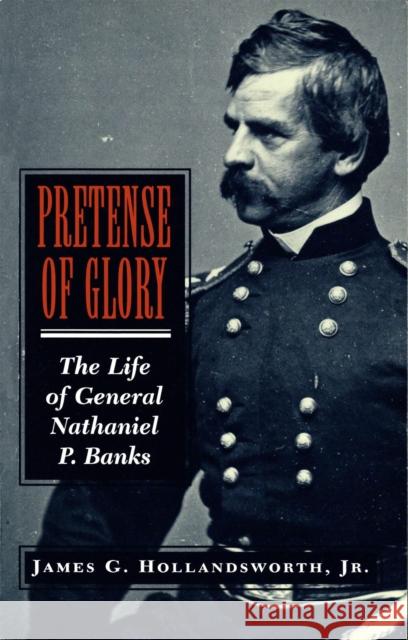
In this first modern biography of Nathaniel P. Banks, James G. Hollandsworth, Jr., reveals the complicated and contradictory nature of the man who called himself the "fighting politician." Despite a lack of formal education, family connections, and personal fortune, Banks (1816--1884) advanced from the Massachusetts legislature to the governorship to the U.S. Congress and Speaker of the House. He learned early in his political career that the pretext of conviction can be more important than the conviction itself, and he practiced a politics of expedience, espousing popular beliefs but...
In this first modern biography of Nathaniel P. Banks, James G. Hollandsworth, Jr., reveals the complicated and contradictory nature of the man who ...
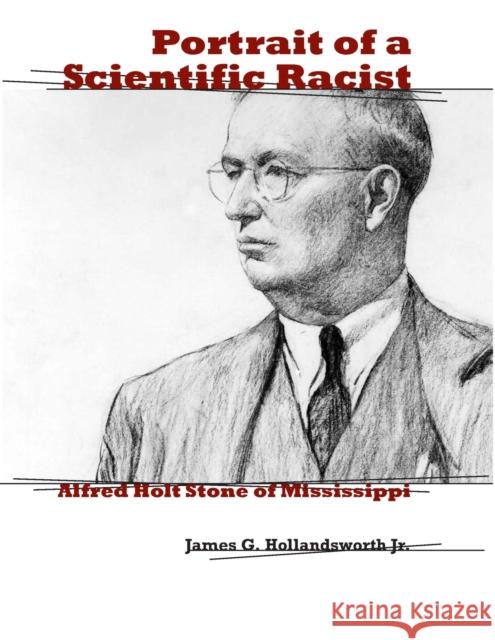
In the years after Reconstruction, racial tension soared, as many white southerners worried about how to deal with the millions of free African Americans among them -- an issue they termed the "negro problem." In an attempt to maintain the status quo, white supremacists resurrected old proslavery arguments and sought new justification in scientific theories purporting to "prove" people of African descent inherently inferior to whites. In Portrait of a Scientific Racist James G. Hollandsworth, Jr., reveals how the conjectures of one of the country's most prominent racial theorists, Alfred...
In the years after Reconstruction, racial tension soared, as many white southerners worried about how to deal with the millions of free African Ame...