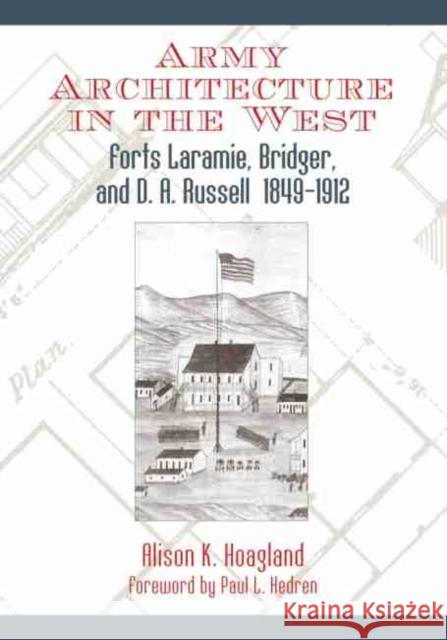
During the nineteenth century, the U.S. military built numerous forts across the country as it stationed more and more troops west of the Mississippi. When most people think about military forts in the American West, they imagine imposing strongholds, meccas of defense enclosed by high, palisaded walls. This popular view, however, is far from reality.
In "Army Architecture in the West," Alison K. Hoagland dispels the myth that all western forts were uniform structures of military might churned out according to a master set of plans authorized by army officials in Washington, D.C....
During the nineteenth century, the U.S. military built numerous forts across the country as it stationed more and more troops west of the Mississip...
Although vernacular architecture scholarship has expanded beyond its core fascination with common buildings and places, its attention remains fixed on the social function of building. Consistent with this expansion of interests, Constructing Image, Identity, and Place includes essays on a wide variety of American building types and landscapes drawn from a broad geographic and chronological spectrum. Subjects range from examinations of the houses, hotels and churches of America s colonial and Republican elite to analyses of the humble cottages of Southern sharecroppers and mill workers,...
Although vernacular architecture scholarship has expanded beyond its core fascination with common buildings and places, its attention remains fixed on...
Building Environments: Perspectives in Vernacular Architecture, Volume X, edited by Kenneth A. Breisch and Alison K. Hoagland, is a collection of the best papers presented at recent annual meetings of the Vernacular Architecture Forum. The editors assert that there is no single correct avenue to exploring our built environment. Rather, these essays provide a road map of the various paths of architectural inquiry, illustrating how expansive and interdisciplinary this research quest can and should be. Building Environments features a dialogue among historians, archaeologists, preservationists,...
Building Environments: Perspectives in Vernacular Architecture, Volume X, edited by Kenneth A. Breisch and Alison K. Hoagland, is a collection of the ...
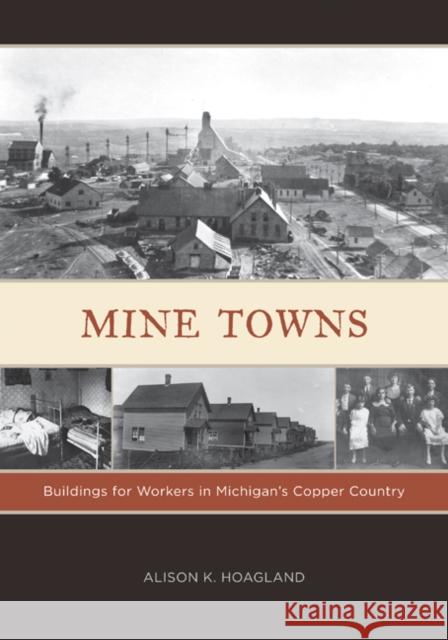
During the nineteenth century, the Keweenaw Peninsula of Northern Michigan was the site of America's first mineral land rush as companies hastened to profit from the region's vast copper deposits. In order to lure workers to such a remote location-and work long hours in dangerous conditions-companies offered not just competitive wages but also helped provide the very infrastructure of town life in the form of affordable housing, schools, health-care facilities, and churches. The first working-class history of domestic life in Copper Country company towns during the boom years of 1890 to 1918,...
During the nineteenth century, the Keweenaw Peninsula of Northern Michigan was the site of America's first mineral land rush as companies hastened to ...
During the nineteenth century, the Keweenaw Peninsula of Northern Michigan was the site of America's first mineral land rush as companies hastened to profit from the region's vast copper deposits. In order to lure workers to such a remote location--and work long hours in dangerous conditions--companies offered not just competitive wages but also helped provide the very infrastructure of town life in the form of affordable housing, schools, health-care facilities, and churches. The first working-class history of domestic life in Copper Country company towns during the boom years of 1890 to...
During the nineteenth century, the Keweenaw Peninsula of Northern Michigan was the site of America's first mineral land rush as companies hastened to ...