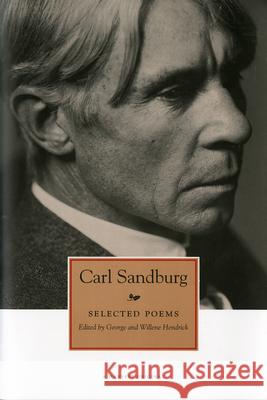
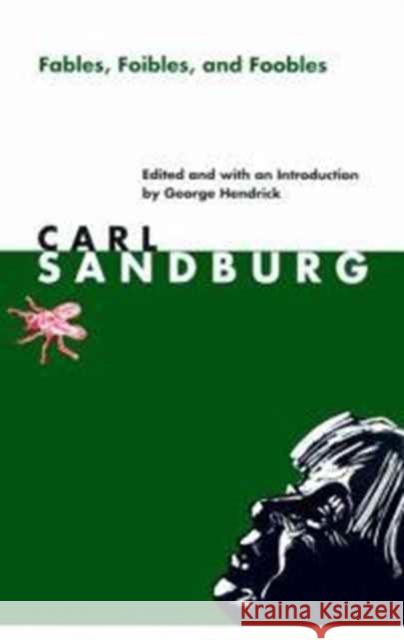
This new collection of Sandburg's finest and most representative poetry draws on all of his previous volumes and includes four unpublished poems about Lincoln. The Hendricks' comprehensive introduction discusses how Sandburg's life and beliefs colored his work and why it continues to resonate so deeply with americans today. Edited and with an Introduction by George and Willene Hendrick.
This new collection of Sandburg's finest and most representative poetry draws on all of his previous volumes and includes four unpublished poems about...
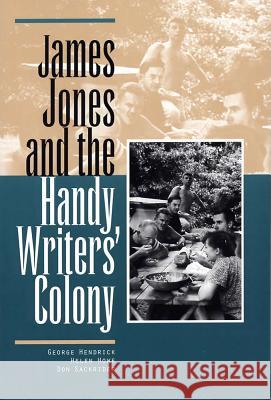
""This story of James Jones and the Handy Colony is a popular account of one of the most unusual writing colonies ever established in the United States.Between his Army enlistment in 1939 and the wound that sent him to a Memphis hospital in 1943, James Jones suffered the loss of both his mother and his father, a victim of suicide. Psychologically precarious, Jones drank heavily, often brawling in bars. Concerned about his erratic behavior, his aunt took Jones to meet Lowney Handy, who took virtual control of his life, securing his discharge from the army and, with her husband Harry, inviting...
""This story of James Jones and the Handy Colony is a popular account of one of the most unusual writing colonies ever established in the United State...
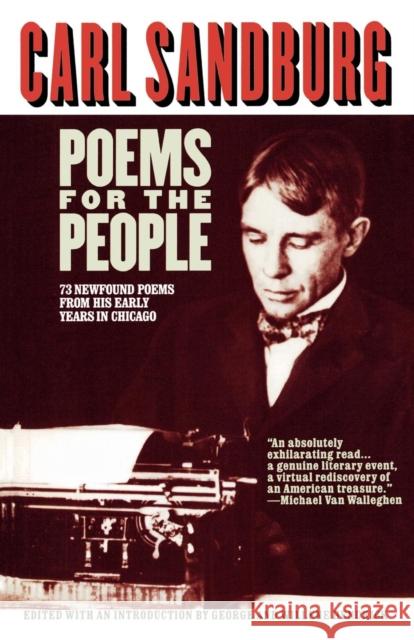
In the winter of 1914, Carl Sandburg, then a reporter at The Day Book in Chicago, submitted several of his poems to Harriet Monroe s Poetry magazine. The title poem began: Hog Butcher for the World, / Tool Maker, Stacker of Wheat... Monroe at first hesitated to accept the poems because of their unorthodox form and their range from brutality to misty lyricism. But she took a deep breath and printed them. In the decade that followed, Sandburg came quickly to national prominence. In Poems for the People, George and Wilene Hendrick, Sandburg s most accomplished interpreters, have selected...
In the winter of 1914, Carl Sandburg, then a reporter at The Day Book in Chicago, submitted several of his poems to Harriet Monroe s Poetry magazine. ...
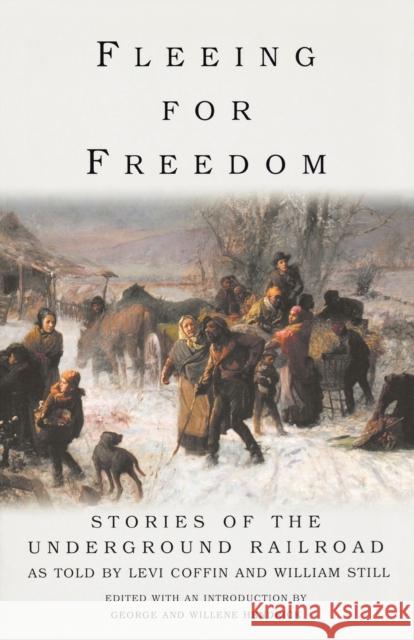
Published to coincide with Black History Month and the opening of the new Underground Railroad Museum in Cincinnati, Fleeing for Freedom includes selected narratives from the two most important contemporary chroniclers of the Underground Railroad, Levi Coffin and William Still. Here are firsthand descriptions of the experiences of escaped slaves making their way to freedom in the North and in Canada in the years before the Civil War. George and Willene Hendrick have chosen a broad range of stories to reflect the strategies, tactics, heartbreak, and dangers--for both the slaves and the...
Published to coincide with Black History Month and the opening of the new Underground Railroad Museum in Cincinnati, Fleeing for Freedom includes sele...
Fredrick Douglass (1818-1895), a fugitive slave who became the best-known black abolitionist orator and autobiographer, and Herman Melville (1819-1891), a fiction writer recognized for the elusiveness of his meanings, both composed stories about slave revolts at sea. In the decade just before the Civil War, during years of increasingly angry debate about slavery, Douglass in -The Heroic Slave- (1853) and Melville in -Benito Cereno- (1855) fictionalized important slave insurrections.
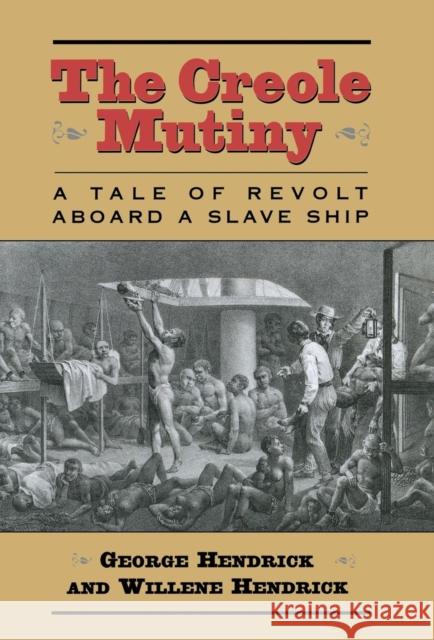
Of the mutiny on the Creole, on which Douglass's story is based, the editors recount what can be...
Fredrick Douglass (1818-1895), a fugitive slave who became the best-known black abolitionist orator and autobiographer, and Herman Melville (1819-1891...
These two slave narratives expand our knowledge of the differing ways males and females coped with enslavement and later ordeals in flight. This popularly-priced anthology contains the often taught Incidents in the Life of a Slave Girl by Harriet Jacobs and the recently discovered A True Tale of Slavery by John S. Jacobs, her younger brother, now reprinted for the first time.
After Harriet's owner, a physician, repeatedly abused her, she escaped his sexual advances for a time by entering into a relationship with a local attorney. Her owner continued to harass her, and she sought...
These two slave narratives expand our knowledge of the differing ways males and females coped with enslavement and later ordeals in flight. This popul...
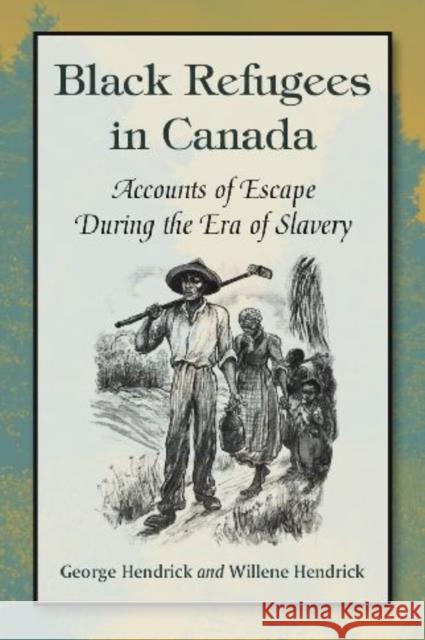
Thousands of black people sought refuge in Canada before the U.S. Civil War. While most refugees encountered at least some racism among Canadian citizens, many of those same refugees also thrived under the auspices of the Canadian government, which worked to protect blacks from the U.S. slaveowners who sought to re-enslave them. This work brings to light the life stories of several nineteenth-century black refugees who managed to survive in their new country by gaining work as barbers, postal carriers, washerwomen, waiters, cab owners, ministers, newspaper editors, and physicians. The book...
Thousands of black people sought refuge in Canada before the U.S. Civil War. While most refugees encountered at least some racism among Canadian citiz...