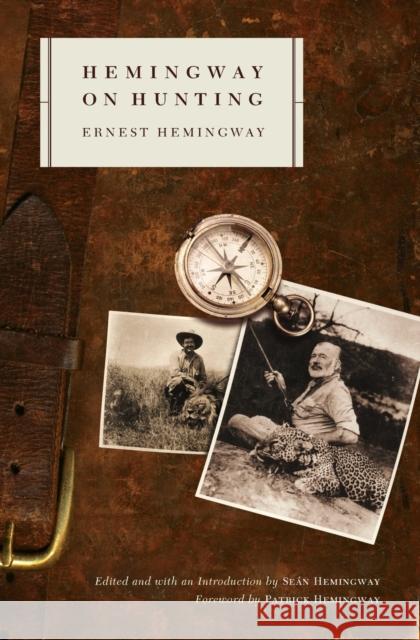
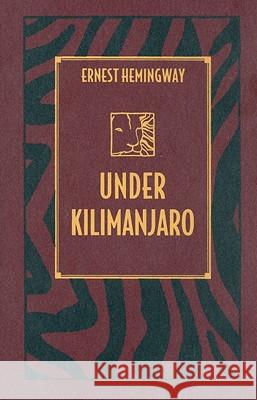
The companion volume to the bestselling Hemingway on Fishing. Ernest Hemingway's lifelong zeal for the hunting life is reflected in his masterful works of fiction, from his famous account of an African safari in "The Short Happy Life of Francis Macomber" to passages about duck hunting in Across the River and Into the Trees. For Hemingway, hunting was more than just a passion; it was a means through which to explore our humanity and man's relationship to nature. Courage, awe, respect, precision, patience--these were the virtues that Hemingway honored in the hunter, and his...
The companion volume to the bestselling Hemingway on Fishing. Ernest Hemingway's lifelong zeal for the hunting life is reflected in his mas...
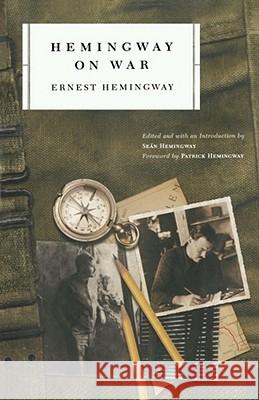
Courage is grace under pressure. -- Ernest Hemingway Ernest Hemingway witnessed many of the seminal conflicts of the twentieth century -- from his post as a Red Cross ambulance driver during World War I to his nearly twenty-five years as a war correspondent for The Toronto Star -- and he recorded them with matchless power. This landmark volume brings together Hemingway's most important, timeless writings about the nature of human combat. Passages from his beloved World War I novel A Farewell to Arms and For Whom the Bell Tolls, about the Spanish Civil...
Courage is grace under pressure. -- Ernest Hemingway Ernest Hemingway witnessed many of the seminal conflicts of the twentieth century -- ...
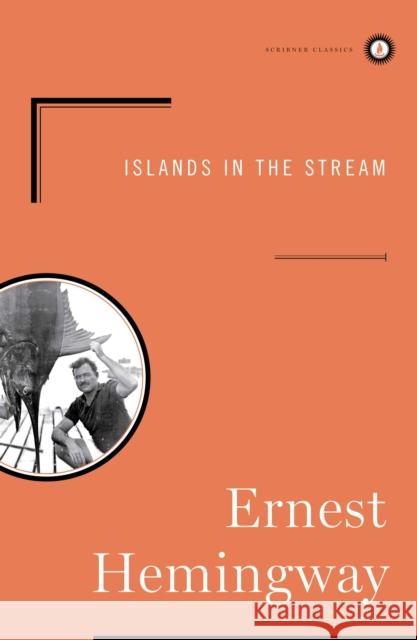
First published in 1970, nine years after Ernest Hemingway's death, Islands in the Stream is the story of an artist and adventurer -- a man much like Hemingway himself. Rich with the uncanny sense of life and action characteristic of his writing -- from his earliest stories (In Our Time) to his last novella (The Old Man and the Sea) -- this compelling novel contains both the warmth of recollection that inspired A Moveable Feast and a rare glimpse of Hemingway's rich and relaxed sense of humor, which enlivens scene after scene. Beginning in the 1930s,...
First published in 1970, nine years after Ernest Hemingway's death, Islands in the Stream is the story of an artist and adventurer -- a man muc...
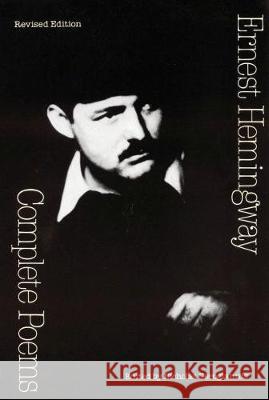
Ernest Hemingway never wished to be widely known as a poet. He concentrated on writing short stories and novels, for which he won the Nobel Prize in 1956. But his poetry deserves close attention, if only because it is so revealing. Through verse he expressed anger and disgust at Dorothy Parker and Edmund Wilson, among others. He parodied the poems and sensibilities of Rudyard Kipling, Joyce Kilmer, Robert Graves, Robert Louis Stevenson, and Gertrude Stein. He recast parts of poems by the likes of Ezra Pound and T. S. Eliot, giving them his own twist. And he invested these poems with the...
Ernest Hemingway never wished to be widely known as a poet. He concentrated on writing short stories and novels, for which he won the Nobel Prize in 1...
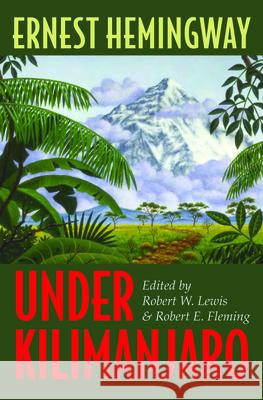
Ernest Hemingway Robert W. Lewis Robert E. Fleming
An American literary treasure
"The sun was not up but that was because of the flank of the mountain it had to rise over and the light was gray but good and Ngui and I were walking through the grass that was wet from the dew. He walked ahead because he knew where the bait had been hung and I watched the trees and his back and the trail his black legs made through the wetness of the grass. We walked silently and the cold wet of the new knee-high grass against my legs was cold and pleasant. Ngui carried the old Winchester pump gun and I carried the Springfield...
An American literary treasure
"The sun was not up but that was because of the flank of the mountain it had to rise...
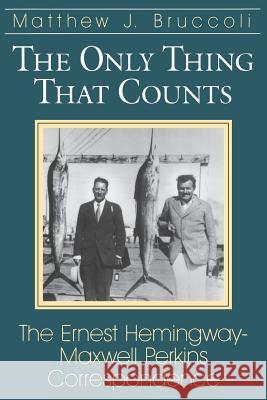
In 1924, F. Scott Fitzgerald told his editor Maxwell Perkins about a young American expatriate in Paris, an unknown writer with a brilliant future. When Perkins wrote to Ernest Hemingway several months later, he began a correspondence spanning more than two decades and charting the career of one of the most influential American authors of this century. The letters collected here are the record of that professional alliance and of Hemingway's development as a writer.
In 1924, F. Scott Fitzgerald told his editor Maxwell Perkins about a young American expatriate in Paris, an unknown writer with a brilliant future. Wh...
Ernest Hemingway was famous for being famous. He assiduously cultivated different and sometimes divergent personae--sportsman, soldier, aesthetician, patriot, drinker, womanizer, intellectual, anti-intellectual, sage, brawler, world traveler, war correspondent, big-game hunter, and even author--each chosen to foster his place in the American cultural consciousness and support the sales of his books. In every role he projected the insider's air of authority and expertise that was presumed credible, even when not wholly deserved. His success in these self-legendizing efforts to couple...
Ernest Hemingway was famous for being famous. He assiduously cultivated different and sometimes divergent personae--sportsman, soldier, aesthetician, ...
Ernest Hemingway Robert W. Lewis Robert E. Fleming
An American literary treasure "The sun was not up but that was because of the flank of the mountain it had to rise over and the light was gray but good and Ngui and I were walking through the grass that was wet from the dew. He walked ahead because he knew where the bait had been hung and I watched the trees and his back and the trail his black legs made through the wetness of the grass. We walked silently and the cold wet of the new knee-high grass against my legs was cold and pleasant. Ngui carried the old Winchester pump gun and I carried the Springfield and the only noise that I heard...
An American literary treasure "The sun was not up but that was because of the flank of the mountain it had to rise over and the light was gray but goo...