In many non-industrial, non-Western societies, power and prestige are closely linked to the extent of an individual's or group's perceived connection to the supernatural realm, which also explains and validates tangible activities such as economic success, victories in war, or control over lucrative trade. Affines (in-laws), ancestors, and aristocrats, in particular, are connected to the realm of creative cosmological origins (i.e., to Genesis), which accords them distinctive, supernatural powers and gives them a natural and legitimate right to worldly authority.
This is the...
In many non-industrial, non-Western societies, power and prestige are closely linked to the extent of an individual's or group's perceived connecti...
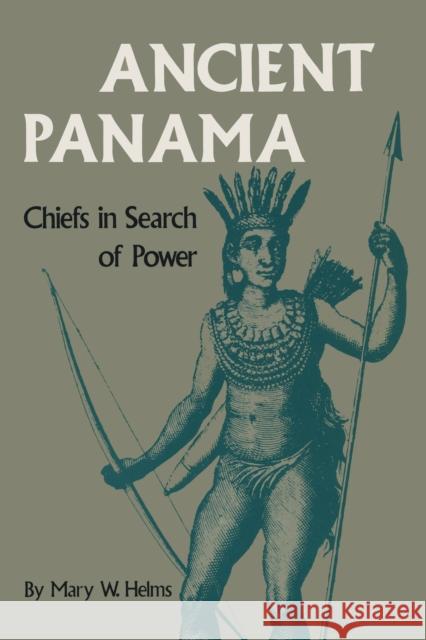
Ancient Panama adds depth to our understanding of the political and religious elite ruling in Panama at the time of the European conquest. Mary W. Helms's research greatly expands knowledge of the distribution, extent, and structural nature of these pre-Columbian chiefdoms.
In addition, Helms delves more deeply into select aspects of ancient Panamanian political systems, including the relationship between elite competition and chiefly status, the use of sumptuary goods in the expression of elite power, and the role of elites in regional and long-distance exchange...
Ancient Panama adds depth to our understanding of the political and religious elite ruling in Panama at the time of the European conqu...
In ancient Mediterranean cultures, diamonds were thought to endow their owners with invincibility. In contemporary United States culture, a foreign-made luxury car is believed to give its owner status and prestige. Where do these beliefs come from?
In this study of craft production and long-distance trade in traditional, nonindustrial societies, Mary W. Helms explores the power attributed to objects that either are produced by skilled artisans and/or come from "afar." She argues that fine artisanship and long-distance trade, both of which are more available to powerful elites than...
In ancient Mediterranean cultures, diamonds were thought to endow their owners with invincibility. In contemporary United States culture, a foreign...
What do long-distance travelers gain from their voyages, especially when faraway lands are regarded as the source of esoteric knowledge? Mary Helms explains how various cultures interpret space and distance in cosmological terms, and why they associate political power with information about strange places, peoples, and things. She assesses the diverse goals of travelers, be they Hindu pilgrims in India, Islamic scholars of West Africa, Navajo traders, or Tlingit chiefs, and discusses the most extensive experience of long-distance contact on record--that between Europeans and native...
What do long-distance travelers gain from their voyages, especially when faraway lands are regarded as the source of esoteric knowledge? Mary Helms...