Winner of the New England Book Award Best Nonfiction Award and the Franklin Fairbanks Award of the Fairbanks Museum
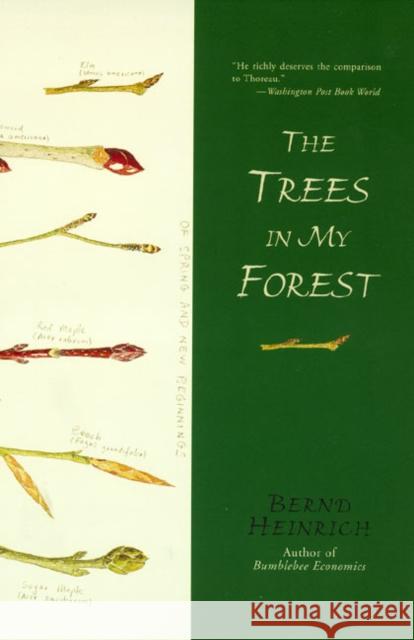
In a book destined to become a classic, biologist and acclaimed nature writer Bernd Heinrich takes readers on an eye-opening journey through the hidden life of a forest.
Winner of the New England Book Award Best Nonfiction Award and the Franklin Fairbanks Award of the Fairbanks Museum
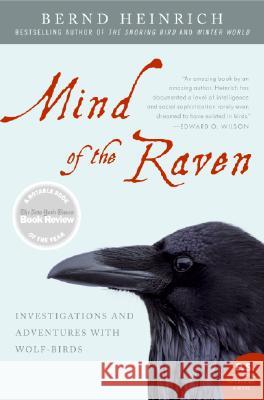
Heinrich involves us in his quest to get inside the mind of the raven. But as animals can only be spied on by getting quite close, Heinrich adopts ravens, thereby becoming a -raven father, - as well as observing them in their natural habitat. He studies their daily routines, and in the process, paints a vivid picture of the ravens' world. At the heart of this book are Heinrich's love and respect for these complex and engaging creatures, and through his keen observation and analysis, we become their intimates too.
Heinrich's passion for ravens has led him around the world in his...
Heinrich involves us in his quest to get inside the mind of the raven. But as animals can only be spied on by getting quite close, Heinrich adopts ...
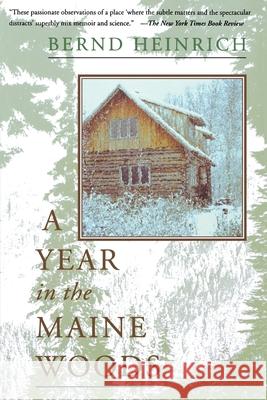
Escapist fantasies usually involve the open road, but Bernd Heinrich's dream was to focus on the riches of one small place--a few green acres along Alder Brook just east of the Presidential Mountains. The year begins as he settles into a cabin with no running water and no electricity, built of hand-cut logs he dragged out of the woods with a team of oxen. There, alone except for his pet raven, Jack, he rediscovers the meaning of peace and quiet and harmony with nature--of days spent not filling out forms, but tracking deer, or listening to the sound of a moth's wings.Throughout this year when...
Escapist fantasies usually involve the open road, but Bernd Heinrich's dream was to focus on the riches of one small place--a few green acres along Al...
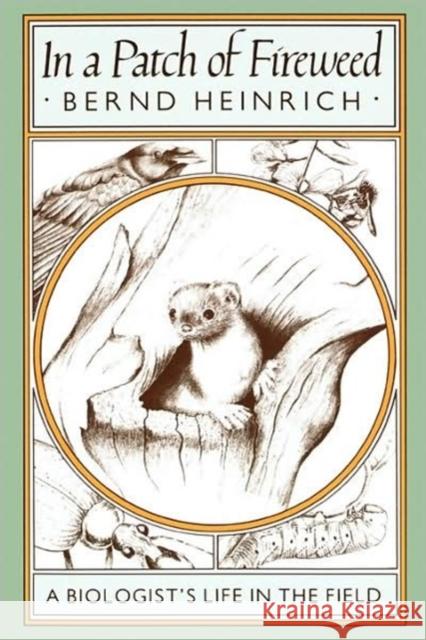
Why would a grown man chase hornets with a thermometer, paint whirligig beetles bright red, or track elephants through the night to fill trash bags with their prodigious droppings? Some might say--to advance science. Heinrich says--because it's fun.
Bernd Heinrich, author of the much acclaimed Bumblebee Economics, has been playing in the wilds of one continent or another all his life. In the process, he has become one of the world's foremost physiological ecologists. With In a Patch of Fireweed, he will undoubtedly become one of our foremost writers of popular...
Why would a grown man chase hornets with a thermometer, paint whirligig beetles bright red, or track elephants through the night to fill trash bags...
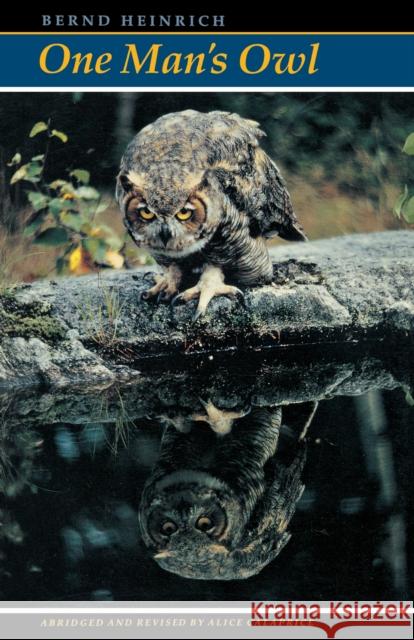
This engaging chronicle of how the author and the great horned owl "Bubo" came to know one another over three summers spent in the Maine woods--and of how Bubo eventually grew into an independent hunter--is now available in an edition that has been abridged and revised so as to be more accessible to the general reader.
This engaging chronicle of how the author and the great horned owl "Bubo" came to know one another over three summers spent in the Maine woods--and...
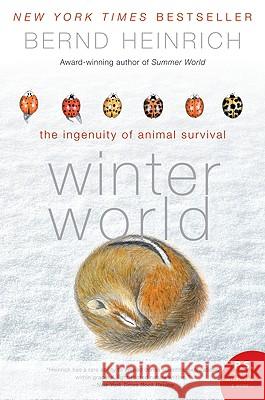
From flying squirrels to grizzly bears, and from torpid turtles to insects with antifreeze, the animal kingdom relies on some staggering evolutionary innovations to survive winter. Unlike their human counterparts, who must alter the environment to accommodate physical limitations, animals are adaptable to an amazing range of conditions.
Examining everything from food sources in the extremely barren winter land-scape to the chemical composition that allows certain creatures to survive, Heinrich's Winter World awakens the largely undiscovered mysteries by which nature sustains herself...
From flying squirrels to grizzly bears, and from torpid turtles to insects with antifreeze, the animal kingdom relies on some staggering evolutiona...
How can cicadas survive--and thrive--at temperatures pushing 115F? Do hummingbirds know what they're up against before they migrate over the Gulf of Mexico? Why do some trees stop growing taller even when three months of warm weather remain? With awe and unmatched expertise, Bernd Heinrich's Summer World never stops exploring the beautifully complex interactions of animals and plants with nature, giving extraordinary depth to the relationships between habitat and the warming of the earth.
How can cicadas survive--and thrive--at temperatures pushing 115F? Do hummingbirds know what they're up against before they migrate over the Gulf o...
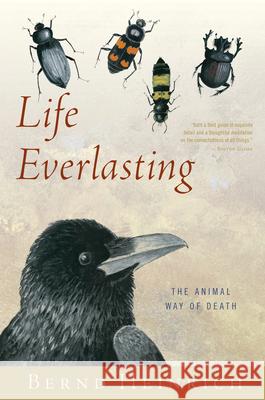
"Bernd Heinrich is one of the finest naturalists of our time. Life Everlasting shines with the authenticity and originality that are unique to a life devoted to natural history in the field."--Edward O. Wilson, author of The Future of Life and The Social Conquest of Earth How does the animal world deal with death? And what ecological and spiritual lessons can we learn from examining this? Bernd Heinrich has long been fascinated by these questions, and when a good friend with a terminal illness asked if he might have his "green burial" at Heinrich's hunting camp in...
"Bernd Heinrich is one of the finest naturalists of our time. Life Everlasting shines with the authenticity and originality that are unique to ...
All bodily activity is the result of the interplay of vastly complex physiological processes, and all of these processes depend on temperature. For insects, the struggle to keep body temperature within a suitable range for activity and competition is often a matter of life and death.
A few studies of temperature regulation in butterflies can be found dating back to the late 1800s, but only recently have scientists begun to study the phenomenon in other insects. In The Thermal Warriors Bernd Heinrich explains how, when, and in general what insects regulate their body...
All bodily activity is the result of the interplay of vastly complex physiological processes, and all of these processes depend on temperature. Fo...
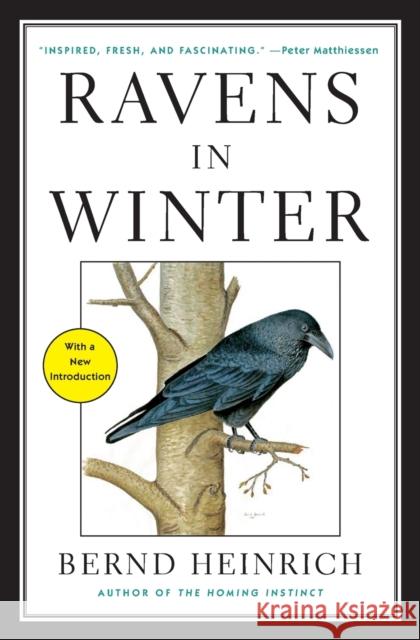
"One of the most interesting discoveries I've seen in animal sociobiology in years." --E.O. Wilson Why do ravens, generally understood to be solitary creatures, share food between each other during winter? On the surface, there didn't appear to be any biological or evolutionary imperative behind the raven's willingness to share. The more Bernd Heinrich observed their habits, the more odd the bird's behavior became. What started as mere curiosity turned into an impassioned research project, and Ravens In Winter, the first research of its kind, explores the fascinating...
"One of the most interesting discoveries I've seen in animal sociobiology in years." --E.O. Wilson Why do ravens, generally understo...