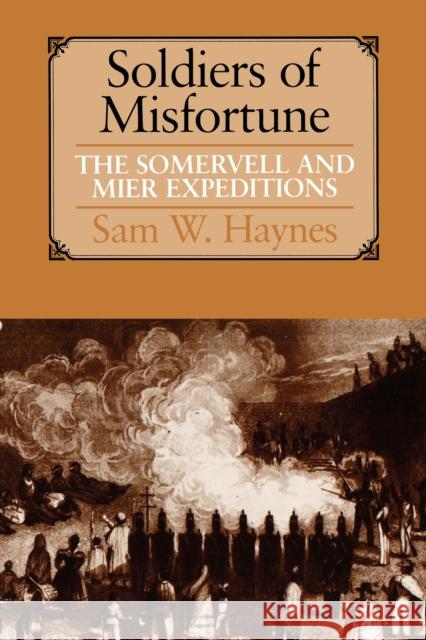
The Somervell and Mier Expeditions of 1842, culminating in the famous "black bean episode" in which Texas prisoners drew white or black beans to determine who would be executed by their Mexican captors, still capture the public imagination in Texas. But were the Texans really martyrs in a glorious cause, or undisciplined soldiers defying their own government? How did the Mier Expedition affect the border disputes between the Texas Republic and Mexico? What role did Texas President Sam Houston play? These are the questions that Sam Haynes addresses in this very readable book, which includes...
The Somervell and Mier Expeditions of 1842, culminating in the famous "black bean episode" in which Texas prisoners drew white or black beans to de...
Six scholars consider important aspects of American antebellum expansion in these studies based on talks originally prepared for the Walter Prescott Webb Memorial Lectures. Robert W. Johannsen of the University of Illinois at Urbana offers fresh insight into the meaning of the term "manifest destiny," arguing for a broader definition. John M. Belohlavek of the University of South Florida takes a close look at the expansionist attitudes of Caleb Cushing, a Massachusetts politician, diplomat, reformer, and intellectual. Cushing's life and controversial career, Belohlavek argues,...
Six scholars consider important aspects of American antebellum expansion in these studies based on talks originally prepared for the Walter Prescott W...
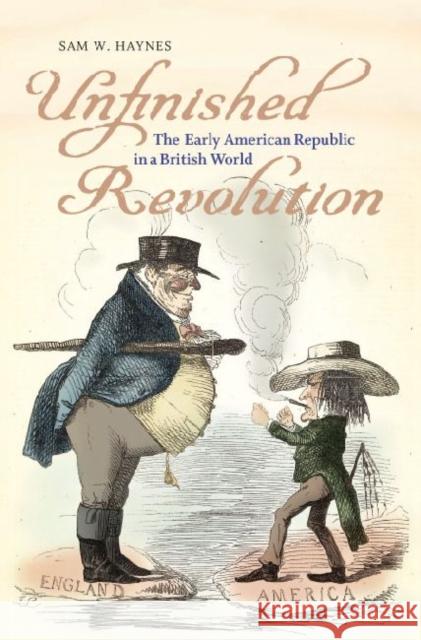
After the War of 1812 the United States remained a cultural and economic satellite of the world's most powerful empire. Though political independence had been won, John Bull intruded upon virtually every aspect of public life, from politics to economic development to literature to the performing arts. Many Americans resented their subordinate role in the transatlantic equation and, as earnest republicans, felt compelled to sever the ties that still connected the two nations. At the same time, the pull of Britain's centripetal orbit remained strong, so that Americans also harbored an...
After the War of 1812 the United States remained a cultural and economic satellite of the world's most powerful empire. Though political independen...
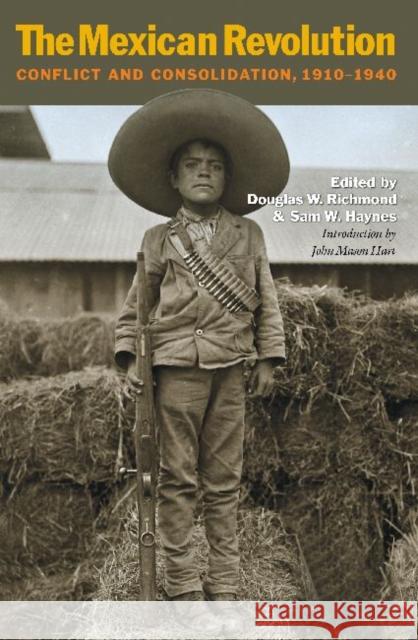
In 1910 insurgent leaders crushed the Porfirian dictatorship, but in the years that followed fought among themselves, until a nationalist consensus produced the 1917 Constitution. This in turn provided the basis for a reform agenda that transformed Mexico in the modern era. The civil war and the reforms that followed receive new and insightful attention in this book.These essays, the result of the 45th annual Walter Prescott Webb Memorial Lectures, presented by the University of Texas at Arlington in March 2010, commemorate the centennial of the outbreak of the revolution.A potent mix of...
In 1910 insurgent leaders crushed the Porfirian dictatorship, but in the years that followed fought among themselves, until a nationalist consensus pr...
To a large degree, the story of Texas' secession from Mexico has been undertaken by scholars of the state. Early twentieth century historians of the revolutionary period, most notably Eugene Barker and William Binkley, characterized the conflict as a clash of two opposing cultures, yet their exclusive focus on the region served to reinforce popular notions of a unique Texas past. Disconnected from a broader historiography, scholars have been left to ponder the most arcane details of the revolutionary narrative--such as the circumstances of David Crockett's death and whether William...
To a large degree, the story of Texas' secession from Mexico has been undertaken by scholars of the state. Early twentieth century historians of the r...