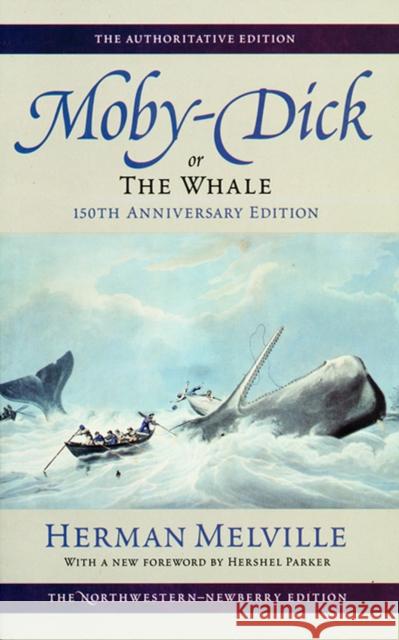
This edition of Moby-Dick, released in honor of the book's sesquicentennial, is the authoritative text of one of the world's great adventure stories. A crew of whalers sets out in pursuit of a fierce white whale. Their names ring through the canon of American literature: Ishmael, the narrator; Queequeg, a South Seas harpooner; Starbuck, the sober and serious chief mate; and above all Captain Ahab, part-Faust and part-Job, obsessed with the destruction of his foe. This text of Moby-Dick is an Approved Text of the Center for Scholarly Editions (Modern Language Association of...
This edition of Moby-Dick, released in honor of the book's sesquicentennial, is the authoritative text of one of the world's great adventure st...
Long considered Melville's strangest novel, "The Confidence-Man" is a comic allegory aimed at the optimism and materialism of mid-nineteenth century America. A shape-shifting Confidence-Man approaches passengers on a Mississippi River steamboat and, winning over his not-quite-innocent victims with his charms, urges each to trust in the cosmos, in nature, and even in human nature--with predictable results. In Melville's time the book was such a failure he abandoned fiction writing for twenty years; only in the twentieth century did critics celebrate its technical virtuosity, wit, comprehensive...
Long considered Melville's strangest novel, "The Confidence-Man" is a comic allegory aimed at the optimism and materialism of mid-nineteenth century A...
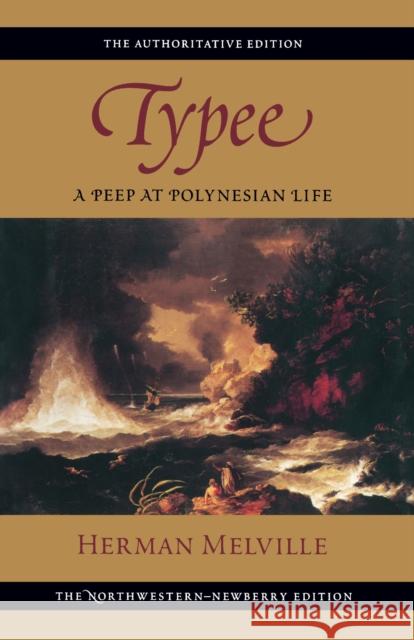
Almost from the time of its publication in 1846, Melville's first book, based on his own travels in the South Seas, has been recognized as a classic in the literature of travel and adventure. Although initially rejected as too fantastic to be true, Typee was immensely popular and regarded in Melville's lifetime as his best work. It established his reputation as the literary discoverer of the South Seas and inspired the likes of Jack London and Robert Louis Stevenson. Two common sailors jump ship and are held in benign captivity by Polynesian natives. Through the narrator's eyes we...
Almost from the time of its publication in 1846, Melville's first book, based on his own travels in the South Seas, has been recognized as a classic i...
Although he surprised the world in 1866 with his first published book of poetry, "Battle-Pieces and Aspects of the War, "Herman Melville had long been steeped in poetry. This new offering in the authoritative Northwestern-Newberry series, "The Writings of Herman Melville," with a historical note by Hershel Parker, is testament to Melville the poet. Penultimate in the publication of the series, "Published Poems "follows the release of Melville s verse epic, "Clarel "(1876), and with it, contains the entirety of the poems published during Melville s lifetime: "Battle-Pieces, " as well as...
Although he surprised the world in 1866 with his first published book of poetry, "Battle-Pieces and Aspects of the War, "Herman Melville had long b...
Herman Melville Harrison Hayford G. Thomas Tanselle
Presented as narratives of his own South Sea experiences, Melville's first two books had roused incredulity in many readers. Their disbelief, he declared, had been "the main inducement" in altering his plan for his third book, "Mardi: and a Voyage Thither "(1849). Melville wanted to exploit the "rich poetical material" of Polynesia and also to escape feeling "irked, cramped, & fettered" by a narrative of facts. "I began to feel . . . a longing to plume my pinions for a flight," he told his English publisher. This scholarly edition aims to present a text as close to the author's intention...
Presented as narratives of his own South Sea experiences, Melville's first two books had roused incredulity in many readers. Their disbelief, he decla...
Although he surprised the world in 1866 with his first published book of poetry, "Battle-Pieces and Aspects of the War, "Herman Melville had long been steeped in poetry. This new offering in the authoritative Northwestern-Newberry series, "The Writings of Herman Melville," with a historical note by Hershel Parker, is testament to Melville the poet. Penultimate in the publication of the series, "Published Poems "follows the release of Melville s verse epic, "Clarel "(1876), and with it, contains the entirety of the poems published during Melville s lifetime: "Battle-Pieces, " as well as...
Although he surprised the world in 1866 with his first published book of poetry, "Battle-Pieces and Aspects of the War, "Herman Melville had long b...
Herman Melville Harrison Hayford G. Thomas Tanselle
Initially dismissed as "a dead failure" and "a bad book," and declined by Melville's British publisher, "Pierre, or The Ambiguities" has since struck critics as modern in its psychological probings and literary technique--fit, as Carl Van Vechten said in 1922, to be ranked with "The Golden Bowl, Women in Love, " and "Ulysses." None of Melville's other "secondary" works has so regularly been acknowledged by its most thorough critics as a work of genuine grandeur, however flawed. This scholarly edition aims to present a text as close to the author's intention as the surviving evidence...
Initially dismissed as "a dead failure" and "a bad book," and declined by Melville's British publisher, "Pierre, or The Ambiguities" has since struck ...
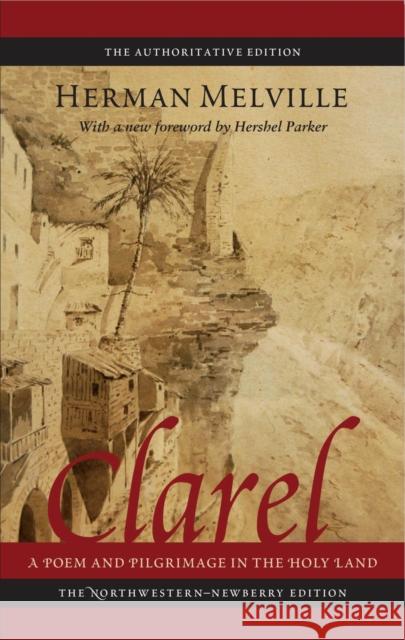
Melville s long poem "Clarel: A Poem and Pilgrimage in the Holy Land" (1876) was the last full-length book he published. Until the mid-twentieth century even the most partisan of Melville s advocates hesitated to endure a four-part poem of 150 cantos and almost 18,000 lines about a naive American named Clarel, on pilgrimage through the Palestinian ruins with a provocative cluster of companions. But modern critics have found "Clarel" a much better poem than was ever realized. Robert Penn Warren called it a precursor of "The Waste Land. "It abounds with revelations of Melville s inner life....
Melville s long poem "Clarel: A Poem and Pilgrimage in the Holy Land" (1876) was the last full-length book he published. Until the mid-twentieth centu...
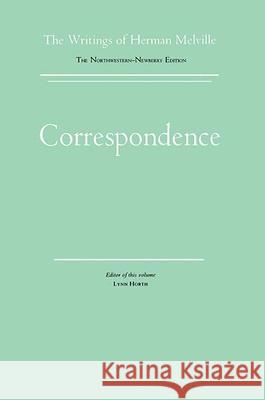
The letters by and to Melville in this volume extend from letters he wrote at the age of nine in 1828 to ones he sent and received during the year before his death at seventy-two in 1891. To fill the gaps within the correspondence, 542 editorial entries are chronologically interspersed for letters both by and to Melville for which no full text has been located but for which some evidence survives. This scholarly edition presents a text as close to the author's intention as his difficult handwriting or other surviving evidence permits. Fifty-two newly discovered letters by Melville, more...
The letters by and to Melville in this volume extend from letters he wrote at the age of nine in 1828 to ones he sent and received during the year bef...