Herman Melville Harrison Hayford Merton M., Jr. Sealts
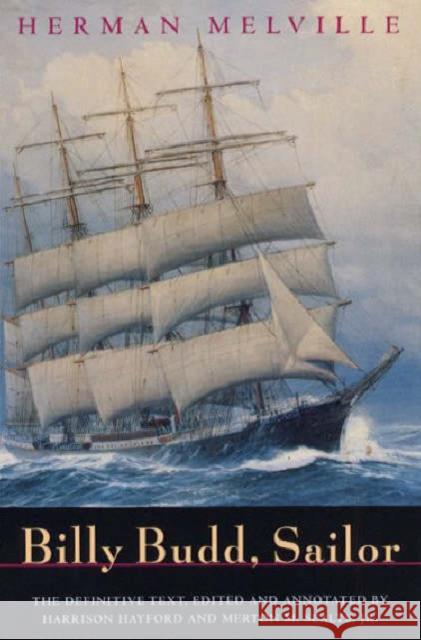
Hayford and Sealts's text was the first accurate version of Melville's final novel. Based on a close analysis of the manuscript, thoroughly annotated, and packaged with a history of the text and perspectives for its criticism, this edition will remain the definitive version of a profoundly suggestive story. "The texts are impeccably accurate. . . . The collection is accompanied by an unobtrusive but expert annotation. . . . Probably Melville's finest short work, the incomplete 'Billy Budd, ' is] a striking reworking of the crucifixion set in the English maritime service of the...
Hayford and Sealts's text was the first accurate version of Melville's final novel. Based on a close analysis of the manuscript, thoroughly annotated,...
When Emerson began these journals in June of 1838, he "had achieved initial success in each of his main forms of public utterance. The days of finding his proper role and public voice were now behind him...and his...personal life had healed from earlier wounds." Now he was married to Lydia Jackson of Plymouth and was the father of a young son, Waldo. They lived in a large, comfortable house in Concord, only a half-day's drive from Boston but close to the solitude of nature. Still to come was the controversy he would create by his address to the graduating class at Harvard Divinity School...
When Emerson began these journals in June of 1838, he "had achieved initial success in each of his main forms of public utterance. The days of find...
The journals printed in this volume, covering the years 1852 to 1855, find Emerson increasingly drawn to the issues and realities of the pragmatic, hard-working nineteenth century. His own situation as a middle-aged, property-owning New Englander with a large household to support gave him a strong sense of everyday financial necessity, and his wide reading for his projected book on the English impressed him deeply with the worldly success that had come to that unphilosophical people. The growing crisis over slavery at home, moreover, demanded the attention of every citizen, even one as...
The journals printed in this volume, covering the years 1852 to 1855, find Emerson increasingly drawn to the issues and realities of the pragmatic,...
Herman Melville Harrison Hayford G. Thomas Tanselle
"Redburn" is a fictional narrative of a boy's first voyage, based loosely on Melville's own first voyage to and from Liverpool in 1839. Hastily composed and little esteemed by its author, "Redburn" was more highly thought of by his critics, who saw it regaining the ground of popular sea stories like "Typee" and "Omoo." Melville so disliked the novel that he submitted it to his publisher without polishing it. This scholarly edition corrects a number of errors that have persisted in subsequent editions. Based on collations of the editions published during his lifetime, it incorporates...
"Redburn" is a fictional narrative of a boy's first voyage, based loosely on Melville's own first voyage to and from Liverpool in 1839. Hastily compos...
Herman Melville Harrison Hayford G. Thomas Tanselle
Redburn is a fictional narrative of a boy's first voyage, based loosely on Melville's own first voyage to and from Liverpool in 1839. Hastily composed and little esteemed by its author, Redburn was more highly thought of by his critics, who saw it regaining the ground of popular sea stories like Typee and Omoo. Melville so disliked the novel that he submitted it to his publisher without polishing it. This scholarly edition corrects a number of errors that have persisted in subsequent editions. Based on collations of the editions published during his lifetime,...
Redburn is a fictional narrative of a boy's first voyage, based loosely on Melville's own first voyage to and from Liverpool in 1839. Hastily c...
Almost from the time of its publication early in 1846, Melville's first book, based on his own travels in the South Seas, has been recognized as a classic in the literature of travel and adventure. From the beginning, however, there have been problems with the text. Due to disparities between the American and English editions, and revisions Melville had to make at his publisher's request concerning its racy style and attitude toward missionaries, the book has circulated in two versions. This scholarly edition is based on collations of all editions published during his lifetime,...
Almost from the time of its publication early in 1846, Melville's first book, based on his own travels in the South Seas, has been recognized as a cla...
Melville's second book, "Omoo, "begins where his first book, "Typee, " left off. As the author said, "It embraces adventures in the South Seas (of a totally different character from 'Typee') and includes an eventful cruise in an English Colonial Whaleman (a Sydney Ship) and a comical residence on the island of Tahiti." The popular success of his first novel encouraged Melville to write a sequel, hoping it would be "a fitting successor." "Typee" describes Polynesian life in its "primitive" state, while "Omoo" represents it as affected by non-native influences. This scholarly edition aims...
Melville's second book, "Omoo, "begins where his first book, "Typee, " left off. As the author said, "It embraces adventures in the South Seas (of a t...
Herman Melville Harrison Hayford G. Thomas Tanselle
Almost from the time of its publication in 1846, Melville's first book, based on his own travels in the South Seas, has been recognized as a classic in the literature of travel and adventure. Although initially rejected as too fantastic to be true, Typee was immensely popular and regarded in Melville's lifetime as his best work. It established his reputation as the literary discoverer of the South Seas and inspired the likes of Jack London and Robert Louis Stevenson. Two common sailors jump ship and are held in benign captivity by Polynesian natives. Through the narrator's eyes we...
Almost from the time of its publication in 1846, Melville's first book, based on his own travels in the South Seas, has been recognized as a classic i...
Herman Melville wrote "White-Jacket; or, The World in a Man-of-War "during two months of intense work in the summer of 1849. He drew upon his memories of naval life, having spent fourteen months as an ordinary seaman aboard a frigate as it sailed the Pacific and made the homeward voyage around Cape Horn. Already that same summer Melville had written" Redburn, " and he regarded the books as "two "jobs, " which I have done for money--being forced to it, as other men are to sawing wood." The reviewers were not as hard on "White-Jacket "as Melville himself was. The English liked its praise of...
Herman Melville wrote "White-Jacket; or, The World in a Man-of-War "during two months of intense work in the summer of 1849. He drew upon his memories...
Initially dismissed as "a dead failure" and "a bad book," and declined by Melville's British publisher, "Pierre, or The Ambiguities" has since struck critics as modern in its psychological probings and literary technique--fit, as Carl Van Vechten said in 1922, to be ranked with "The Golden Bowl, Women in Love, " and "Ulysses." None of Melville's other "secondary" works has so regularly been acknowledged by its most thorough critics as a work of genuine grandeur, however flawed. This scholarly edition aims to present a text as close to the author's intention as the surviving evidence...
Initially dismissed as "a dead failure" and "a bad book," and declined by Melville's British publisher, "Pierre, or The Ambiguities" has since struck ...