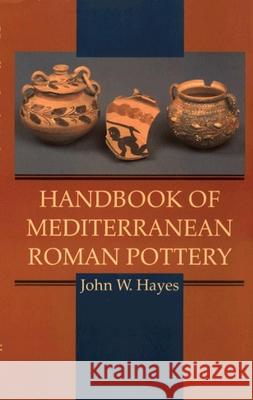
In the past, Roman pottery has been judged as inferior to Greek pottery. Recent excavations, however, have led to an increase in knowledge and appreciation of Roman wares. These wares now constitute an important body of evidence for the understanding of art, literacy and trade in the ancient world.
John W. Hayes, the acknowledged authority in this field, explains the particular features that mark Roman-period wares, concisely describing how the vessels were manufactured, decorated, traded and used. Placing the pottery in historical context, he describes its roots in the Hellenistic Greek...
In the past, Roman pottery has been judged as inferior to Greek pottery. Recent excavations, however, have led to an increase in knowledge and appr...
Examples of Roman period red-gloss and red-slip pottery (terra sigillata) found during excavations in the Athenian Agora form the focus of this volume. These fine wares, like the other table wares of the first seven centuries A.D. discussed here, were all imported--a very different situation to earlier periods where Athens was known as a great ceramic-making center, and perhaps the result of mass destruction of potters' workshops during the Sullan sack of 86 B.C. While the image of a demolished pottery industry is tragic, the consequent conglomeration of fine-wares from many parts of the...
Examples of Roman period red-gloss and red-slip pottery (terra sigillata) found during excavations in the Athenian Agora form the focus of this volume...