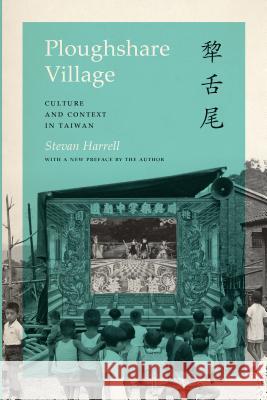
This anthropological study of a workers' village in North Taiwan makes an important contribution to the comparative literature on Chinese and Taiwanese social organization. Based on fieldwork conducted in 1973 and 1978, the study is exceptional not only because of its excellent data but also because the village itself was unique. Unlike villages previously studied and written about, Ploughshare was neither an agricultural nor a fishing village, but rather one whose inhabitants earned their living mostly from coal mining, knitting, and other non-agrarian activities. Culture and...
This anthropological study of a workers' village in North Taiwan makes an important contribution to the comparative literature on Chinese and Taiwa...
Drawing on extensive fieldwork conducted in the 1980s and 1990s in southern Sichuan, this pathbreaking study examines the nature of ethnic consciousness and ethnic relations among local communities, focusing on the Nuosu (classified as Yi by the Chinese government), Prmi, Naze, and Han. It argues that even within the same regional social system, ethnic identity is formulated, perceived, and promoted differently by different communities at different times.
Ways of Being Ethnic in Southwest China exemplifies a model in which ethnic consciousness and ethnic relations consist of...
Drawing on extensive fieldwork conducted in the 1980s and 1990s in southern Sichuan, this pathbreaking study examines the nature of ethnic consciou...
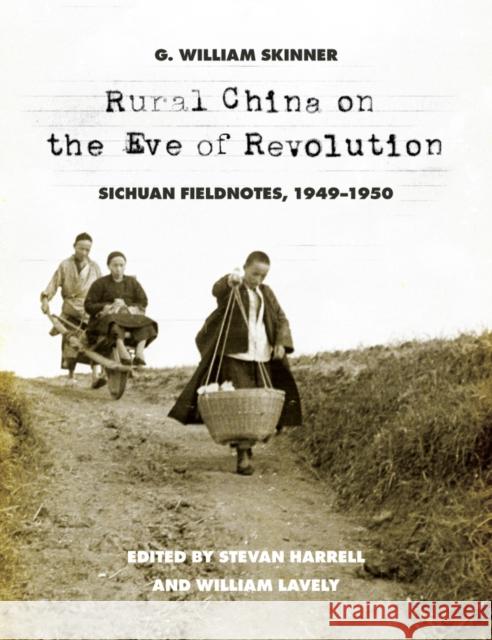
In 1949, G. William Skinner, a Cornell University graduate student, set off for southwest China to conduct field research on rural social structure. He settled near the market town of Gaodianzi, Sichuan, and lived there for two and a half months, until the newly arrived Communists asked him to leave. During his time in Sichuan, Skinner kept detailed field notes and took scores of photos of rural life and unfolding events.
Skinner went on to become a giant in his field--his obituary in American Anthropologist called him "the world's most influential anthropologist of China." A...
In 1949, G. William Skinner, a Cornell University graduate student, set off for southwest China to conduct field research on rural social structure...
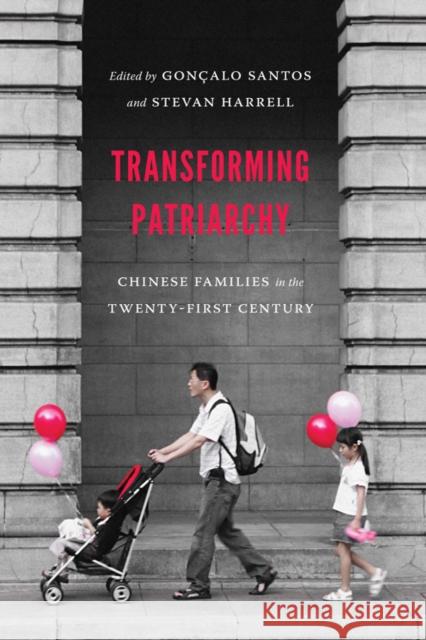
Each successive wave of revolution to hit modern China--political, cultural, and economic--has radically reshaped Chinese society. Whereas patriarchy defined the familial social structure for thousands of years, changing realities in the last hundred years have altered and even reversed long-held expectations. Transforming Patriarchy explores the private and public dimensions of these changes in present-day China. Patriarchy is not dead, but it is no longer the default arrangement for Chinese families: Daughters-in-law openly berate their fathers-in-law. Companies sell filial-piety...
Each successive wave of revolution to hit modern China--political, cultural, and economic--has radically reshaped Chinese society. Whereas patriarc...
Each successive wave of revolution to hit modern China--political, cultural, and economic--has radically reshaped Chinese society. Whereas patriarchy defined the familial social structure for thousands of years, changing realities in the last hundred years have altered and even reversed long-held expectations. Transforming Patriarchy explores the private and public dimensions of these changes in present-day China. Patriarchy is not dead, but it is no longer the default arrangement for Chinese families: Daughters-in-law openly berate their fathers-in-law. Companies sell filial-piety...
Each successive wave of revolution to hit modern China--political, cultural, and economic--has radically reshaped Chinese society. Whereas patriarc...