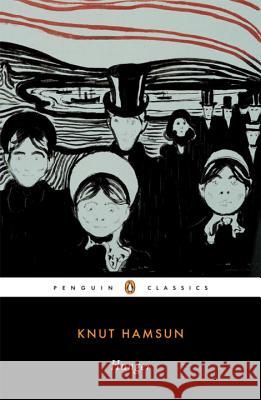
One of the first modernist novels First published in Norway in 1890, Hunger probes into the depths of consciousness with frightening and gripping power. Like the works of Dostoyevsky, it marks an extraordinary break with Western literary and humanistic traditions. For more than seventy years, Penguin has been the leading publisher of classic literature in the English-speaking world. With more than 1,700 titles, Penguin Classics represents a global bookshelf of the best works throughout history and across genres and disciplines. Readers trust the series to provide...
One of the first modernist novels First published in Norway in 1890, Hunger probes into the depths of consciousness with fri...
Hamsun's portrait of a man rejecting the claims of bourgeois society for a Rousseauian embrace of Nature and Eros, in a remarkable new translation. For more than seventy years, Penguin has been the leading publisher of classic literature in the English-speaking world. With more than 1,700 titles, Penguin Classics represents a global bookshelf of the best works throughout history and across genres and disciplines. Readers trust the series to provide authoritative texts enhanced by introductions and notes by distinguished scholars and contemporary authors, as well as up-to-date translations...
Hamsun's portrait of a man rejecting the claims of bourgeois society for a Rousseauian embrace of Nature and Eros, in a remarkable new translation.
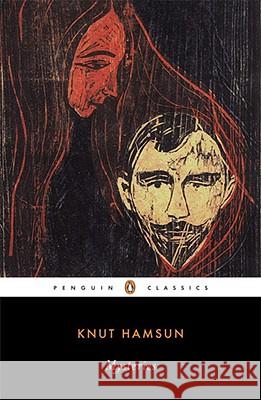
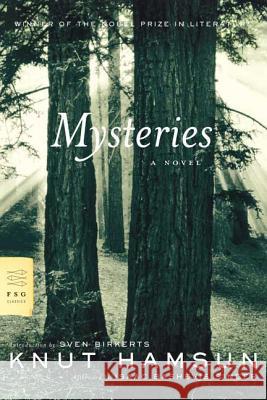
Mysteries (1892) is the story of Johan Nilsen Nagel, a mysterious stranger who suddenly turns up in a small Norwegian town one summer-and just as suddenly disappears. Nagel is a complete outsider, a sort of modern Christ treated in a spirit of near parody. He condemns the politics and thought of the age, brings comfort to the insulted and injured and gains the love of two women suggestive of the biblical Mary and Martha. But there is a sinister side of him: in his vest he carries a vial of Prussic acid. The novel creates a powerful sense of Nagel's stream of thought, as he increasingly...
Mysteries (1892) is the story of Johan Nilsen Nagel, a mysterious stranger who suddenly turns up in a small Norwegian town one summer-and just ...
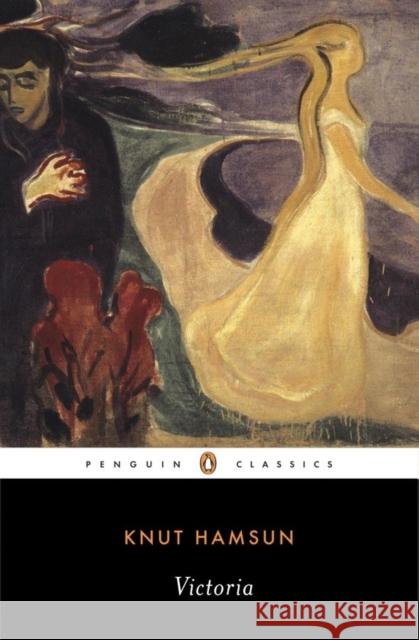
When it first appeared in 1898, this fourth novel by celebrated Norwegian writer Knut Hamsun captured instant acclaim for its poetic, psychologically intense portrayal of love's predicament in a class-bound society. Set in a coastal village of late nineteenth-century Norway, Victoria follows two doomed lovers through their thwarted lifelong romance. Johannes, the son of a miller, finds inspiration for his writing in his passionate devotion to Victoria, an impoverished aristocrat constrained by family loyalty. Separated by class barriers and social pressure, the fated pair parts ways, only to...
When it first appeared in 1898, this fourth novel by celebrated Norwegian writer Knut Hamsun captured instant acclaim for its poetic, psychologically ...
In a Norwegian coastal town, society's carefully woven threads begin to unravel when an unsettling stranger named Johan Nagel arrives. With an often brutal insight into human nature, Nagel draws out the townsfolk, exposing their darkest instincts and suppressed desires. At once arrogant and unassuming, righteous and depraved, Nagel seduces the entire community even as he turns it on its head--before disappearing as suddenly as he arrived.
In a Norwegian coastal town, society's carefully woven threads begin to unravel when an unsettling stranger named Johan Nagel arrives. With an ofte...
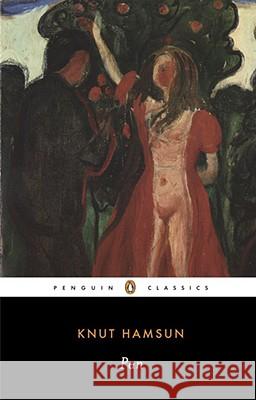
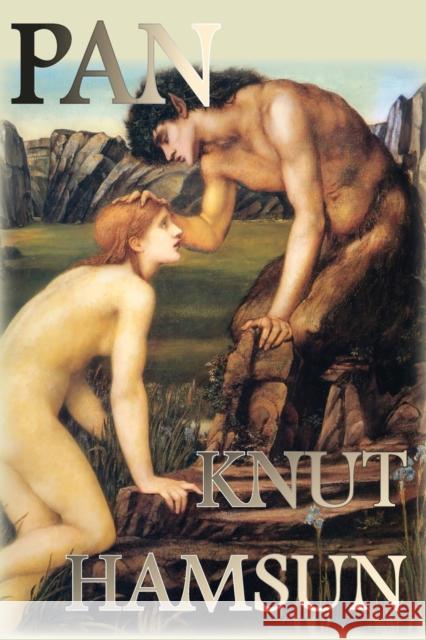
Pan (1894) by Knut Hamsun who won the 1920 Nobel Prize in Literature, is a multi-layered psychological masterpiece of human perversity and pride in the face of love and sensual attraction.
Romantically awkward hunter, fisherman and nature-lover Lieutenant Thomas Glahn lives in a cabin away from society -- alone, except for his dog and occasional interactions with the locals including the young and audacious Edwina, a free spirit who searches for a prince to conquer her, and has not yet met her match. The two commence a peculiar hot and cold relationship that evolves into a tragic...
Pan (1894) by Knut Hamsun who won the 1920 Nobel Prize in Literature, is a multi-layered psychological masterpiece of human perversity and pride in th...
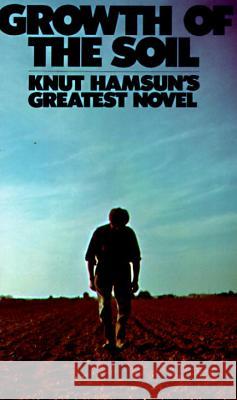
Knut Hamsun was a major Norwegian author who received the Noble Prize for Literature for Growth of the Soil in 1920. Hamsun writing makes excellent use of symbolism. The essential elements of this novel are expressed in the words of the English translator W Worster in his footnote in December 1920 "Jt is the life story of a man in the wilds, the genesis and gradual development of a homestead, the unit of humanity, in the unfilled, uncleared tracts that still remain in the Norwegian Highlands.It is an epic of earth; the history of a microcosm. Its dominant note is one of patient strength and...
Knut Hamsun was a major Norwegian author who received the Noble Prize for Literature for Growth of the Soil in 1920. Hamsun writing makes excellent us...
Those readers are, perhaps, most fortunate who come upon such a book as this without foretaste or preparation. To the mind under spell of an asthetic or emotional appeal, the steps that went to make it, the stages whereby the author passed, are as irrelevant as the logarithms that went to build an aeroplane. Yet it is only by knowledge of such steps that the achievement can be fully understood. The story is epic in its magnitude, in its calm, steady progress and unhurrying rhythm, in its vast and intimate humanity. The author looks upon his characters with a great, all-tolerant sympathy,...
Those readers are, perhaps, most fortunate who come upon such a book as this without foretaste or preparation. To the mind under spell of an asthetic ...