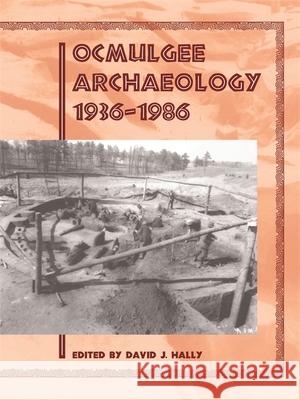
At the time of Spanish contact in A.D. 1540, the Mississippian inhabitants of the great valley in northwestern Georgia and adjacent portions of Alabama and Tennessee were organized into a number of chiefdoms distributed along the Coosa and Tennessee rivers and their major tributaries. The administrative centers of these polities were large settlements with one or more platforms mounds and a plaza. Each had a large resident population, but most polity members lived in a half dozen or so towns located within a day s walk of the center. This book is about one such town, located on the Coosa...
At the time of Spanish contact in A.D. 1540, the Mississippian inhabitants of the great valley in northwestern Georgia and adjacent portions of Alabam...
From 1933 to 1941, Macon was the site of the largest archaeological excavation ever undertaken in Georgia and one of the most significant archaeological projects to be initiated by the federal government during the depression. The project was administered by the National Park Service and funded at times by such government programs as the Works Progress Administration, Civilian Conservation Corps, and Civil Works Administration. At its peak in 1955, more than eight hundred laborers were employed in more than a dozen separate excavations of prehistoric mounds and villages.
The best-known...
From 1933 to 1941, Macon was the site of the largest archaeological excavation ever undertaken in Georgia and one of the most significant archaeolo...